Buying Kleim's Hardy Gardenia: Container Sizes and What to Look For
Finding a healthy Kleim's Hardy Gardenia starts before you bring it home. Whether you're shopping at a local nursery or ordering online, knowing what to inspect and which container size matches your space will save you time and money. This guide walks you through the key quality markers, container options, and sourcing tips so you can buy a plant with confidence.
What to Look for in a Healthy Plant
Quality matters more than price when you're buying Kleim's Hardy Gardenia. A robust plant will establish faster, bloom reliably in its first season, and require fewer corrective interventions than a stressed specimen. Here are the markers that separate a thriving plant from one heading for trouble.
Foliage Condition
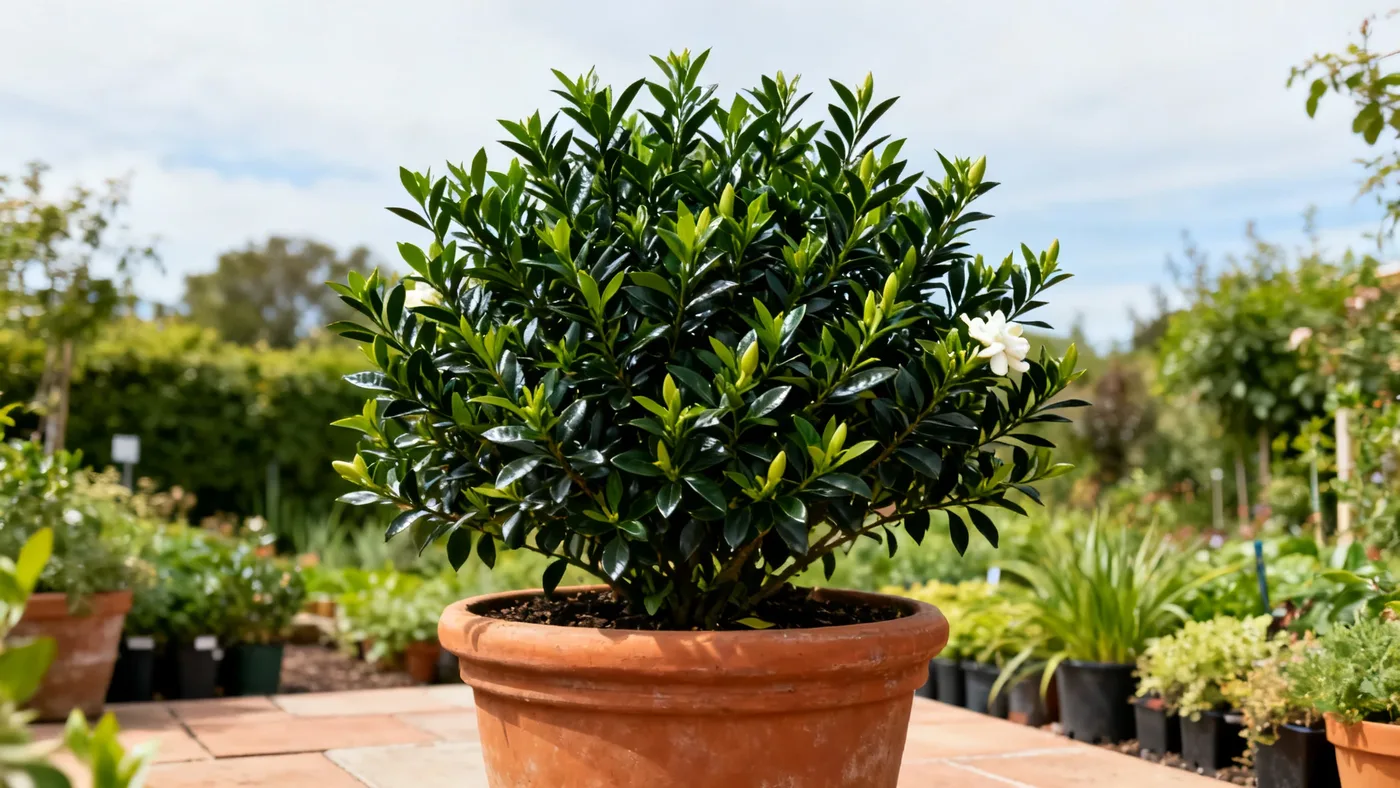
Healthy Kleim's Hardy Gardenia carries glossy, dark-green leaves without yellowing, spotting, or visible insects. Turn the leaves over and check the undersides carefully, as whiteflies, spider mites, and scale insects often cluster there out of sight. Avoid any plant with yellowed leaves that have green veins running through them, which signals chlorosis from alkaline soil or iron deficiency at the nursery. A few naturally dropped lower leaves are normal, but widespread leaf loss or browning is a warning sign that the plant has experienced stress like overwatering or drought.
Root System Health
When you lift the container, roots should be visible at the soil surface but not dense and circling the pot in a tight spiral. Gently feel the soil moisture. It should feel consistently moist, not soggy or bone dry. Soggy soil signals poor drainage in the potting mix or chronic overwatering, both common reasons for root rot in gardenias. If water runs out immediately from the drainage holes and the soil stays wet for hours, the plant may be waterlogged. That's a deal-breaker. Inspect the drainage holes themselves for blockages or algae growth, which indicates standing water inside the pot.
Signs of Active Growth
Look for fresh green shoots at the branch tips and new leaf buds forming along the stems. Compact, bushy plants are preferable to tall, thin, and sparse ones. When comparing plants at a nursery, side-by-side view quickly shows which specimen has better branching structure. If you're shopping during late spring or early summer (May through June), check for visible flower buds along the stems. Buds confirm the plant is genetically primed to flower, though bloom timing depends on your planting location and subsequent care.
No Pest Damage or Disease
Inspect the stems and leaf joints for cottony mealybug clusters, sticky aphid residue, or sooty mold, which appears as a black coating on leaves, stems, or soil. These pests and fungal problems are common on gardenias in nursery conditions and can hitchhike into your garden. A plant with active pest damage will cost more in treatment time than simply buying a clean specimen. Look also for leaf spot fungal lesions, which show as dark patches on foliage.
Container Sizes and What They Mean
Nursery-grown Kleim's Hardy Gardenia typically arrives in one of three standard container sizes. Each has trade-offs in price, maturity, and time to reach landscape-ready size.
Quart Containers
Quart-size plants are the most affordable entry point when you want to buy Kleim's Hardy Gardenia. These are young, often under one year old, and typically stand 1 to 1.5 feet tall. They grow at a moderate pace, adding roughly 6 to 12 inches per year, so you can expect two to three years before reaching the 2 to 3 feet mature height that this cultivar is known for. Quart plants are ideal if you're building a mass planting or low hedge and budget allows for patience. They do require consistent attention to watering and feeding in the first season while establishing roots. Many gardeners accept the wait because the overall cost is significantly lower than buying multiple #1 or #3 specimens.
#1 Containers (One-Gallon)
The #1 size is the most popular and strikes a practical balance between cost and landscape maturity. Plants typically stand 1.5 to 2.5 feet tall and have already developed a stronger root system than quart sizes. You'll often see your first flowers within one to two years of planting, and the plant will reach full mature size (2 to 3 feet tall with a 3 to 4 foot spread) within one to two years more. For most home gardeners and landscapers looking for where to buy Kleim's Hardy Gardenia, the #1 container offers the best value proposition for quick visual impact without the premium price tag of larger stock. Spacing #1 plants 2 to 3 feet apart works well for foundation plantings or low hedges.
#3 Containers (Three-Gallon)
Number 3 pots contain the largest, most established specimens you'll find in general retail nurseries. These plants often stand 2.5 to 3.5 feet tall and come with mature root systems and substantial branch structure already in place. Buy a #3 if you need immediate landscape presence, are replacing a failed planting, or want to fill a garden gap this season without waiting. The trade-off is cost. These mature specimens command higher prices, and they require more careful transport and planting technique to avoid compacting the root ball or damaging branches during installation.
Comparing Plants by Growth Stage and Budget
Different buyers have different priorities. Here is how to shop for a Kleim's Hardy Gardenia based on what matters most to your timeline and budget.
Budget-Conscious Buyers: Quart Size
If you're planting several Kleim's Hardy Gardenia in a border or hedging situation, buying quart-size plants lets you stretch your budget significantly further than jumping to #1 or #3 containers. You trade a few years of growth for lower upfront cost. Pair quart plants with consistent summer watering, spring feeding with an acid-forming fertilizer formulated for azaleas, camellias, or gardenias, and light pruning right after flowering finishes (late spring/early summer) to accelerate establishment and branching.
Value Focused: #1 Container
The #1 is where most nurseries concentrate inventory because it serves the broadest market. A #1 Kleim's Hardy Gardenia will bloom the first year after planting in many cases, especially if you plant in spring to allow summer root establishment before the plant flowers. The plant is mature enough to handle transplant stress better than quart sizes, yet affordable enough to plant multiple specimens for landscape impact. This is the size you'll find most often when you search for Kleim's Hardy Gardenia for sale at regional nurseries or garden centers.
Instant Impact: #3 Container
Buy #3 if instant visual height matters (for screening, a focal point near an entry, or filling a substantial gap in a mature landscape). These plants are on the cusp of their full mature height (occasionally reaching 4 feet) and arrive with established root systems that transplant more reliably than younger stock. The plant will typically bloom that first season and won't need years to reach full size in your garden.
Where to Buy Kleim's Hardy Gardenia
Your options for sourcing Kleim's Hardy Gardenia depend on your location and hardiness zone.
Local Nurseries
Independent and regional Kleim's Hardy Gardenia nurseries often carry this cultivar, especially in USDA zones 7 through 9 where it thrives. The advantage of buying locally is inspecting plants in person before purchase and receiving expert local guidance on planting, care, and overwintering. Staff can confirm whether the cultivar is suited to your specific microclimate. This is especially important if you live in zone 7 or the cooler parts of zone 6b, where this hardy cultivar is marketed as cold-hardy but still benefits from winter protection at the cold edge of its range.
Specialty Growers Focused on Acid-Loving Plants
Nurseries that specialize in acid-loving plants (azaleas, camellias, rhododendrons, and gardenias) often maintain stock of Kleim's Hardy Gardenia year-round or during spring and fall shipping seasons. These growers deeply understand the plant's soil pH needs, drainage requirements, and water preferences, and they can ship healthy stock across regions. If you're ordering a Kleim's Hardy Gardenia online from a nursery, look for growers that specialize in southern ornamentals and have established return policies for damaged or unhealthy plants.
Big-Box Garden Centers
Large retailers stock Kleim's Hardy Gardenia seasonally, typically in spring (March through May) and early fall (August through September) when planting season peaks. Selection is often limited to #1 containers, and staff expertise varies by location. If you're buying from a big-box store, inspect plants carefully. Turnover and watering practices sometimes fall short of specialty nursery standards, particularly during hot months when irrigation systems struggle to keep pace with demand.
Online Plant Retailers
Many online retailers ship Kleim's Hardy Gardenia nationwide, expanding your options if local nurseries don't carry the cultivar. Shipping costs and dormancy during transit can stress younger plants, so confirm the retailer's packaging standards. Ask whether plants arrive in their nursery pots or bare-root, and verify they offer a clear return or replacement policy if the plant arrives damaged. Read reviews from other buyers to gauge whether the retailer's stock typically arrives in good condition.
Red Flags to Avoid
Walk away from a Kleim's Hardy Gardenia if you notice any of these warning signs:
- Yellowed foliage with green veins running through (chlorosis), especially if the nursery uses alkaline potting mix or hard water
- Roots circling densely at the soil surface or protruding aggressively from drainage holes (severe root-bound condition)
- Soggy soil that stays wet for days after a light watering
- Visible insects, webbing, sticky residue, or sooty mold on leaves or stems
- Brittle, desiccated stems or leaves that crumble when touched
- Weak, thin growth with few branch points or visible buds
- Bare spots, peeling bark, or missing sections of bark on main stems
- Mushy, brown roots visible at the surface (root rot)
A plant with one or two minor cosmetic issues (a few yellowed lower leaves, light whitefly presence on new growth) can often recover with proper care once planted. But if three or more red flags are present, buy elsewhere. Quality nurseries want you to leave with a healthy plant that will thrive in your garden and reflect well on their reputation.
Timing Your Purchase
The best time to buy Kleim's Hardy Gardenia is spring or early fall. Spring purchases (March through May) let the plant establish roots during warm growing season before flowering in late spring/early summer. Early fall (August through September) also works well, giving the plant weeks of mild weather to root in before winter cold arrives. Avoid buying in late fall or winter in zone 7 unless you can shelter the plant indoors until spring frost risk passes. Planting season is key to establishment success, so timing your purchase right improves your odds of a thriving plant in year two.
Buying Checklist: Quick Reference
| What to Check | Good Sign | Red Flag |
|---|---|---|
| Foliage | Glossy, dark green leaves, no spots or yellowing | Yellow leaves with green veins, insect damage, widespread leaf drop |
| Roots | Visible at soil surface, moist but not waterlogged | Circling densely, protruding from holes, soggy soil, root rot smell |
| Growth Habit | Compact, bushy, fresh green shoots at branch tips | Tall and sparse, weak growth, few branch points |
| Pests and Disease | No visible insects, webbing, or sooty mold | Whiteflies, scale, mealybugs, spider mites, sticky residue |
| Flower Buds | Visible buds (spring/early summer purchase) | No buds, bruised or split buds, bud drop |
| Container Size | Quart (budget), #1 (value), or #3 (mature) fit your needs | Severely root-bound, poor drainage holes |
| Purchase Timing | Spring (March-May) or early fall (August-September) | Late fall/winter in zones 6b-7 without shelter plan |
After you bring your Kleim's Hardy Gardenia home, follow the detailed care steps in our care guide to ensure it thrives in its first season and beyond. Proper planting depth, soil pH, watering frequency, and pruning timing make the difference between a struggling plant and one that rewards you with years of fragrant white flowers.