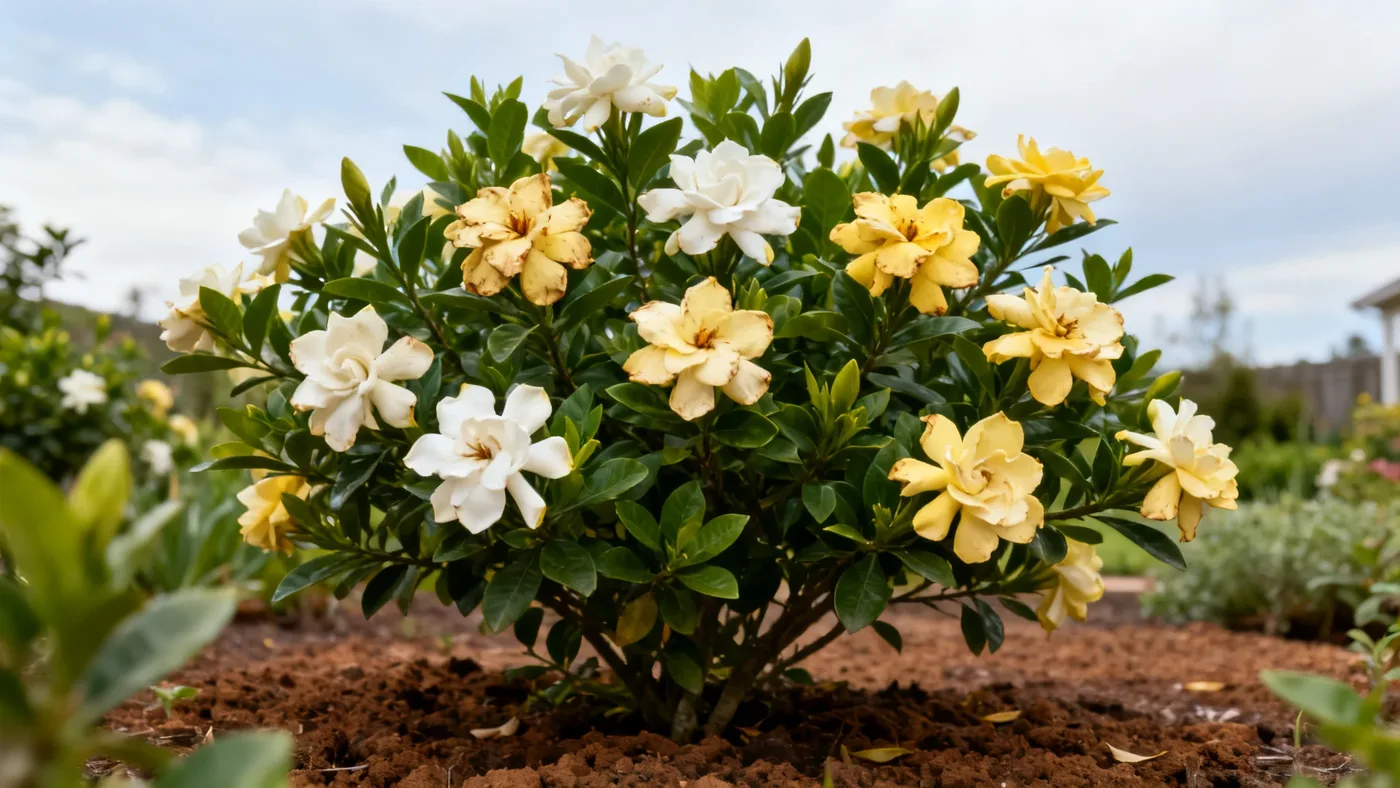
Kleim's Hardy Gardenia Care Guide: Sun, Soil, Water and Bloom
Kleim's Hardy Gardenia (Gardenia jasminoides 'Kleim's Hardy') is one of the most cold-tolerant gardenia cultivars available to home gardeners. While standard gardenias struggle in cooler climates, this selection survives in USDA zones 7 through 9, and with winter protection can even push into zone 6b. The reward for choosing this cultivar is the same classic gardenia fragrance you'd expect from the species, paired with a more compact, manageable growth habit and exceptional hardiness. This guide walks you through everything you need to know to grow a thriving Kleim's Hardy Gardenia in your garden.
Table of Contents
- Why Choose Kleim's Hardy Gardenia
- Planting Kleim's Hardy Gardenia
- Light and Sunlight Requirements
- Soil, Water, and Drainage
- Feeding Your Gardenia
- Pruning and Encouraging Blooms
- Pests, Diseases, and Problem-Solving
- Container Growing and Winter Protection
- Quick Reference Checklist
Key Takeaways
- Kleim's Hardy Gardenia grows 2 to 3 feet tall and 3 to 4 feet wide with a mounding habit.
- Plant in spring or early fall in USDA zones 7 to 9 for best establishment.
- Prefers full sun to part shade; afternoon shade in hot southern regions reduces stress.
- Needs acidic soil (pH 5.0 to 6.5) with consistent moisture but never wet feet.
- Blooms late spring to early summer (May through June) with strong, sweet fragrance.
- Prune lightly right after flowering to avoid removing next year's flower buds.
- Feeding in spring with acid-forming fertilizer and occasional chelated iron keeps foliage glossy.
Why Choose Kleim's Hardy Gardenia
Standard gardenias often disappoint in cooler regions, their buds dropping before they open in response to temperature swings and dry winters. Kleim's Hardy Gardenia was selected specifically to overcome these limitations. Its smaller, narrower leaves and compact form (reaching just 2 to 3 feet tall in most gardens) make it easier to protect in marginal climates and better suited to foundation plantings and smaller spaces.
The fragrance is where this cultivar truly shines. Those who grow Kleim's Hardy Gardenia consistently report the full, sweet, classic gardenia scent, especially in the evening. The plant rewards good care with abundant white flowers in late spring and early summer (May through June), with occasional light rebloom in late summer under favorable conditions.
Beyond fragrance, this is a long-lived shrub. With proper care, a single Kleim's Hardy Gardenia can flourish for decades, becoming a treasured anchor in your garden.
Planting Kleim's Hardy Gardenia
When to Plant
Timing matters for gardenia establishment. Plant in spring or early fall to allow the root system to establish before temperature extremes arrive. Spring planting gives your gardenia the full growing season to acclimate. Early fall planting (late August through September) works equally well in most regions, provided you ensure consistent moisture through the first winter.
Spacing and Site Selection
Space plants 2 to 3 feet apart for a massed planting or low hedge. This spacing prevents crowding as plants reach their mature width of 3 to 4 feet. Choose a location with morning sun and afternoon light, especially in hot southern climates where scorching afternoon heat can stress the foliage and damage flower buds.
Soil Preparation
Kleim's Hardy Gardenia demands acidic, well-drained soil rich in organic matter. The target pH range is 5.0 to 6.5. Soil that is too alkaline triggers chlorosis, a nutrient deficiency that yellows the leaves while the veins stay green. Before planting, amend your native soil heavily with peat moss, pine bark, or composted leaves to boost organic content and lower pH if needed.
Work amendments 12 inches deep in the planting area. Create a planting hole only as deep as the root ball and 1.5 times as wide. Set the plant so the top of the root ball is level with the soil surface, never buried deeper. Water thoroughly after planting to settle soil around the roots.
Light and Sunlight Requirements
Kleim's Hardy Gardenia thrives in full sun to part shade. Full sun (6 or more hours of direct light daily) produces the most flowers and densest foliage. In cool climates where plants are already at the edge of their hardiness, full sun is ideal for ripening wood and hardening off the plant before winter.
However, in hot southern gardens where afternoon temperatures regularly exceed 90 degrees Fahrenheit, afternoon shade (specifically between 2 and 6 p.m.) improves flower quality and prevents heat stress on the foliage. The key is morning sun; afternoon dappled shade is perfect in the Deep South.
Too much shade leads to sparse blooming and weak growth. If your planting area receives fewer than 4 hours of direct sun daily, the plant will struggle to flower reliably.
Soil, Water, and Drainage
Soil Maintenance
After planting, maintain that acidic, organic-rich environment. Mulch the base with 2 to 3 inches of pine bark or shredded hardwood to regulate soil temperature and moisture while slowly adding organic matter as it breaks down. Never pile mulch against the trunk.
If your garden sits on alkaline native soil (limestone regions, for example), annual spring applications of sulfur or an acid-forming fertilizer help maintain the right pH.
Watering Practices
Kleim's Hardy Gardenia needs medium, consistent moisture. Water deeply when the top inch of soil feels dry to the touch, roughly 1 to 1.5 inches of water per week during the growing season. In the first year after planting, water more frequently to help roots establish.
Inconsistent watering is a primary trigger for bud drop. Plants that alternate between wet and dry stress lose their flower buds before they open. During dry spells, increase watering frequency to keep soil evenly moist. Conversely, do not overwater. Standing water and waterlogged soil cause root rot, one of the few conditions that kill gardenias outright.
Drainage is non-negotiable. If water pools on the soil surface and drains slowly, amend the soil further or consider raised beds to improve drainage.
Drought Tolerance
Once established (after the first 12 to 18 months), Kleim's Hardy Gardenia has low to moderate drought tolerance. The plant survives brief dry periods but performs best with regular watering. During summer heat or extended dry spells, water more frequently to prevent stress.
Feeding Your Gardenia
Feed Kleim's Hardy Gardenia in spring with an acid-forming fertilizer formulated for acid-loving plants such as azaleas, camellias, and gardenias. Apply once in early spring as new growth begins. Follow the product label for rate based on plant size. Do not overfeed; excess nitrogen promotes soft, tender growth prone to insect damage.
If leaves yellow while veins remain green, the plant likely has chlorosis from alkaline soil or iron deficiency. Supplement with chelated iron according to label directions. Foliar sprays (applied to leaves) work faster than soil applications if you need quick color recovery.
No additional feeding is needed in summer or fall. Late-season fertilizer encourages tender new growth that may not harden off before winter, compromising cold hardiness.
Pruning and Encouraging Blooms
Timing and Technique
Kleim's Hardy Gardenia sets its flower buds on new growth that appears after this season's flowers fade. This timing matters enormously for pruning. Prune lightly right after flowering finishes, roughly late spring or early summer (late May through June in most zones). Light pruning at this time removes spent flowers and shapes the plant without sacrificing next year's blooms.
Avoid pruning in late summer or fall. Cutting back in August or September removes the stems that will carry next year's flowers, resulting in a plant with lush foliage but few or no blooms.
Use sharp bypass pruners to make clean cuts just above healthy leaf nodes. Remove dead, diseased, or crossing branches first. Thin crowded interior growth to improve air circulation and light penetration.
Growth Rate and Maturity
Kleim's Hardy Gardenia grows at a moderate pace, typically adding 6 to 12 inches of new growth annually depending on climate and care. Most nursery-grown plants bloom in their first year after planting. Reach full mature size in about 3 to 5 years, at which point the plant should reach 2 to 3 feet tall and 3 to 4 feet wide.
Bud drop is the most frustrating issue, triggered by temperature swings, drought stress, or overwatering during the budding stage (roughly April through May). Keep soil consistently moist but not wet during this critical period.
Pests, Diseases, and Problem-Solving
Common Pests
Kleim's Hardy Gardenia attracts several sap-feeding insects. Aphids, whiteflies, scale insects, mealybugs, and spider mites all occasionally infest gardenias, especially plants stressed by heat or drought. Check the undersides of leaves regularly for early infestations.
For light infestations, prune affected branches or spray with a strong stream of water to dislodge pests. For heavier populations, horticultural oil or neem oil applied according to label directions provides control. Do not spray during extreme heat.
Fungal Issues and Root Rot
Sooty mold is a black fungus that grows on the sticky honeydew left by sap-feeding insects. It looks unsightly but does not directly harm the plant. Control the insect pest, and the mold typically disappears.
Root rot develops in poorly drained soil where roots sit in water. Prevent it by ensuring excellent drainage and consistent but not excessive watering. If root rot occurs, improve drainage immediately or relocate the plant to a drier site.
Leaf spot fungal diseases appear as brown or dark spots on foliage, particularly in high humidity. Improve air circulation through pruning and avoid wetting foliage when watering.
Chlorosis and Nutrient Deficiency
Yellow leaves with green veins signal chlorosis, the result of alkaline soil or iron deficiency. Test soil pH. If it exceeds 6.5, apply elemental sulfur to lower it, or use acid-forming fertilizers consistently. Supplement with chelated iron if yellowing persists despite correct pH.
Winter Dieback
At the colder edge of its range (zone 6b or exposed zone 7 sites), Kleim's Hardy Gardenia may show cold-stress yellowing or leaf drop in a hard winter. Mulch heavily after the ground freezes to insulate the root zone. In marginal zones, grow the plant in a container that can be moved to a sheltered location during extreme cold.
Container Growing and Winter Protection
Growing in Pots
Kleim's Hardy Gardenia performs well in containers with acidic, well-drained potting mix designed for acid-loving plants. Choose a pot at least 12 inches in diameter for a young plant, moving to larger sizes as it grows. Ensure the pot has drainage holes.
Container plants dry out faster than in-ground plants, so water more frequently. In hot climates, containers may need daily watering during peak summer. Feed more often (every 4 to 6 weeks in growing season) since container soil has fewer nutrients than garden soil.
Winter Protection
In zones 7 and 8, containerized Kleim's Hardy Gardenias can winter outdoors if given some protection. Move pots to the sheltered side of a building or under an overhang. Wrap the pot (not the foliage) with burlap or bubble wrap to insulate roots from freezing temperatures. Reduce watering in winter since the plant is dormant and uses less water.
In zone 6b or the coldest parts of zone 7, move containers to an unheated garage, cold frame, or sheltered porch for winter. Water sparingly until spring growth resumes.
Containerized plants can also be grown indoors near a bright, south-facing window during winter in colder climates, though indoor heating dries the air. Mist foliage occasionally or set the pot on a pebble-filled tray of water to boost humidity.
Companion Planting
Kleim's Hardy Gardenia looks beautiful planted alongside other acid-loving shrubs that share similar cultural needs. Azaleas, camellias, hydrangeas, and dwarf conifers are excellent companions. In the understory, shade-tolerant perennials like hostas and ferns complement the gardenia's glossy foliage.
Use Kleim's Hardy Gardenia in foundation plantings near seating areas or windows where evening fragrance can be enjoyed. Its moderate height and compact spread make it ideal for foundation borders or as a low hedge (spaced 2 to 3 feet apart).
Quick Reference Checklist
| Task | Timing | Details |
|---|---|---|
| Plant | Spring or early fall | Choose site with full sun to part shade (afternoon shade in hot regions). Space 2 to 3 feet apart. |
| Soil prep | Before planting | Amend with peat moss or pine bark; target pH 5.0 to 6.5. Ensure excellent drainage. |
| Water | Growing season | Keep soil consistently moist, 1 to 1.5 inches per week. Never allow waterlogging. |
| Mulch | After planting | Apply 2 to 3 inches of pine bark. Do not pile against trunk. |
| Feed | Early spring | Use acid-forming fertilizer for azaleas/camellias/gardenias. Follow label rate. |
| Chelated iron | As needed | Apply if leaves yellow while veins stay green. Indicates alkaline soil or iron deficiency. |
| Prune | Right after flowering (late May to June) | Prune lightly only. Avoid pruning late summer or fall. |
| Winter protection | After ground freezes | Mulch root zone. In zone 6b, move containers to shelter or insulate heavily. |
| Monitor pests | Late spring through summer | Check for aphids, whiteflies, scale, spider mites. Use water spray or horticultural oil if needed. |
| Watch for bud drop | April through May | Keep soil consistently moist during budding stage. Avoid temperature swings. |
Final Thoughts
Kleim's Hardy Gardenia rewards attentive care with decades of fragrant blooms and glossy foliage. Its combination of hardiness and classic gardenia charm makes it an excellent choice for gardeners in zones 7 through 9 who thought they could never grow a true gardenia. Plant it in well-drained, acidic soil with consistent moisture and a spot of afternoon shade in hot climates, and you'll have a thriving shrub that fills your garden with perfume each late spring and early summer.