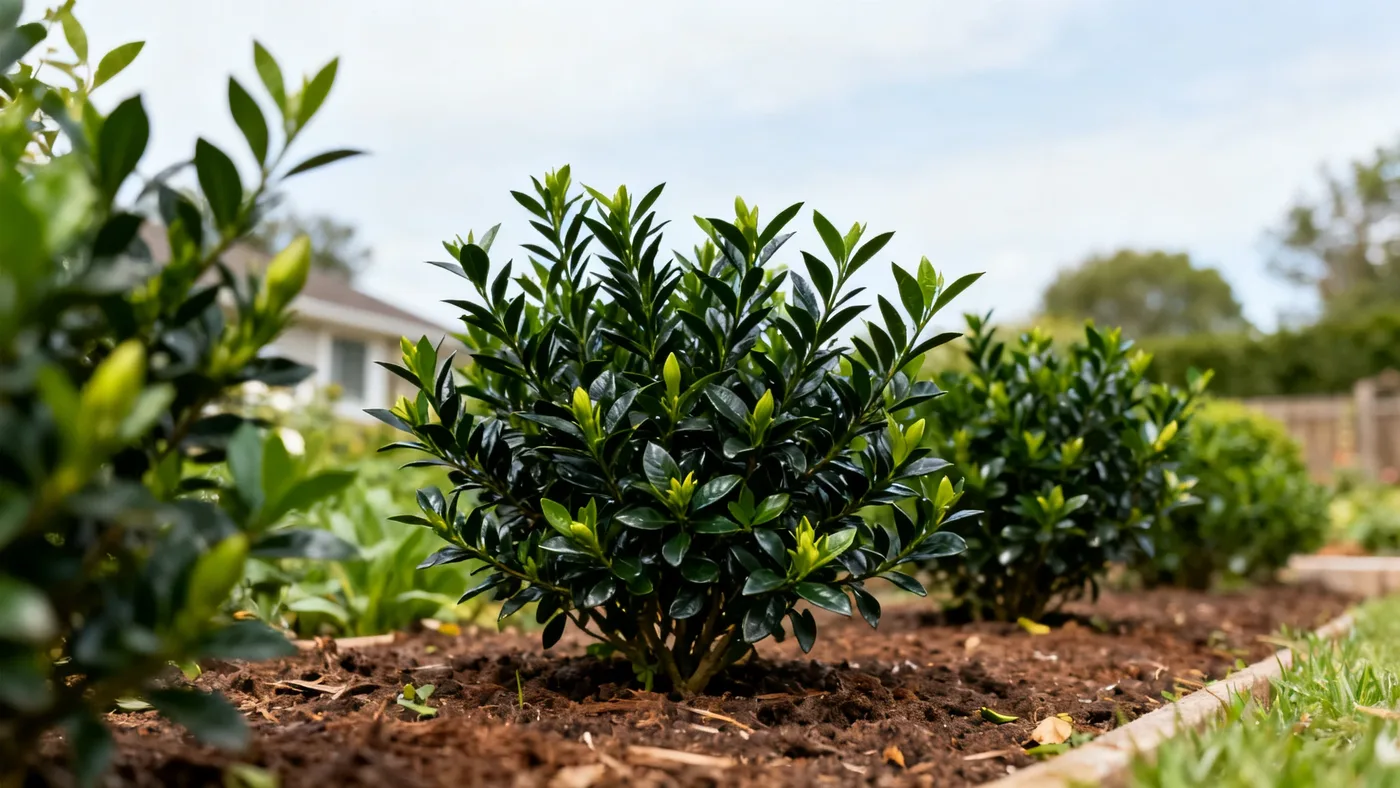
Winter Care for Kleim's Hardy Gardenia in Cold Climates
Kleim's Hardy Gardenia is one of the most cold-tolerant gardenia cultivars available, but winter protection makes the difference between a thriving shrub and one that drops leaves or suffers dieback. If you're growing this prized plant in zones 7 through 9, a few straightforward steps taken in fall will keep it blooming reliably next spring. Even gardeners at the colder edge of its range (zone 6b/7) can succeed with intentional care.
Understanding Your Hardiness Zone and Winter Risk
Kleim's Hardy Gardenia survives reliably in USDA zones 7 through 9. Some nurseries market it for zone 6b in favorable microclimates, but plants at the colder edge of that range need winter protection to prevent dieback. The plant retains its glossy dark-green foliage year-round, which is part of its appeal. However, after a hard winter, you may see leaf yellowing or some leaf drop, particularly on the plant's exposed sides. This is cold stress, not disease, and the plant typically recovers as temperatures rise.
Check your local USDA zone before committing to protection strategy. A zone 7 gardener in a sheltered urban location might skip heavy wrapping, while a zone 6b gardener in an exposed site will want the full range of protections.
Materials and Tools You'll Need
- Wood mulch or shredded bark (2 to 3 cubic feet per mature shrub)
- Landscape fabric or burlap (for wrapping taller plants)
- Bamboo stakes or wooden supports (4 to 6 feet tall, as needed)
- Garden twine or soft plant ties
- Garden hose or drip irrigation system
- Slow-release, acid-forming fertilizer (applied in spring only, not fall)
- Hand pruners for removing dead wood in spring
- Optional: frost cloth or shade cloth for temporary cold snaps
Step-by-Step Winter Preparation Guide
Begin preparing your Kleim's Hardy Gardenia for winter in late summer, months before frost arrives. This timing allows you to prune correctly and help the plant transition gradually into dormancy.
Step 1: Prune Right After Flowering (Late May to June)
This is the most important pruning window. Kleim's Hardy Gardenia sets next year's flower buds on new growth made during the growing season. If you prune in late summer or fall, you remove those flower buds and lose next year's blooms. After your plant finishes flowering in early summer, prune lightly to shape it and remove any crossing or damaged branches. Keep pruning minimal, removing no more than one-third of new growth. The plant reaches a mature height of 2 to 3 feet (occasionally to 4 feet) and spreads 3 to 4 feet, so most gardeners simply remove any branches that exceed these bounds or that rub together.
Step 2: Stop Pruning After July (Critical)
Do not prune your gardenia from late July through winter. New pruning wounds become entry points for cold damage, and any cut growth you remove also removes developing flower buds. Leave the plant alone for the rest of the growing season.
Step 3: Apply a Light Feeding in Spring Only (March to April)
Do not fertilize in fall or winter. Instead, wait until soil temperatures warm in spring (roughly March or April, depending on your zone). Then apply an acid-forming fertilizer formulated for gardenias, azaleas, or camellias. Follow the package label for your plant's size. If leaves show yellowing with green veins (a sign of alkaline soil or iron deficiency), supplement with chelated iron according to label instructions.
Step 4: Reduce Watering as Temperatures Cool (October Onward)
Through summer and early fall, keep soil consistently moist (not waterlogged). As temperatures drop in late September and October, reduce watering frequency. Kleim's Hardy Gardenia does not tolerate standing water, so never let the soil become soggy. However, do water deeply once before the first hard freeze to ensure roots are well-hydrated. A hydrated plant withstands cold stress better than a drought-stressed one.
Step 5: Add Mulch in Early November (Before First Hard Frost)
Mulch is your primary winter protection. Once soil temperatures drop consistently below 50°F (usually early November in zones 7 to 8, late October in zone 6b), apply 2 to 3 inches of wood mulch or shredded bark in a ring around the shrub's base. Keep mulch 3 to 4 inches away from the main stems to avoid rot. Mulch keeps soil temperature stable and prevents the freeze-thaw cycles that damage roots and cause heaving (pushing the plant partially out of the ground).
Step 6: Consider Wrapping or Screening in Zone 6b or After Severe Freezes Forecast (Optional but Effective)
If you live in zone 6b or zone 7 at high elevation, or if a deep freeze (below 0°F) is forecast, additional protection helps. Once mulch is in place, loosely wrap burlap around the shrub, staking it gently to keep it in place without constricting growth. Burlap blocks harsh winter wind and reflects some radiant cold. Do not use plastic sheeting, which traps moisture and can cause more damage than it prevents. Leave the top open to allow air circulation. Remove wrapping in spring as temperatures consistently rise above 40°F (usually late March or early April).
Protection Techniques for Cold Climates
Mulching Best Practices
Mulch is not insulation in the traditional sense. Instead, it maintains consistent soil temperature and prevents repeated freezing and thawing, which is what damages roots most severely. Refresh mulch annually if it has broken down. Wood mulch compacts over time and loses depth, so add fresh material each November to maintain the 2 to 3-inch target.
Container Plants (Extra Protection Needed)
Kleim's Hardy Gardenia performs well in containers with acidic, well-drained potting mix. Roots in containers freeze solid much faster than in-ground roots because soil in pots chills from all sides. If you're growing your gardenia in a pot and live in zone 7 or colder, move the container to a sheltered location (against a south-facing wall, inside an unheated garage, or into a cold frame) before the first hard freeze. At minimum, wrap the pot in burlap or move it to a location that gets morning sun but is shaded from harsh afternoon wind.
Windbreak Sites
Position new plantings in locations sheltered from harsh winter wind. A site on the south or east side of a wall, fence, or evergreen hedge provides substantial protection without full shade. Kleim's Hardy Gardenia prefers full sun to part shade, so balance cold protection with sun exposure.
Watering During Winter Dry Spells
If your area experiences a winter with little snow or rain, water deeply once every 4 to 6 weeks (only when soil is not frozen). This is particularly important in late winter (February and March) when longer days begin to draw moisture from evergreen foliage while the ground remains cold and roots cannot absorb water.
Common Mistakes That Damage Winter Hardiness
Mistake 1: Pruning in Late Summer or Fall
This is the single biggest reason hardy gardenias fail to bloom the following year. Late pruning removes developing flower buds and creates fresh wounds that invite cold damage. Prune only in late spring after flowering finishes.
Mistake 2: Over-Mulching or Mulching Against the Stems
Piling mulch directly against the shrub's stems traps moisture and invites root rot and fungal disease. Mulch should form a ring 3 to 4 inches away from the base of the plant, extending outward to the plant's drip line (roughly 3 to 4 feet for a mature shrub).
Mistake 3: Watering in Freezing Conditions
Do not water if soil is frozen solid. Frozen soil cannot absorb water, and watering in freezing weather creates ice on foliage and around the crown, which can cause branch breakage. Water only when soil is unfrozen and the plant can absorb moisture.
Mistake 4: Using Plastic Sheeting for Winter Wrapping
Plastic traps moisture and creates a greenhouse effect that can damage the plant on warm winter days. Use breathable burlap instead, or skip wrapping altogether if you live in zone 8 or 9.
Mistake 5: Fertilizing in Fall
Fall fertilizing stimulates new soft growth that is vulnerable to frost damage. Fertilize only in spring as the plant resumes active growth.
Monitoring and Spring Cleanup
Winter Inspection
Check your mulched gardenia every 3 to 4 weeks during winter. If mulch has shifted or compacted noticeably, top it up. Look for signs of rodent damage or disease. If you notice yellowing or wilting (not normal for an evergreen but possible if a warm spell is followed by sudden deep cold), do not be alarmed. The plant is likely dormant and will recover once temperatures stabilize and days lengthen.
Spring Removal of Winter Protection
Begin removing winter protection in early spring as soil temperatures consistently warm above 40°F (usually late March in zones 7 to 9, early April in zone 6b). Remove burlap wrapping first, allowing the plant a week or two to acclimate to open air. Then gradually rake back mulch from the base of the shrub over 2 to 3 weeks, pulling it back to just 1 to 2 inches. Do not remove all mulch abruptly, as late frosts can still occur. By late April or early May, you can remove mulch entirely if you wish, or leave a thin layer year-round (many gardeners do).
Spring Pruning and Cleanup
Once new growth appears (usually April or May), inspect the shrub for dead branches. Remove any branches that did not survive winter by pruning them back to live wood. This cleanup is minor compared to the main pruning done after flowering. Do not head back branches aggressively, as you do not want to remove developing flower buds.
Resume Feeding and Watering
Once active growth resumes and soil warms, return to regular watering (moist but not waterlogged). Apply spring fertilizer for gardenias as directed on the label. Your plant should return to normal blooming schedule by late spring (May to June).
Quick Reference: Winter Care Checklist
| Timing | Task | Details |
|---|---|---|
| Late May to June | Prune after flowering | Light pruning only; remove crossing or damaged branches |
| July onward | Stop pruning | No pruning from July through winter to protect flower buds |
| September to October | Reduce watering frequency | Water less often but deeply before first hard freeze |
| Early November | Apply mulch | 2-3 inches around base, 3-4 inches away from stems |
| After mulch applied (zones 6b-7 only) | Wrap with burlap (optional) | Loosely wrap if hard freeze forecast; remove in spring |
| Every 3-4 weeks (winter) | Inspect and refresh mulch | Check for damage; top up if compacted |
| Late winter (Feb-March) | Water if no snow or rain | Deep soak every 4-6 weeks when soil unfrozen |
| Late March to early April | Remove winter protection | Remove burlap; gradually pull back mulch over 2-3 weeks |
| April to May | Clean up dead wood | Prune out branches that did not survive winter |
| Spring (March-April) | Apply fertilizer | Use acid-forming gardenia/azalea formula; follow label |
| Spring onward | Resume regular watering | Keep soil consistently moist through growing season |
Winter care for Kleim's Hardy Gardenia is straightforward when you follow this seasonal rhythm. The key is planning ahead, pruning at the right time, and protecting the plant with mulch before the deepest cold arrives. Your reward is a shrub that blooms reliably each year with fragrant white flowers and glossy foliage. For complete guidance on caring for your gardenia year-round, see our full care guide.