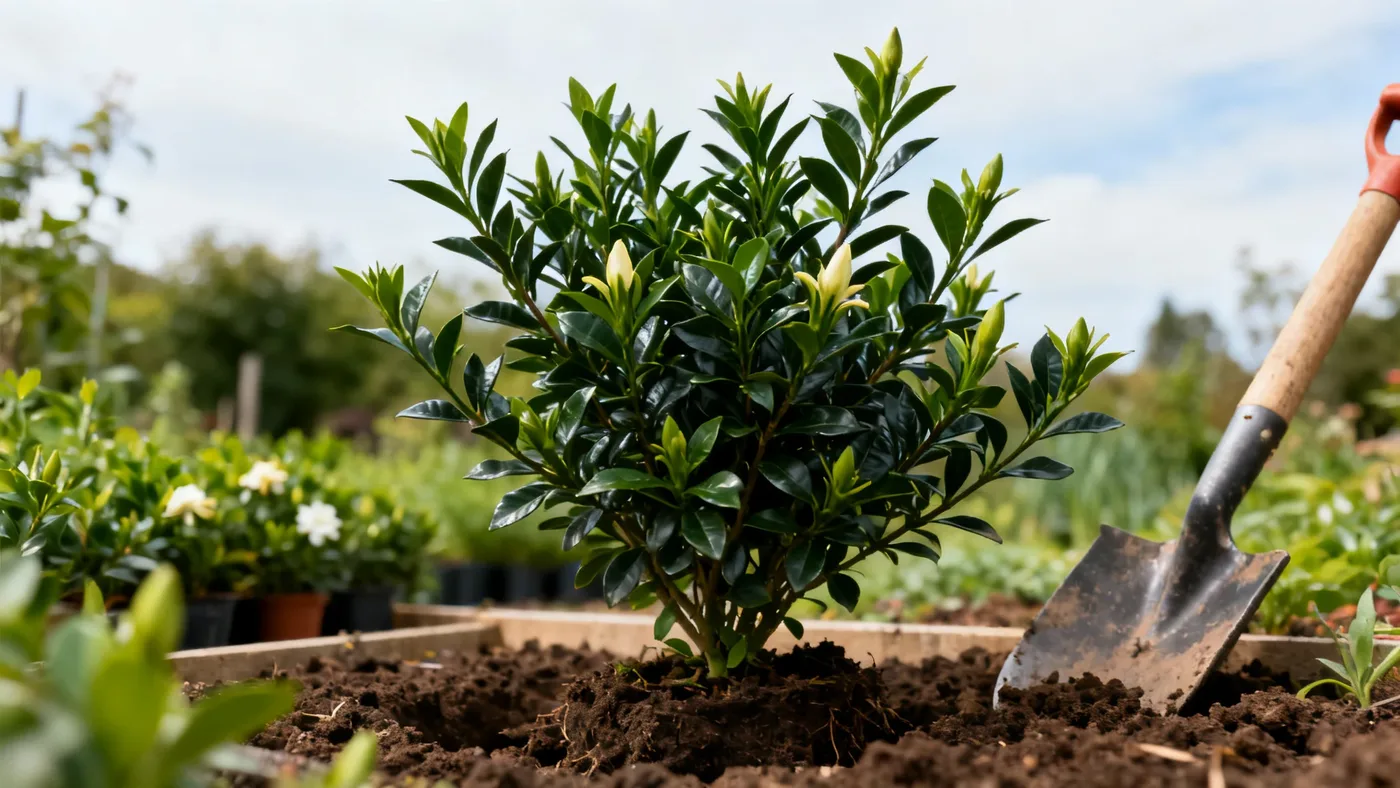
How to Plant Kleim's Hardy Gardenia for Best Results
Kleim's Hardy Gardenia is one of the more cold-tolerant gardenia cultivars on the market, reliably hardy in USDA zones 7 through 9. If you're looking to add fragrant white blooms and glossy evergreen foliage to your landscape, successful planting starts with choosing the right location and preparing your soil before the plant goes in the ground. This guide walks you through the entire planting process, from site selection to the first season of care.
What You'll Need
Before you plant, gather these materials and tools:
- A young Kleim's Hardy Gardenia plant from a nursery (typically sold in quart, #1, or #3 containers)
- Acidic, well-drained soil with high organic matter content
- Soil pH test kit or meter (target pH 5.0 to 6.5)
- Peat moss, aged bark, or compost to amend soil
- Chelated iron supplement (optional, for alkaline soil regions)
- Mulch, such as pine bark or aged hardwood (2 to 3 inches)
- Spade or shovel
- Garden gloves and watering can
- Measuring tape for spacing multiple plants
Choosing Your Planting Site
Location is everything with Kleim's Hardy Gardenia. The plant performs best in full sun to part shade, meaning at least 4 to 6 hours of direct sunlight daily. In hot southern climates, afternoon shade actually improves both flower quality and foliage appearance, so consider planting where the plant receives morning sun and afternoon protection from the hottest rays.
Drainage is critical. Kleim's Hardy Gardenia does not tolerate standing water or soggy soil. Choose a spot that is naturally well-drained or where you can improve drainage with amended soil. Avoid planting at the base of a slope where runoff collects, or in low-lying areas that stay wet after rain.
If you're in zone 7 or at the colder edge of the plant's range, site your gardenia where it has some winter wind protection. A location on the east or south side of a building, fence, or evergreen screen will help reduce cold-stress damage during hard freezes.
Testing and Preparing Your Soil
Kleim's Hardy Gardenia is an acid-loving plant. It prefers soil with a pH between 5.0 and 6.5. Before you dig, use a soil test kit to check your soil pH. You can pick up an inexpensive test kit at any garden center, or send a sample to your local extension service for professional analysis.
If your soil is acidic (pH below 7.0), you're in good shape. If it's neutral or alkaline (pH 7.0 or higher), the gardenia's foliage will likely develop chlorosis, a yellowing of the leaves with green veins. This happens because the plant cannot absorb iron properly in alkaline soil.
To amend acidic-loving plants in less-than-ideal soil, work peat moss, aged bark, or sulfur into the top 12 inches of soil. A 2:1 ratio of existing soil to amendment (by volume) will help. Mix thoroughly and test again if you're working with very alkaline soil.
The ideal planting bed is rich in organic matter. Loamy, well-draining soil with plenty of compost or aged organic material will support strong root development and consistent moisture availability, which the plant needs during its first year.
Step-by-Step Planting Instructions
Step 1: Dig the Planting Hole
Dig a hole slightly wider and at the same depth as your nursery pot. A rule of thumb is to make the hole 1.5 times the width of the root ball. This gives roots room to spread outward without being forced to circle. If you're amending the soil, the hole should be deep enough that the top of the root ball sits level with the ground surface; planting too deep is one of the most common mistakes.
Step 2: Loosen the Root Ball
Gently remove the gardenia from its pot and examine the roots. If the roots are tightly wound around the ball, lightly score the outside of the root ball with your fingers or a small knife in 3 to 4 places. This encourages new roots to grow into the surrounding soil. Do not aggressively tear apart the root ball, as this can damage delicate roots.
Step 3: Position the Plant
Set the plant in the hole so the top of the root ball is level with the soil surface. Backfill halfway with native soil (amended if needed), then water to settle the soil and eliminate air pockets. Finish backfilling, water again thoroughly, and check that the plant sits upright.
Step 4: Mulch Around the Plant
Apply 2 to 3 inches of mulch (pine bark or aged hardwood) around the base of the plant, keeping the mulch a few inches away from the stem to prevent rot. Mulch helps retain soil moisture, moderates soil temperature, and improves the soil as it breaks down.
Step 5: Water Deeply and Monitor
Water immediately after planting with 1 to 2 gallons of water, depending on your soil type. The goal is to moisten the root ball and surrounding soil without creating puddles or compacting the soil. Continue to water consistently during the first growing season, aiming for moist but not waterlogged soil.
Spacing for Landscapes and Hedges
If you're planting multiple Kleim's Hardy Gardenia shrubs, spacing matters. For a massed planting or low hedge, space plants 2 to 3 feet apart center-to-center. The mature width of the plant is 3 to 4 feet, so this spacing allows the plants to fill in without crowding. Plants may eventually touch, creating a unified screen or border, but they will not be competing for water and nutrients.
For a single specimen plant, place it where it has room to develop its natural mounding, spreading form without being sheared or pruned into an unnatural shape.
When to Plant
Spring or early fall are the ideal planting windows. Planting in spring (after the last frost in your zone) or in early fall (6 to 8 weeks before the first frost) gives the plant time to establish roots before temperature extremes arrive. Avoid planting in mid to late summer, when heat stress and the plant's need for frequent watering create stress during the critical establishment period.
Container-grown Kleim's Hardy Gardenia can technically be planted any time the soil is workable, but spring and fall will give you the best results.
Common Planting Mistakes to Avoid
Planting too deep is the number one mistake. The top of the root ball should sit level with the soil surface, not buried. Buried plants are prone to root rot and may struggle to establish.
Poor drainage in the planting location will lead to root rot, especially over winter. If your soil stays soggy after rain, either amend it with organic matter and sand to improve drainage, or choose a different site.
Overwatering in the first weeks after planting can be just as harmful as under-watering. Water deeply when you plant, then water when the top inch or two of soil feels dry to the touch. In cooler seasons, the plant needs less frequent watering.
Planting in full shade will reduce flowering. While the plant tolerates part shade, it blooms best with at least 4 to 6 hours of direct sun daily.
Neglecting soil pH in alkaline regions will result in chlorotic foliage that never fully recovers. If you're in an area with naturally alkaline soil, either amend the soil before planting or plan to supplement with chelated iron in the growing season.
What to Expect in the First Year
A nursery-grown Kleim's Hardy Gardenia often blooms the first year after planting, especially if you plant in spring. The glossy, dark green foliage will be visible year-round, since this is an evergreen shrub. In its first season, focus on keeping the soil consistently moist and monitoring for pests such as aphids, whiteflies, or scale insects, which occasionally affect gardenias.
The plant's growth rate is moderate, adding roughly 6 to 12 inches of new growth per year. It will reach its mature height of 2 to 3 feet (occasionally to 4 feet in ideal conditions) and width of 3 to 4 feet in about 3 to 5 years. Do not expect full size the first year.
If you experience bud drop in spring (buds forming but falling before they open), this is usually a sign of temperature swings, drought stress, or overwatering. Adjust your watering and site the plant where it has some shelter from temperature extremes.
After Planting: Ongoing Care
Once established, water during dry spells to keep the soil consistently moist. Kleim's Hardy Gardenia does not tolerate prolonged drought, so regular watering during the growing season is important. Feed in spring with an acid-forming fertilizer formulated for azaleas, camellias, and gardenias.
Prune lightly right after the plant finishes flowering in late spring or early summer. Next year's flower buds set on the following season's growth, so avoid pruning in late summer or fall, or you will remove next year's blooms.
For a deeper dive into care after planting, see our Kleim's Hardy Gardenia care guide, which covers watering schedules, fertilizing, pruning, and managing common problems.
Quick Reference: Planting Checklist
| Task | Details |
|---|---|
| Site Selection | Full sun to part shade; 4-6 hours direct sun minimum; well-drained location |
| Soil pH | Test before planting; target 5.0-6.5 (acidic) |
| Soil Amendment | Mix peat moss, bark, or compost into top 12 inches if soil is not naturally rich in organic matter |
| Hole Size | 1.5 times the width of the root ball; same depth |
| Planting Depth | Top of root ball level with soil surface |
| Spacing | 2-3 feet apart for hedges or mass plantings |
| Mulch | 2-3 inches; keep a few inches clear of stem |
| Initial Watering | Water deeply immediately after planting and monitor soil moisture for the first season |
| Planting Season | Spring after last frost or early fall (6-8 weeks before first frost) |
| Hardiness Zone | USDA zones 7-9; zone 7 benefits from winter wind protection |