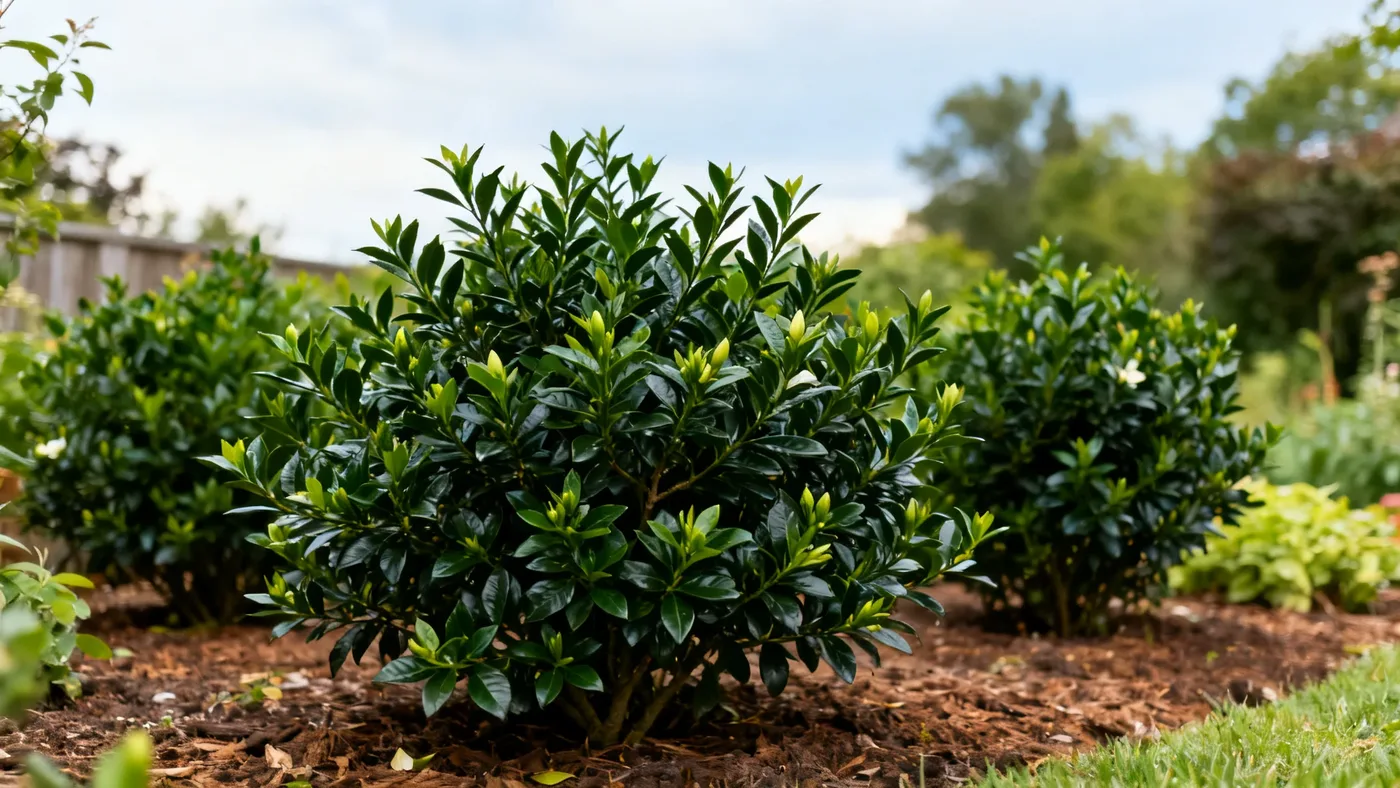
Soil, Drainage and pH for Kleim's Hardy Gardenia
The right soil is the foundation of a thriving Kleim's Hardy Gardenia. This cultivar is finicky about its growing medium in a way that matters: feed it what it needs, and you'll have glossy foliage and fragrant blooms. Get the soil wrong, and the plant will signal its distress with yellowed leaves and sparse flowers. The good news is that Kleim's hardy gardenia soil requirements are straightforward once you understand them.
Why Soil Matters for Kleim's Hardy Gardenia
Kleim's Hardy Gardenia is an evergreen shrub that reaches 2 to 3 feet tall and 3 to 4 feet wide at maturity. Its root system is relatively shallow and sensitive to two problems: waterlogging and alkalinity. Neither is forgiving. Standing water rots roots in days. Alkaline soil locks up nutrients, leaving the plant unable to absorb iron even when it's present in the ground. Both conditions show up visually within weeks.
The plant thrives in the acidic soils of its preferred zones (7–9), where clay and sand naturally lean sour. If your soil is neutral or sweet, you'll need to amend it. Container growing sidesteps this issue entirely, which is why Kleim's Hardy Gardenia performs well in pots with the right potting mix.
Understanding Kleim's Hardy Gardenia Soil pH and Structure
Kleim's Hardy Gardenia needs acidic soil, ideally in the range of 5.0 to 6.5 pH. This acidity is not a preference; it's a requirement for nutrient availability. The lower end (5.0–5.5) is optimal, especially if your tap water or climate tends toward neutral.
Chlorotic foliage, meaning yellowed leaves with visible green veins, is the first sign of trouble. This happens when the soil is too alkaline, preventing the plant from absorbing iron. Alkaline soil also binds up magnesium and manganese, compounding the problem. Once chlorosis appears, correcting it takes weeks, even with iron supplements.
Beyond pH, the best soil for gardenias has three structural qualities:
- Well-drained, so water moves through it quickly and doesn't pool around roots
- Humus-rich, meaning high in organic matter like compost, peat moss, or aged bark
- Loose and friable, so roots can penetrate easily and access nutrients
This combination mimics the loose, acidic forest floor where the parent Gardenia jasminoides grows wild. Kleim's Hardy Gardenia needs consistent moisture, but not soggy soil. Think of it this way: the soil should feel like a well-wrung sponge after watering, not like a soaked one.
Testing Your Soil
Before you amend, test. You can spend money guessing or $10 getting an answer.
Contact your local extension service and request a soil test. They'll measure pH, nutrient levels (nitrogen, phosphorus, potassium), and organic matter content. The report will include amendment recommendations tailored to your region. In most states, the test costs $10–20 and takes 5–10 working days.
If you prefer a faster read, home pH kits are available at garden centers for $5–15. They're less precise than lab tests but give you a ballpark. Anything above 6.8 is too alkaline for Kleim's Hardy Gardenia without amendment.
Don't skip this step. Amending soil before planting is far cheaper than trying to fix a struggling plant later.
Amending Soil for Kleim's Hardy Gardenia
If your test shows pH above 6.5, or if you have dense clay, you'll need to amend. Here's how.
Materials you'll need:
- Acidic soil amendments (choose one or combine):
- Peat moss (highly acidic, pH 3.5–4.5)
- Sulfur (lowers pH slowly; follow package rates)
- Aged pine bark or bark dust
- Compost made from hardwood leaves or coffee grounds
- Well-aged compost or aged bark mulch (adds organic matter)
- Soil pH test kit or lab test results
- Shovel and garden spade
- Wheelbarrow
- Tape measure
Amendment steps:
- Determine your planting area. For a single plant, plan a hole at least 18 inches wide and 12 inches deep. For a massed planting with multiple plants spaced 2–3 feet apart, work the entire bed.
- Loosen existing soil with a spade. Break up any compacted clay or dense subsoil. Go 12 to 15 inches deep.
- Add peat moss or bark amendment to the loosened soil. Use a ratio of 1 part amendment to 2 parts native soil. If your soil tested very alkaline (pH 7.5 or higher), go 1 part amendment to 1.5 parts soil.
- If your test revealed a pH problem, add sulfur according to the lab report or package directions. Sulfur is slow acting, so work it in gently at the rate recommended for your soil type and target pH. Never exceed the rate on the package; too much sulfur can harm the plant.
- Mix thoroughly with a spade until the amendments are evenly distributed. Aim for a dark, crumbly texture.
- Water the amended area and let it settle for 3–5 days before planting. This allows sulfur to begin lowering pH.
- Re-test the pH 2 weeks before planting if you added sulfur. Sulfur takes time to work. If pH is still above 6.5, you may need a second application, or consider container planting as a simpler alternative.
Planting Kleim's Hardy Gardenia in Amended Soil
Once your soil is ready, planting is straightforward. Nursery-grown Kleim's Hardy Gardenias typically come in 1-gallon, #1 (approximately 1–2 gallons), or #3 containers.
- Choose a location with full sun to part shade. In hot southern climates (zone 8–9), afternoon shade helps protect flower and foliage quality.
- Dig a hole as wide as the container and slightly shallower than its depth. The top of the root ball should sit level with the ground, never buried deeper.
- Gently remove the plant from its container and loosen the root ball with your fingers. If roots are tightly wound, make three or four vertical scores on the outside of the root ball with a knife to encourage outward growth.
- Set the plant in the hole and backfill with your amended soil. Press gently to eliminate air pockets, but don't compact hard. The soil should feel firm but not dense.
- Water deeply to settle the soil. The first watering should reach the bottom of the planting hole.
- Apply 2–3 inches of aged pine bark or compost as mulch around the base, keeping it 2 inches away from the stem. Mulch conserves moisture, cools roots, and gradually adds organic matter as it breaks down.
- For a massed planting or low hedge, space plants 2–3 feet apart, depending on your desired density. Closer spacing fills faster but requires more plants and more vigilance with water.
The plant will often bloom the first year after planting from nursery stock, especially if planted in spring or early fall. This is normal and indicates the plant is established.
Growing Kleim's Hardy Gardenia in Containers
Container growing eliminates soil pH guesswork entirely. Kleim's Hardy Gardenia performs well in pots with acidic, well-drained potting mix.
Use a potting mix formulated for acid-loving plants, such as those labeled for azaleas, camellias, or gardenias. These mixes are peat or coconut-husk based with added perlite for drainage. They're typically pH 5.0–6.0 right out of the bag.
Choose a container at least 2 inches larger in diameter than the nursery pot. Use a pot with drainage holes. Dark-colored pots absorb heat, which is fine in cooler zones but can stress the plant in zone 8–9 heat. Terracotta or light-colored ceramic is ideal.
Fill the container halfway with potting mix, set the plant in place at the same depth it was in its nursery pot, and fill around it with mix. Water until water drains from the bottom. In zones 7 and 8, move containers to a sheltered location or into a garage during hard winters, as the potting mix will freeze more readily than in-ground soil.
Fertilizing and Ongoing Maintenance
Feed Kleim's Hardy Gardenia in spring with an acid-forming fertilizer formulated for azaleas, camellias, or gardenias. These fertilizers are slightly acidic and contain micronutrients tuned to what the plant needs.
If leaves yellow with green veins after you've planted, and your soil test showed adequate iron, the issue is likely soil alkalinity. Supplement with chelated iron applied according to the product label. Chelated iron bypasses the pH barrier and makes iron available to the plant within days to weeks.
Mulch every spring with aged compost or bark. This gradually increases organic matter, improves drainage, and keeps roots cool. Maintain mulch at 2–3 inches without piling it against the stem.
Common Mistakes and How to Avoid Them
Planting in heavy clay without amending is the most common misstep. The plant drowns slowly as water pools around the roots. Amending takes a weekend; replacing a dead plant takes heartbreak and money.
Overwatering in hopes of keeping the plant happy backfires. Kleim's Hardy Gardenia needs consistent moisture, not constant wetness. Water when the top inch of soil feels dry. In regions with regular rainfall, even established plants may need supplemental watering only during drought spells lasting more than two weeks.
Planting in alkaline soil and waiting for the plant to adapt is futile. The plant won't adapt. Either amend the soil before planting or grow in containers.
Ignoring the first signs of chlorosis wastes time. If leaves yellow early in the season, test your soil pH immediately. Correcting it then prevents the plant from struggling all summer.
Quick Reference: Soil and Drainage Checklist
| Task | Timing | Target |
|---|---|---|
| Soil test (pH and nutrients) | Before planting | pH 5.0–6.5; organic matter >5% |
| Amend with peat moss or bark | Before planting | 1 part amendment to 2 parts native soil |
| Add sulfur (if pH >6.5) | Before planting | Per lab report; retest in 2 weeks |
| Loosen planting hole | Planting day | 18 in. wide, 12 in. deep; level top of root ball |
| Apply mulch | Planting day and annually | 2–3 in. depth; 2 in. away from stem |
| Water after planting | Immediately | Until water drains from bottom of hole |
| Ongoing watering | Growing season | When top inch of soil is dry; avoid standing water |
| Spring fertilizer (acid-forming) | Early spring | Azalea/camellia/gardenia formulation |
| Chelated iron (if chlorotic) | As needed | Per product label; repeat if needed after 4 weeks |
| Container potting mix | Container planting | Acidic, well-drained; pH 5.0–6.0 |
Soil sets the stage for everything else. Take the time to get it right before you plant, and Kleim's Hardy Gardenia will reward you with years of healthy growth. For more on the full picture of plant care, see the complete care guide. When you're ready to plant, step-by-step instructions are available in the planting guide.