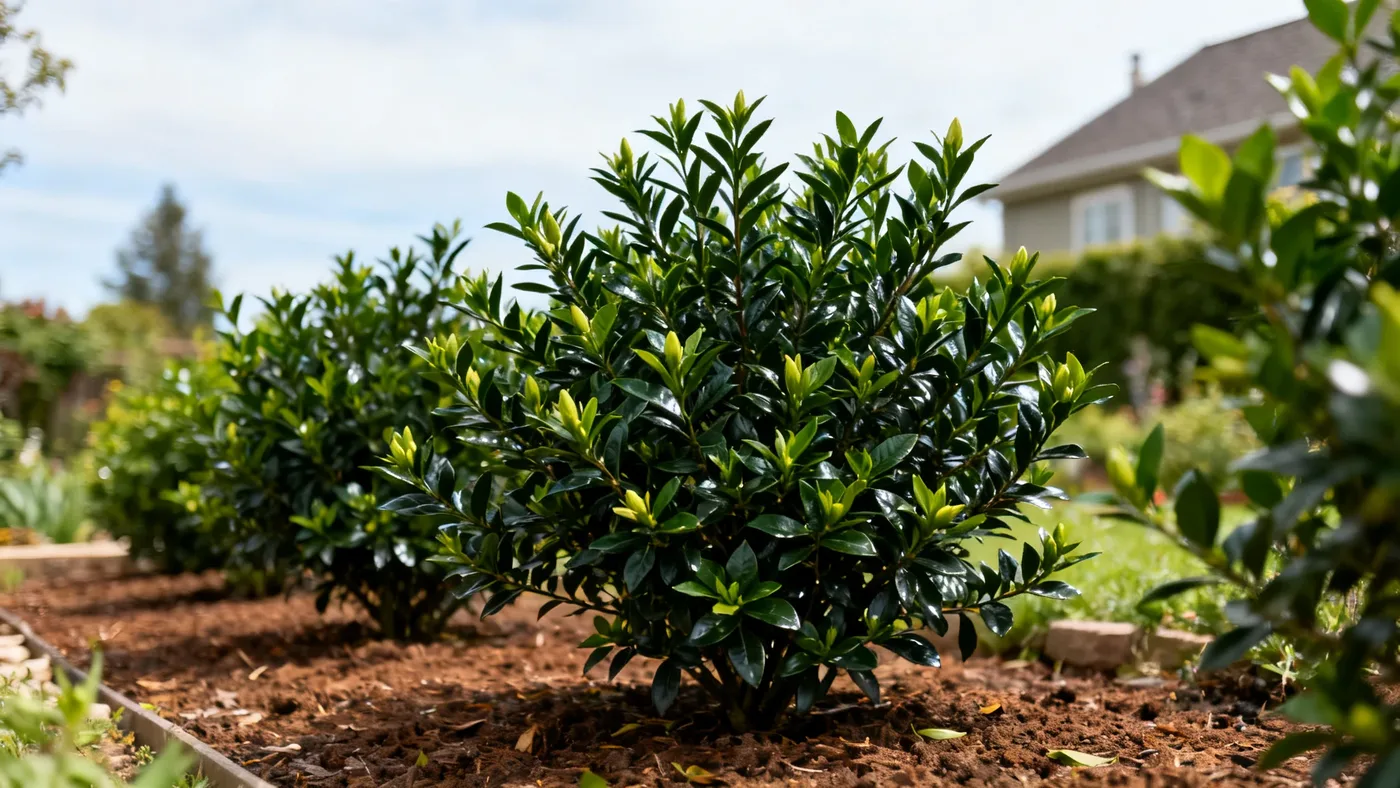
Kleim's Hardy Gardenia Pests, Diseases and Common Problems
Kleim's Hardy Gardenia is one of the most reliable cold-hardy gardenia cultivars for zones 7 through 9, but like any shrub, it faces challenges from pests, diseases, and environmental stress. The good news: most problems are preventable, and many respond well to simple organic interventions. This guide covers the pests and diseases you're most likely to see, what they look like, and how to stop them before they damage your blooms or foliage.
1. Scale Insects
Scale insects are among the most common pests on Kleim's Hardy Gardenia. These tiny, hard-shelled bugs attach themselves to stems and leaves, pierce the plant tissue, and feed on sap. They're easy to miss at first because they resemble small bumps or crusts on the leaf undersides and stems. Look closely and you'll see brown, tan, or white armored insects clinging to the plant. A light infestation may not cause obvious damage, but heavy populations weaken the shrub, cause yellowing leaves, and trigger the secondary problem of sooty mold.
Scale insects reproduce year-round in mild climates, which means they compound over time if left unchecked. You'll spot the damage before you spot all the insects: leaves thin out, branches lose vigor, and the plant stops blooming. The key to control is early detection during your regular watering and pruning routine.
Practical takeaway: Inspect the undersides of leaves and branch crotches monthly. For light infestations, spray with horticultural oil or neem oil in early spring when temperatures are below 85 degrees Fahrenheit. For heavy infestations, repeat applications every 7 to 10 days for three applications. Prune out the most heavily infested stems and dispose of them in the trash, not compost.
2. Aphids, Mealybugs, and Whiteflies
These soft-bodied insects often travel together and cause similar damage to Kleim's Hardy Gardenia. Aphids cluster on new growth and under leaves, feeding on sap and curling the foliage. Mealybugs appear as cottony white masses in leaf axils and on stems. Whiteflies are tiny, pale insects that fly up when you brush the plant and congregate on leaf undersides. All three excrete honeydew, a sticky substance that coats the leaves and attracts sooty mold fungus.
These pests thrive in warm weather and dry conditions. If your Kleim's Hardy Gardenia isn't receiving consistent moisture (ideally medium, consistent water without standing water), it becomes stressed and more susceptible to infestation. Stressed plants also recover more slowly from pest damage, so proper watering is your first line of defense.
Practical takeaway: Spray affected plants with a strong stream of water to dislodge the insects. For persistent infestations, apply insecticidal soap or neem oil every 7 days until the population drops. Prune off the most infested shoot tips. Maintain consistent soil moisture to reduce plant stress, but do not create standing water around the root zone.
3. Spider Mites
Spider mites are nearly invisible to the naked eye, but their damage is unmistakable: fine webbing on leaf undersides and a speckled, bronzed appearance to the foliage. These arachnids are not true insects; they're mites that pierce cells and drain the contents, causing yellowing and premature leaf drop. Spider mites prefer hot, dry conditions and are rarely a problem in regions with regular rainfall or consistent irrigation.
If your Kleim's Hardy Gardenia is struggling with spider mites, check your watering habit first. The plant requires consistent moisture and does not tolerate prolonged drought. In hot spells, a morning soak may not be enough; you may need to water every other day or apply mulch to conserve soil moisture. Improving humidity around the plant (grouping it with other shrubs, adding compost to retain moisture) also discourages mites.
Practical takeaway: Spray the undersides of leaves with water to dislodge mites and rinse away webbing. For heavy infestations, apply sulfur dust or neem oil every 5 to 7 days. Do not spray when temperatures exceed 85 degrees Fahrenheit, as the oil can damage foliage. Ensure the soil remains moist (not soggy) and mulch around the base to maintain consistent root-zone moisture.
4. Sooty Mold
Sooty mold is a fungal disease that doesn't directly infect the plant but colonizes the honeydew left behind by aphids, scale insects, and mealybugs. The result is a black or dark gray powdery coating on leaves and stems that looks unsightly and reduces photosynthesis. Sooty mold is a symptom of an insect problem, not a primary disease, so treating the insects is your primary control.
On a lightly infested plant, you can wipe the affected leaves with a soft cloth and mild soapy water to remove the mold. The mold will return if the insects remain, so don't waste time on cosmetic cleanup until you've addressed the underlying pest population. Once the insects are under control, the sooty mold typically washes away in the next rain or two.
Practical takeaway: Identify and treat the insects causing the honeydew (usually scale, aphids, or mealybugs). Once the insect population drops, monitor for new mold growth. If the plant is heavily soiled, prune out the most affected branches to speed recovery. Wipe leaves with a damp cloth if desired, but focus your effort on insect control first.
5. Root Rot
Root rot is the most common fatal problem on Kleim's Hardy Gardenia and is almost always caused by overwatering or poorly drained soil. The plant prefers well-drained, humus-rich soil with a pH of roughly 5.0 to 6.5 (acidic). If water sits in the root zone, the roots suffocate and fungal pathogens invade, causing the roots to decay. Symptoms include wilting despite moist soil, yellowing leaves, and a mushy smell from the soil or stem base.
Prevention is far easier than cure. Before planting, amend heavy clay soils with compost and perlite to improve drainage. Water the plant when the top 1 inch of soil is dry to the touch, not on a fixed schedule. Container-grown Kleim's Hardy Gardenias are especially prone to root rot if the pot lacks drainage holes or is overpotted. Use a well-draining acidic potting mix labeled for azaleas or camellias, not garden soil.
Practical takeaway: Check soil drainage before planting. If the plant shows signs of root rot, stop watering immediately and allow the soil to dry somewhat. Repot container plants into fresh, well-draining mix or improve the planting site with compost and sand. If the entire root system is mushy and black, the plant is likely lost; salvage semi-hardwood cuttings from the healthiest stems if possible. For future plantings, never plant in standing water, and consider raised beds or mounded soil in areas with high water tables.
6. Leaf Spot Fungi
Leaf spot diseases show up as brown or black spots with or without yellow halos on the foliage. These fungal diseases are most common in humid conditions, especially if water splashes onto the leaves during watering or if the plant is crowded and lacks air circulation. The spots may enlarge and cause the leaf to drop, weakening the plant's ability to photosynthesize. Light leaf spot is usually cosmetic, but heavy defoliation stresses the shrub.
Prevention centers on moisture management and air flow. Water at the base of the plant, not from above, to keep water off the foliage. Space Kleim's Hardy Gardenia at least 2 to 3 feet apart if planting a hedge, and prune lightly after flowering to open up the canopy. In areas with high humidity or frequent rain, space plants farther apart to encourage drying between showers.
Practical takeaway: Water only at the soil line. Prune out branches with heavy spotting. Improve air circulation by thinning the plant. If leaf spot persists, apply a copper fungicide or sulfur spray in spring and early summer, following label directions. These work best as preventives, applied before the disease appears, not after symptoms are obvious.
7. Bud Drop
One of the most frustrating problems: your Kleim's Hardy Gardenia sets flower buds, then drops them before they open, leaving you with no blooms. Bud drop is almost always caused by environmental stress, not disease. Temperature swings, drought stress, or overwatering are the usual culprits. If the plant experiences a cold snap while in bud, or if the soil dries out severely during the pre-bloom period, buds abort. Overwatering and poor drainage also trigger bud drop by stressing the roots.
The late spring to early summer bloom period (roughly May through June on most zones 7-9 gardens) is when buds are most vulnerable. If your area experiences late frost or erratic watering in spring, bud drop is more likely. The plant itself is healthy; it's simply dropping buds as a survival mechanism under stress. Next year's buds will develop on this season's growth, so the problem often resolves if conditions improve.
Practical takeaway: Maintain consistent soil moisture from late spring through early summer. Water deeply when the top 1 inch of soil is dry, but do not water daily or create standing water. If frost threatens, cover the plant with a blanket on the coldest night. Avoid applying high-nitrogen fertilizer in spring, which can trigger excessive soft growth that's prone to frost damage. If bud drop is severe, prune lightly right after flowering to shape the plant, and next year monitor watering more closely during the bloom period.
8. Chlorosis (Yellow Leaves with Green Veins)
Chlorosis is the yellowing of leaf tissue while the veins remain green. On Kleim's Hardy Gardenia, it signals iron deficiency, usually caused by alkaline soil. The plant prefers acidic soil with a pH of 5.0 to 6.5. In neutral or alkaline soil, iron is locked up and unavailable to the plant, even if iron is present in the soil. The plant can't absorb it, so new leaves emerge pale yellow with dark green veins.
The solution depends on your soil pH. If you don't know your pH, test your soil through your local extension service. If the soil is alkaline, you have two options: lower the pH by adding sulfur or acidifying amendments (a slow process), or treat the symptom by applying chelated iron to the foliage or soil, which makes iron immediately available to the plant. Chelated iron is not a permanent fix, but it will green up the plant while you work on soil improvement.
Practical takeaway: Test your soil pH. If it's above 6.5, apply chelated iron according to label directions every 4 to 6 weeks during the growing season. Plan a long-term pH reduction by incorporating sulfur or peat moss around the plant. Consider growing Kleim's Hardy Gardenia in containers with acidic, ericaceous potting mix (formulated for azaleas) if your native soil is stubbornly alkaline. Feed in spring with an acid-forming fertilizer labeled for azaleas or gardenias.
9. Winter Dieback
Kleim's Hardy Gardenia is hardy to zone 7, but it's at the cold edge of its range. In a hard winter (especially if temperatures drop below 5 to 10 degrees Fahrenheit), the plant may lose some branches or show cold-stress yellowing and leaf drop. The foliage is evergreen and normally stays dark green year-round, so winter color loss signals temperature damage. The plant usually recovers in spring if the dieback is partial.
Cold dieback is not a disease; it's a hardiness issue. If your garden is in zone 7, especially the colder parts of the zone, consider planting Kleim's Hardy Gardenia in a sheltered location (south-facing, protected from north winds) and mulching around the base in fall. Container plants are more vulnerable to severe cold and should be moved to a sheltered spot (garage, shed, or against the south side of a house) in winter if you live in zone 7. In zones 8 and 9, winter dieback is rare and usually only occurs in an unusually severe winter.
Practical takeaway: Plant in a sheltered location and apply 2 to 3 inches of mulch around the base in late fall to insulate the root zone. In zone 7, avoid planting on the north side of a building or in a wind-exposed location. Prune out any winter-damaged branches in spring once new growth begins. If dieback is extensive, the plant may need two years to recover fully, so patience is required.
Quick Reference: Pests, Diseases, and Common Problems
| Problem | Symptoms | Best Prevention | First Treatment |
|---|---|---|---|
| Scale insects | Brown, tan, or white armored bumps on stems and leaf undersides; yellowing leaves | Monthly inspection; maintain plant vigor | Prune infested stems; spray with horticultural oil |
| Aphids, mealybugs, whiteflies | Cottony masses, clusters on new growth, sticky honeydew on leaves | Consistent soil moisture; good air circulation | Spray with strong water stream; apply insecticidal soap |
| Spider mites | Fine webbing on leaf undersides, speckled bronzed foliage, premature leaf drop | Consistent moisture; good humidity; avoid hot, dry stress | Spray undersides with water; apply sulfur or neem oil |
| Sooty mold | Black or dark gray powdery coating on leaves (symptom of insect infestation) | Control aphids, scale, and mealybugs (source of honeydew) | Wipe leaves with damp cloth; treat underlying insect pest |
| Root rot | Wilting despite moist soil, yellowing leaves, mushy stem or root smell | Well-drained soil; water only when top 1 inch is dry | Stop overwatering; repot into fresh mix or amend soil with compost and perlite |
| Leaf spot fungi | Brown or black spots with yellow halos on foliage; leaf drop | Water at soil level only; space 2 to 3 ft apart for air flow | Prune out affected stems; apply copper or sulfur fungicide |
| Bud drop | Buds form but fall off before blooming | Consistent moisture May through June; avoid temperature swings | Check soil moisture; cover during late frost; reduce high-nitrogen fertilizer |
| Chlorosis (yellow leaves, green veins) | New leaves pale yellow with dark green veins | Test soil pH; maintain 5.0 to 6.5 pH; use acidifying fertilizer | Apply chelated iron; lower soil pH with sulfur or peat moss |
| Winter dieback | Branch loss or yellowing foliage in severe cold; evergreen foliage dulls | Plant in sheltered location (zones 7); mulch in fall; move containers indoors | Prune out dead wood in spring; allow two years for full recovery if dieback is heavy |
For more on keeping your Kleim's Hardy Gardenia healthy year-round, see our complete care guide on sun, soil, water, and bloom.