Is Kleim's Hardy Gardenia Deer and Rabbit Resistant?
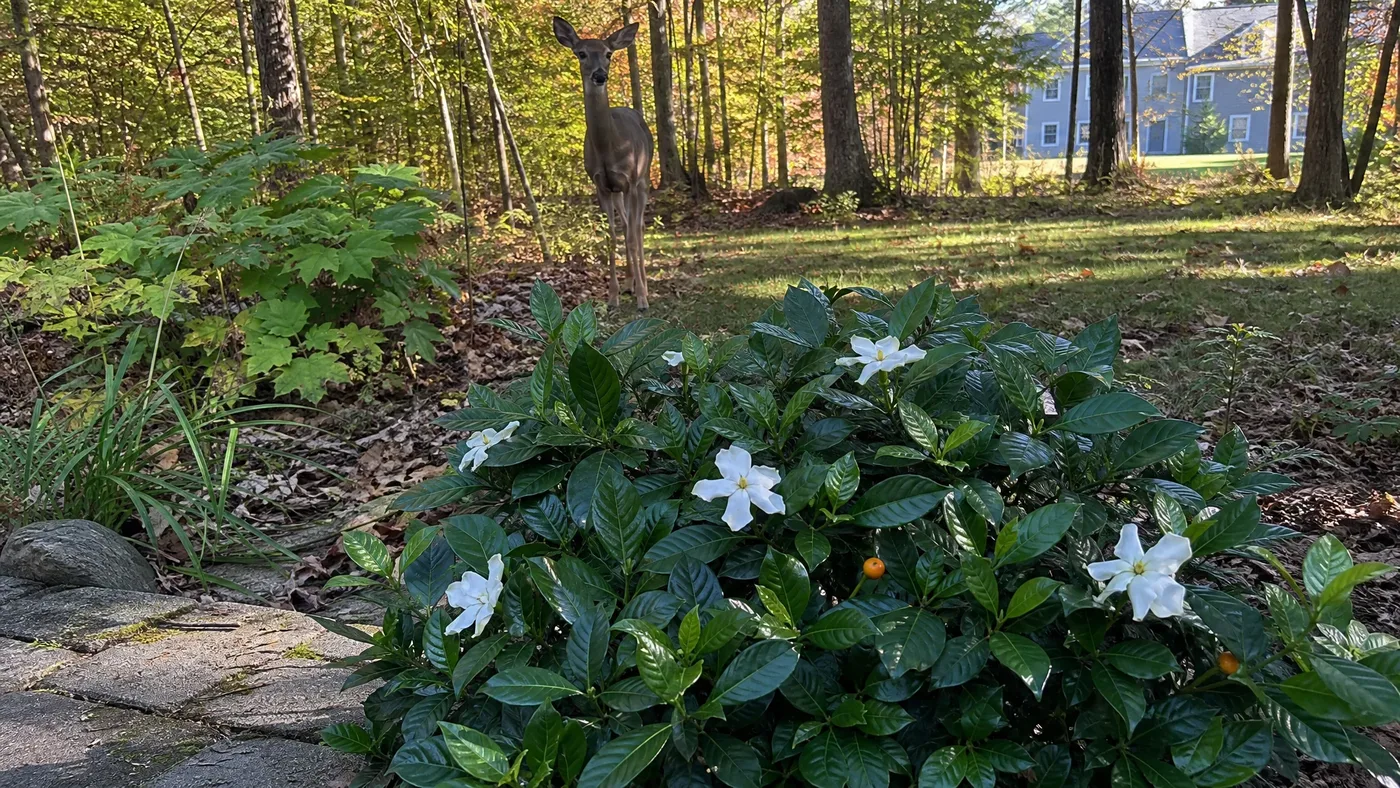
A gardener walks out one October morning to a gardenia that was full and glossy in August. The twigs are stripped, the tips are ragged, and the plant tag, still pushed into the mulch, says "deer resistant." The tag was not exactly wrong. It described a tendency, and a hungry animal does not read tags.
That gap between a label and a browsing animal is wider for Kleim's Hardy than for most gardenias. This cultivar gets planted into colder, more rural zone 7 properties, where deer are often more numerous than in the warm landscapes where gardenias are usually grown.
Below, you'll find out all about what the ratings actually say about Kleim's Hardy, including whether fragrance protects it, how rabbits treat young stems, why hard winters change deer behavior, and which fences and repellents are worth the effort.
The Belief That Deer Ignore Every Gardenia
The belief usually starts with a rating list. Gardenias are widely considered deer resistant shrubs, and the species carries a #deer resistant tag. Both ratings are real and credible. Both are also statements about a genus or a species, and neither one tested or named Kleim's Hardy on its own.
Resistance in these lists is a ranking of preference. It means deer tend to pass a plant over when something tastier is available. It is not a barrier, and nobody who compiles these lists promises that a plant will never be touched. Browsing varies from one property to the next, so a rating is best read as a starting probability, not a guarantee.
The cultivar adds a wrinkle. The species can reach 4–8 feet tall and wide, while Kleim's Hardy stays at 2–3 feet, often about 3 feet. On a large shrub, a few nibbled shoots are a minor loss. On a plant this compact, the same bite takes a much larger share of the whole, and a slow grower replaces it slowly.
So the belief is half right. Deer do pass over gardenias more often than they eat them, but "ignore every gardenia" is not something any source supports.
Does Fragrance Keep Deer Off Kleim's Hardy Gardenia?
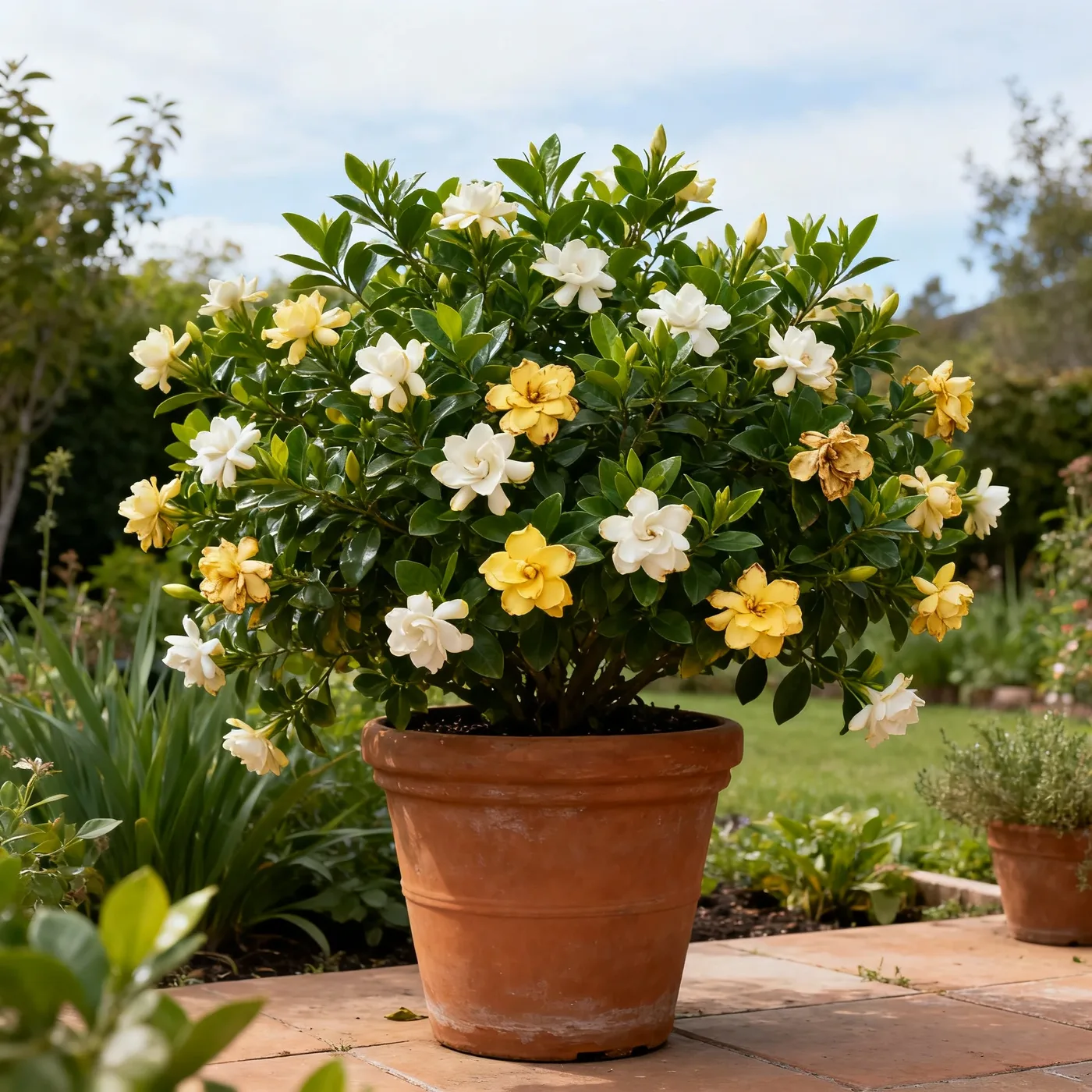
The second belief is that scent and shiny foliage act as a defense. Kleim's Hardy bears very fragrant, single, white flowers in summer and autumn, with deep glossy green leaves. Both traits are real. None of our sources, however, links them to deer avoidance, so that link is a guess, however reasonable it sounds.
Look at it as a naturalist would. Heavily scented white blossoms are generally built to draw pollinators, not to turn away mammals. The scent also lives on the flowers, which are open for only part of the year, while deer feed on leaves and twigs. The plant is evergreen, so its foliage sits there all winter, long after the last bloom has dropped. You can read more about how strongly the blooms perfume the air without assuming that perfume is armor.
Glossy, leathery leaves may well make a gardenia a lesser choice for deer, and that is likely part of why extension lists rate it well. Texture is a preference, though, not a wall.
The same caution applies to toxicity. The ASPCA lists the species as toxic to dogs and cats, and LSU's veterinary school says the same, but that is a finding about pets. Nothing in our sources says it keeps deer away.
Scent and shine tilt the odds a little. They do not protect the plant.
Rabbits and Young Kleim's Hardy Gardenia Stems
People often say rabbits only bother tender perennials and leave woody shrubs alone. That holds in summer, when clover and garden greens are plentiful. It weakens in winter, when herbaceous growth has died back and rabbits turn to the twigs and bark of woody plants. Snow cover pushes them harder, because the low food is buried and the stems above it are all that is left.
We have to be straight about the sources here: the extension pages we rely on speak about deer and say nothing specific about rabbits and gardenias. What we can say comes from how rabbits feed. They work close to the ground, and a 2–3 foot cultivar sits entirely inside that reach. A 4–8 foot species shrub keeps most of its growth well above it.
Reading the Damage
Before you blame an animal, check what is chewing. Possible pests include aphids, mealybugs, scale, spider mites and whiteflies, and our pests and problems guide covers them. If the damage is on twigs, these clues help sort deer from rabbit:
- Rabbits leave clean, slanted cuts on twigs, usually low on the plant. Deer leave ragged, torn ends, because they lack upper front teeth.
- Damage confined to the lowest part of the plant points to rabbits. Missing tips higher up point to deer.
- Bark scraped from the base of young stems in winter is typical of rabbits and other small gnawing animals.
- Small round pellets near the plant suggest rabbits, while larger pellets point to deer.
Young plants are the most exposed, because their stems are thin and there is little wood to spare.
Hungry Winters Change What Deer Will Eat
The fourth belief is that "deer resistant" means "deer proof." Deer are opportunists, and their diet follows the season. When fruit, acorns and tender growth are gone, plants they ignore in July start to look like food. Resistance rankings describe what deer choose when they have a choice. In a lean winter they have less of one.
Why Evergreen Leaves Matter in Winter
Kleim's Hardy keeps its glossy leaves through the cold months, which means it is one of the few green things in the bed when other plants are bare sticks. A deer reading the landscape in February sees green, not a preference chart. Our winter care guide covers protecting the plant from cold, and the same cover can double as a simple physical screen.
Cold Damage and Browsing Compound
Gardenias are cold-sensitive and, in severe winters, can be killed to the ground in upstate regions. Dwarf cultivars are often more cold sensitive. Kleim's Hardy is rated hardy to 10°F. A plant that has dieback and a few surviving shoots has little to lose, and a browsed one is slower to recover. It is also wise not to fertilize gardenias in the fall, because the soft growth it encourages is the first thing both frost and deer take.
One of the most common questions we get in late winter is whether a chewed gardenia is dead. Wait for spring growth before deciding, because plants often regenerate.
Why Zone 7 Browsing Pressure Differs From the Deep South
Kleim's Hardy is listed for USDA zones 7a through 11b, while the species starts at 7b. That one half-zone step is what carries the plant into many colder, more rural landscapes. Our hardiness zones guide covers where it will survive. The deer question changes along with the map.
Most gardenias are grown in the Deep South in town gardens and foundation beds, close to houses, pavement and people. Deer visit those sites, but they do not usually live beside them. A rural zone 7 property is different. Woodland edges, hedgerows, creek corridors and open fields make the kind of mixed habitat where deer feed and bed down. The odds shift because the animals are simply nearer and more numerous.
Local pressure varies a great deal, and we cannot give you a number for your county. Your local extension service can tell you how heavy deer pressure runs in your area. In our rows, the plants nearest the tree line are always the first ones we check, and that is a good habit for you too.
If your garden backs onto woods, plant as though the label were a rumor. If it sits in a walled courtyard, the label is probably close to the truth.
Fencing and Repellents for Kleim's Hardy Gardenia
Protection works best when it matches the plant's size. A 2–3 foot shrub is easy to enclose, which is an advantage over the 4–8 foot species. The compact form suits containers, small spaces and the sides of patios and walkways, and a site close to the house with regular human traffic already lowers the odds. This table sorts the usual options.
| Method | What it does | Our view |
|---|---|---|
| Wire cage around the plant | Blocks deer and rabbits from stems | Works best, especially for young plants in winter |
| Fence around the bed | Excludes deer from a larger area | Works if tall enough, so ask your extension service what height local deer require |
| Repellent sprays | Make foliage taste or smell unpleasant | Helpful as a layer, but needs renewing after rain and new growth |
| Scent or gadget deterrents | Try to startle or confuse animals | Unreliable, since animals get used to them |
| Planting fragrant neighbors | Aims to mask the gardenia | Not proven, so do not rely on it |
Cages and fences work because they do not depend on an animal's mood. For rabbits, the mesh has to be fine enough at the base that they cannot squeeze through, and it should sit snug at ground level. Repellents depend on taste and routine, so they perform best on a plant that is already low on a deer's list.
Common advice says to add enough strongly scented companions to hide a plant. We do not rely on that approach. Use it as a bonus if you like the look, and read our landscape ideas and companion plants for the planting itself.
What the Evidence Says About Kleim's Hardy Gardenia
Next we cover what the research actually supports about deer and Kleim's Hardy Gardenia. First we lay out what is settled, then we turn to what remains unknown, and we finish with how we suggest you plan around both.
What Is Settled
Extension ratings class gardenias as deer resistant shrubs, and the species carries the same tag. The ratings and the tag agree on the pattern, so it is fair to say deer tend to leave gardenias alone when other food is on offer. The cultivar's glossy evergreen foliage and compact habit are documented, and they fit that picture.
What Is Not
No source we use rates Kleim's Hardy separately, and none rates rabbit damage on any gardenia. The ratings come from the genus and species, and the cultivar is smaller, slower and likelier to be planted near hungry deer than the typical Deep South gardenia. We also have no figure for how heavy browsing runs in your county. That is why we call the evidence good for the general rule and thin for your property.
Our position is simple. Treat Kleim's Hardy as a plant deer usually pass over, not one they never touch. In a rural zone 7 setting, plan on protecting young plants through their first winters, and relax the protection once the plant has built some size.
Planning Around Kleim's Hardy Gardenia and Deer
Kleim's Hardy carries a genuine deer-resistant reputation, but it comes from genus and species ratings, and a compact cultivar in colder, more rural country has less margin than the label suggests. Rabbits are an unrated risk for young stems, fragrance and glossy leaves help only a little, and a lean winter erodes whatever resistance the plant has.
Some risk will always remain, small in a town garden and real beside woodland. Each winter, look at the lowest stems and the tips of the evergreen leaves after the first hard freeze, because that is when the damage is easiest to catch.
Kleim's Hardy Gardenia
Nursery-grown Kleim's Hardy Gardenia in sizes from 2 Quart, shipped to your door.
From $15.95
Shop Now →Deer and rabbits are one reason we pay such close attention to Kleim's Hardy at home, where it sits in acid soil and gets anywhere from full sun to partial shade on our farms. Because we run a grower-owned shop, each plant we send out is one we would put in our own beds, and we like knowing it will do well beside yours. If this guide has you thinking about adding one, we would love for you to see which plants we have ready.