Does Kleim's Hardy Gardenia Spread or Self-Seed?
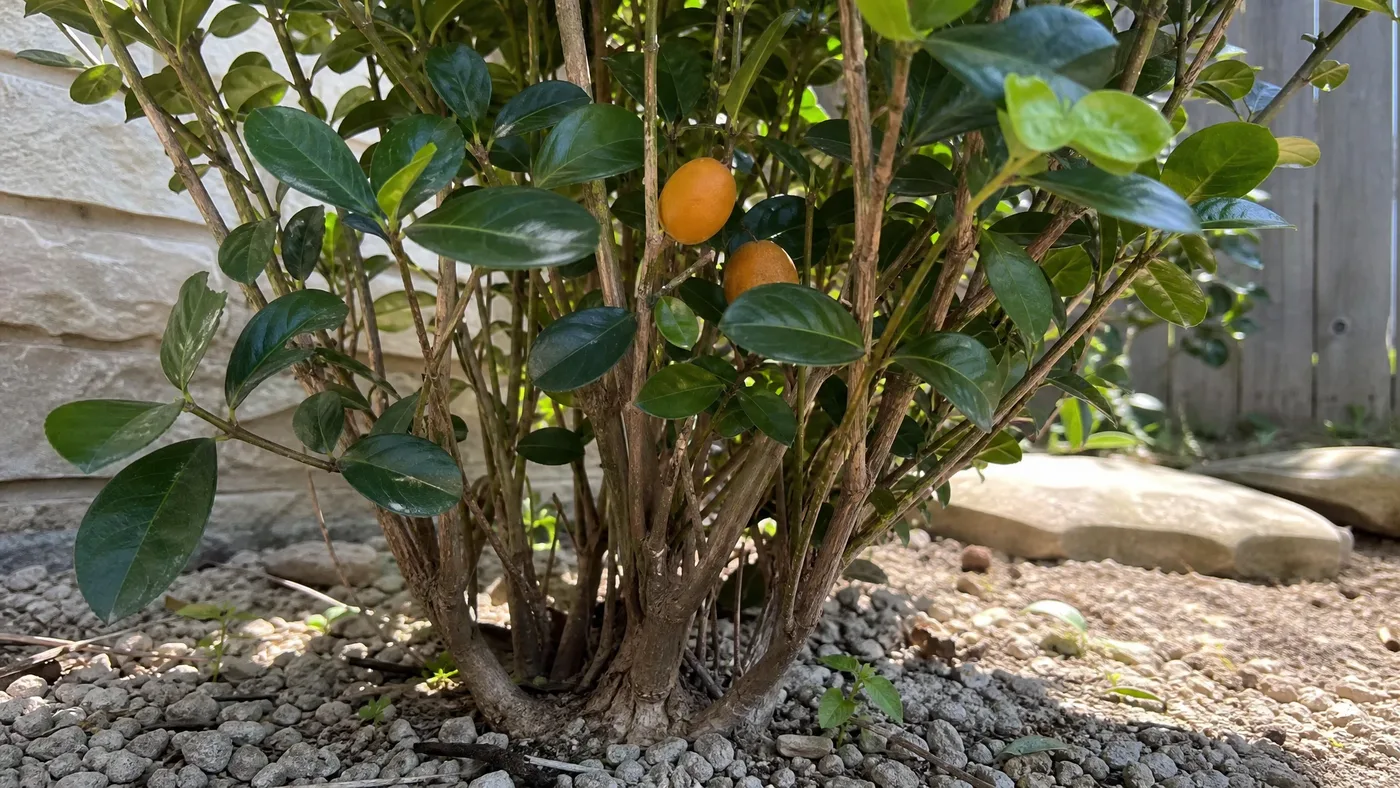
Two to three feet is the full width of a mature Kleim's Hardy, and that number tells you most of what you need to know about spreading. Underground, this gardenia builds a single crown with fibrous roots around it. It sends no runners, throws no suckers and does not root where a stem touches the soil, so the width you plant is close to the width you keep.
That matters because "dwarf" on a tag makes many buyers picture a groundcover that fills a bed for free. Plan for spreading and you end up with gaps and a second plant order you did not budget for. Plan for a clump and the costs are easy to predict.
In this article, we'll go through how the roots and crown behave, why seedlings are not a concern, how the clump widens over a decade, and how to turn that into plant counts for a hedge.
How the Root System of Kleim's Hardy Gardenia Grows
Start underground, because that is where the answer to the title sits. A Kleim's Hardy grows from one crown, the point at the soil line where the stems and roots meet. From that crown the roots fan out as a dense mat of fine, fibrous roots that stays close to the plant. There are no long runners, no suckers popping up a foot away and no stems that root along the ground.
Fibrous Roots Stay Close to Home
Fibrous roots are many fine threads rather than a few thick travelers. They fill the soil under and just beyond the branches, which is why a Kleim's Hardy lifted from a pot comes out as a compact ball. Because the plant does not forage, it depends on the patch of soil you give it.
That patch has to be acid, with a pH below 6.0, and moist but well drained. When we troubleshoot a yellowing plant, we check that soil before we look at anything else. Our soil, drainage and pH guide covers testing and correcting it.
How the Crown Adds Stems
New growth comes from the crown itself. Each season it adds stems from its center and sides, so the plant thickens and gains a little width, but the root mat widens only as fast as the shrub does. Nothing travels.
That is the difference you will see in the next section, and it makes planning simple. The plant you set is the plant you will have, only fuller and somewhat wider.
Why a Dwarf Label Does Not Mean Spreading
One of the most common questions we get is whether the word dwarf on the tag means the plant will creep along the ground and fill a bed.
It does not. Dwarf is a size claim, and the comparison is the species. Gardenia jasminoides reaches 4 to 8 feet in height and width, while Kleim's Hardy tops out at 2 to 3 feet and grows slowly where the species grows at a medium pace. Smaller and slower is all that dwarf tells you. It says nothing about how the plant moves across a bed.
Habit is a separate trait, and it is where the cousin differs. 'Radicans' has a low, spreading, dwarf habit and makes a good low-hedge groundcover. Kleim's Hardy is listed as mounding, so it builds up and out from the crown, not along the soil.
This comparison shows how the two behave in a bed:
| Trait | Kleim's Hardy | 'Radicans' |
|---|---|---|
| Habit | Mounding, rounded | Low and spreading |
| Mature size | 2–3 ft tall and wide | Dwarf and low |
| How it fills a bed | Crown thickens, plants stay where set | Sold as a trailing groundcover |
| Typical use | Hedge, specimen, container, beside a walkway | Groundcover, low hedge, border |
Our choice depends on the job. To cover a wide bed or a slope with few plants, choose 'Radicans', because it is sold for that. For a defined shape, even spacing and a plant that stays where you put it, choose Kleim's Hardy and fill the space with plants instead of waiting for it to creep.
You will see advice to plant dwarf gardenias close and let them knit into a carpet. With this one the branches will touch, but the plants will not root into each other.
What Happens to Spent Flowers and Seed Pods
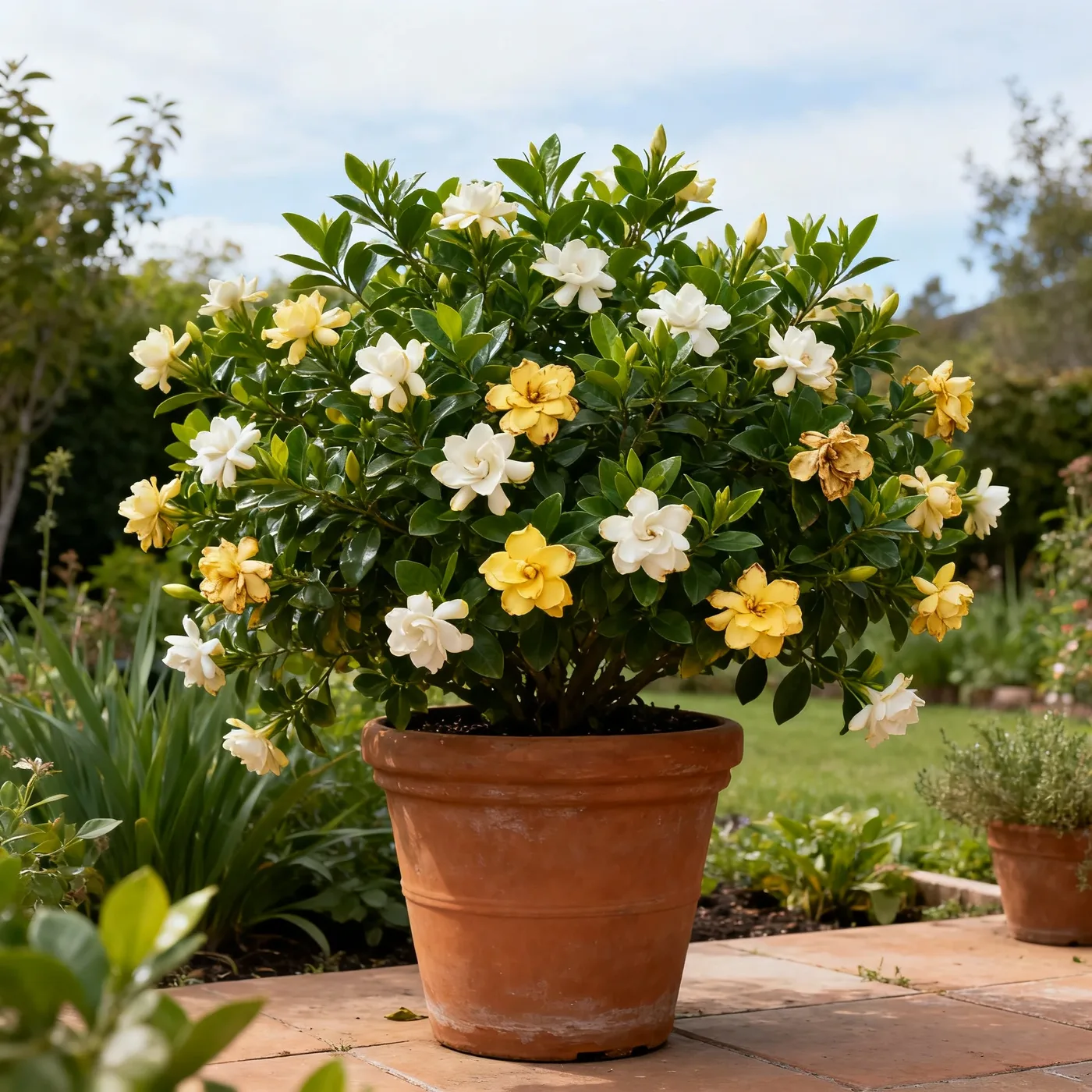
Kleim's Hardy carries very fragrant, single, white, saucer-shaped flowers in summer and autumn. A single flower is the kind that can in principle turn into a fruit pod, which is why people ask about volunteers. In home gardens it rarely does. The plant sets pods only occasionally unless someone pollinates by hand, and the seed from those pods is rarely viable.
Why Volunteers Do Not Appear
The practical result is that you will not find seedlings under the shrub. In our rows, we have never seen a gardenia seedling come up around a mature plant.
Even if a pod ripened and a seed sprouted, seedlings of a named cultivar are not a dependable copy of the parent. That is why cultivars are multiplied from cuttings, which we cover below.
Handling Spent Blooms
Removing faded flowers is about looks, not about keeping the plant from going wild. A few practical points follow.
- Snip or pinch off browned flowers when they bother you. Leave them and nothing happens except a less tidy shrub.
- If a pod does form, you can remove it or leave it. Either way it will not seed the bed.
- Take only the flower and its short stalk. Save any larger cut for the timing in our pruning guide.
Kleim's Hardy Gardenia Clump Growth Over Ten Years
A plant that cannot spread is a plant you can schedule. A mature Kleim's Hardy stands 2 to 3 feet tall and 2 to 3 feet wide and grows slowly. We plan hedges on a ten-year view. The exact pace depends on your zone, light and soil, so ask your local extension service how fast gardenias fill in your area. Our guide to size and growth rate goes further.
The First Few Seasons
Early on, the plant puts its energy into roots. It looks small for longer than most people expect, and the gaps between plants look large. This is when buyers are tempted to wait for it to spread. It will not, so mulch the gaps and keep the soil evenly moist.
The Middle Years
Stems thicken and branches begin to meet their neighbors where plants were set near the mature width. The deep glossy green foliage closes into a continuous line. Touching plants are the goal of a hedge, but watch airflow, since powdery mildew and leaf spots are among the problems this plant can suffer.
Mature Plants
At full size the clump stops widening in any meaningful way. It gets denser, not wider. A plant clearly past 3 feet across deserves a second look at its label, because the species runs 4 to 8 feet and a mix-up would explain it.
Budgeting Space and Plants for a Hedge
Because the clump stays inside its 2 to 3 foot footprint, plant counts are plain arithmetic. Divide the length of the run by the spacing, round up, then add a small reserve. The one real decision is spacing. Wider centers cost fewer plants and take longer to meet, while tighter centers close sooner and cost more up front.
This table gives the count for common run lengths, rounded up and not counting any reserve:
| Length of run | Plants at 2 ft centers | Plants at 3 ft centers |
|---|---|---|
| 6 ft | 3 | 2 |
| 12 ft | 6 | 4 |
| 20 ft | 10 | 7 |
| 30 ft | 15 | 10 |
We would choose 3-foot centers for most budgets. The plants reach their mature width either way, they grow slowly, and the extra room helps airflow. Choose 2-foot centers only where a gap would be noticed daily, such as along a walkway.
Spreading the Cost Over Seasons
Multiply the count by the price of the container size you pick. Larger containers cost more at the start but close the gaps sooner, and our container size buying guide explains what to look for. Since every plant is the same cultivar and matures at the same size, you can also fill a row in stages, and we grow Kleim's Hardy ourselves for exactly that kind of phased plan.
For ideas on what to set beside the row, see our landscape ideas and companion plants.
Propagating Kleim's Hardy Gardenia From Cuttings Instead
Seed will not give you more plants, and the crown sends up no suckers you can dig and move. Division is a poor fit too, since a single crown with fibrous roots does not come apart into independent pieces, and cutting through it risks the roots that feed the plant. That leaves cuttings, either softwood or semi-ripe. Softwood is new, flexible growth from the current season. Semi-ripe is growth that has started to firm up at the base.
A straightforward sequence looks like this:
- Take a cutting of healthy current growth from a mature plant that flowered well.
- Strip the lower leaves and any flower buds so the cutting puts its energy into roots.
- Set the base in a moist, well-drained mix.
- Keep the cutting humid and out of hot direct sun while it roots.
- Pot it on once roots form, and grow it in acid soil before it goes into the garden.
We would take cuttings for two or three extra plants. For a hedge of a dozen or more we would buy plants, because a slow grower spends a long time as a rooted cutting before it is ready for a row. Ask your local extension service when cuttings root best in your area.
What a Tight Clump Means for Kleim's Hardy Gardenia Owners
A Kleim's Hardy stays where you plant it. It widens to 2 to 3 feet, thickens from a single crown, rarely sets viable seed in a home garden and has no runners or rooting stems. Dwarf describes its size against the species, not a creeping habit. If you want a plant that covers ground, look to 'Radicans'.
So put your money in the right places: enough plants to fill the row at the spacing you chose, acid and well-drained soil kept evenly moist, mulch and a few seasons of patience. Leave edging, root barriers and a spreading-control plan out of the budget, because this plant never needs them.
Kleim's Hardy Gardenia
Nursery-grown Kleim's Hardy Gardenia in sizes from 2 Quart, shipped to your door.
From $15.95
Shop Now →Kleim's Hardy has been grown by us for years in moist, well-drained, acid soil, and we like how each crown thickens in place without wandering. We are a small, grower-run business, so a shrub only goes out the door if we would happily plant it in our own beds. Whenever you are set on the spot you have picked for yours, order a Kleim's Hardy of your own.