Kleim's Hardy Gardenia's Natural Growth Habit and Shape
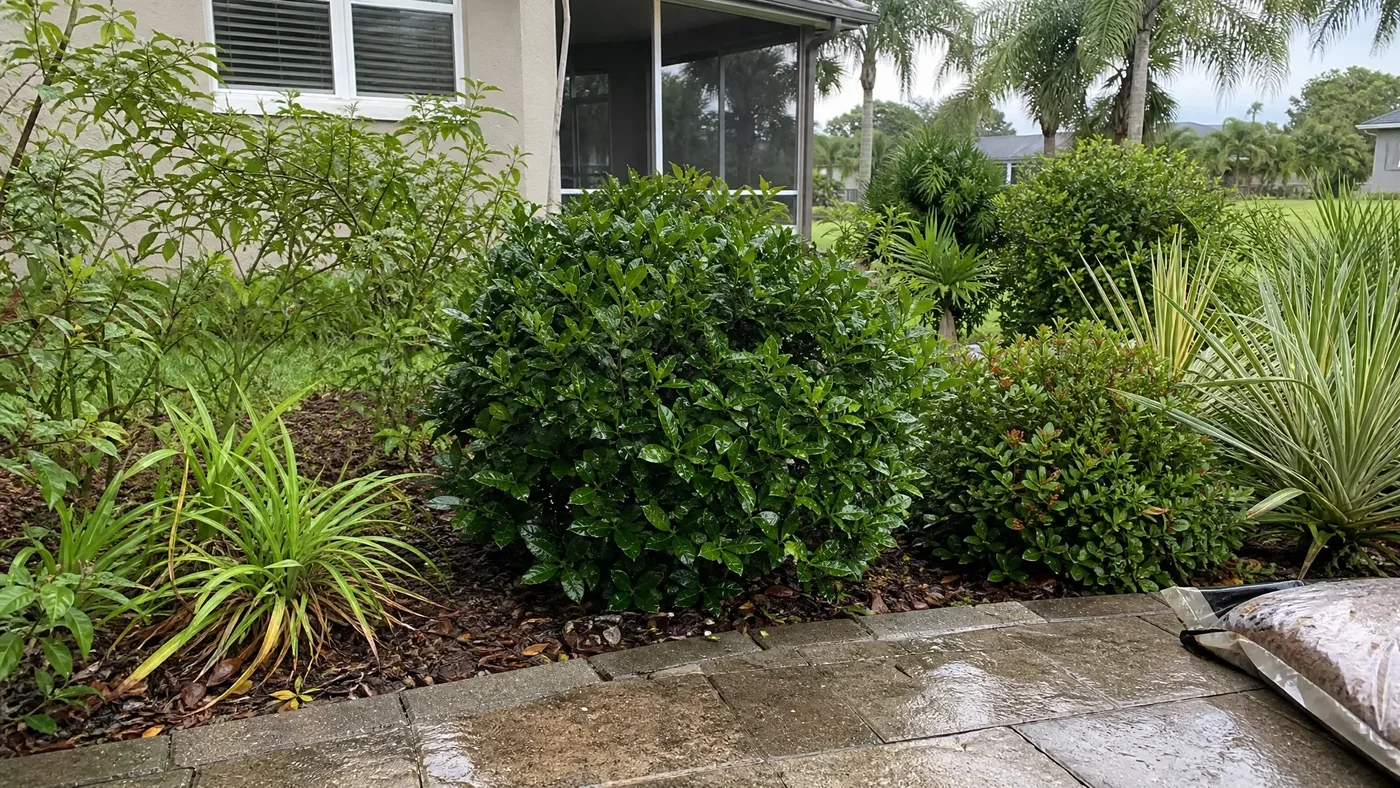
Stand on the patio near the end of the day, when low light rakes across a mixed border, and the rounded silhouettes read first. The single leaves come later, once your eye settles. Kleim's Hardy Gardenia is one of those silhouettes, and the surprise is how little it does to earn the role. It stops at 2–3 feet tall and wide and rounds itself off without being told.
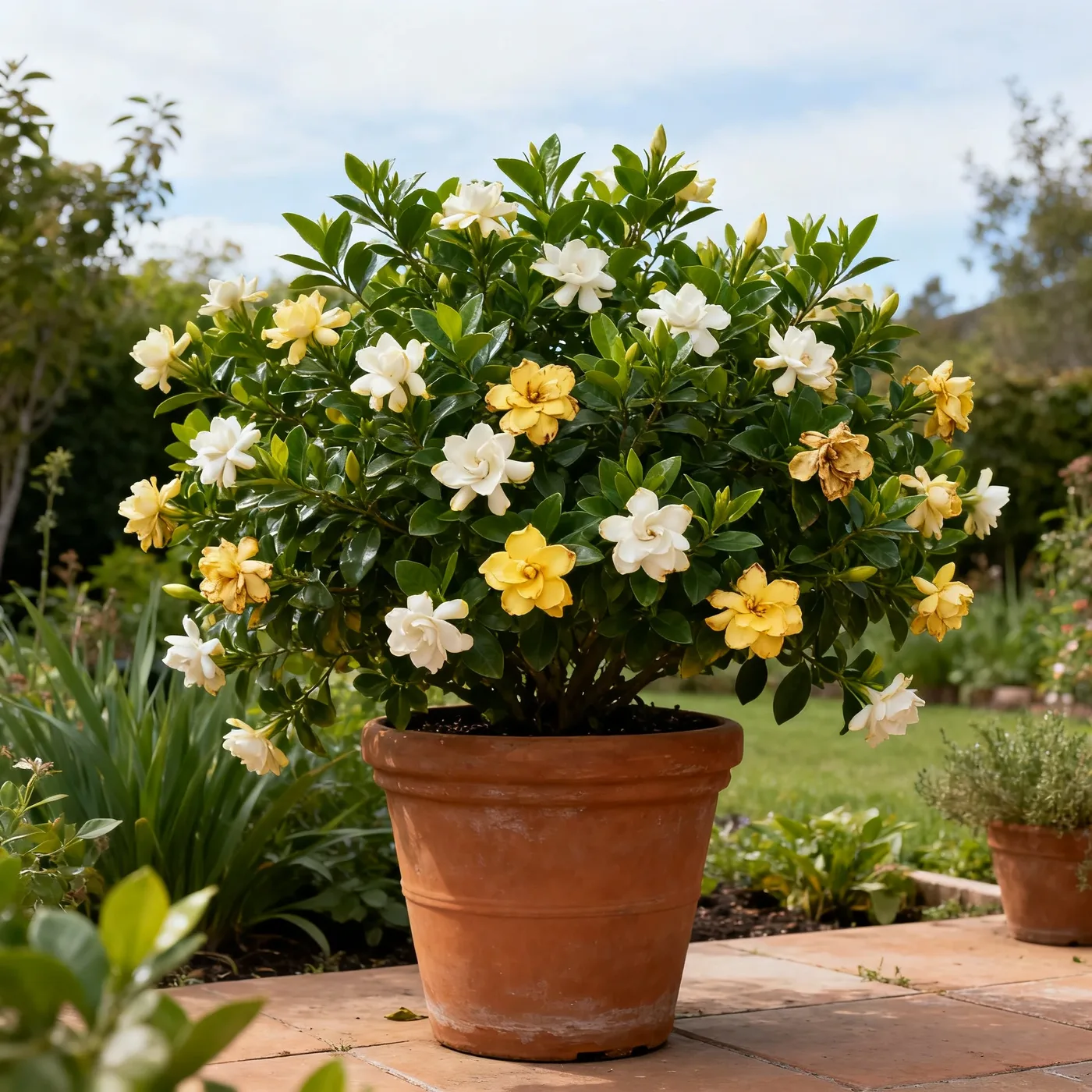
That matters because most gardenias do not behave this way. Full-size types lengthen, lean and need corrective cuts to stay presentable, while this one hands you a finished outline from the start and keeps it.
In this article, we'll go through how the mound sits in a border, what makes it so dense, how it compares with leggier gardenias, and what all of that means for pruning and upkeep.
The Garden Border Seen From the Patio
A border is a composition before it is a collection of plants. From a patio chair you read it in masses: tall verticals at the back, fine or feathery textures that move in the breeze, and rounded forms that give the eye somewhere to rest. Take the resting shapes away and the whole planting turns restless, all edges and no weight.
What Rounded Shapes Do in a Border
A mound does two jobs. It adds visual weight low in the planting, where spiky foliage and open perennials have little to offer, and it repeats well. Set one gardenia near the front and another several steps along, and the echo tells the viewer the border was planned rather than accumulated.
The contrast works in both directions. A solid dome makes ornamental grass blades look finer and airier, and the grass makes the dome look denser. Put strap-leaved perennials or tall flower spikes beside it and the gardenia becomes the calm note in the middle of the chord.
Evergreen Weight After the Perennials Quit
This is where an evergreen earns its place. By late fall the perennials around it have been cut down or have gone to brown stalks, and the gardenia is still carrying deep glossy green leaves through the bare months. The border keeps its structure because one rounded form never left.
For pairings that suit this role, see our landscape ideas and companion plants.
Placing Kleim's Hardy Gardenia in the Middle Layer
Think of a planting in three layers: tall structure at the back, a middle band, and a low edge in front. At 2–3 feet, Kleim's Hardy belongs in the middle band of most beds, or at the very front of a deep one. It is too small to hide a fence and too solid to be treated as an edging plant.
Between Tall Backdrops and Low Edgers
Behind it, put something taller, such as a larger shrub or a screen of grasses, so the dome has a softer backdrop to read against. White flowers and glossy leaves stand out best against a matte background. In front, keep to low groundcovers that stay below the lowest leaves, so the base of the mound stays visible.
Because it stays small, it also works where a full-size gardenia would crowd a walkway. The compact size suits containers, small spaces and the edge of a patio or walkway.
How Light Reaches the Mound
Full sun is listed as six or more hours of direct sun and partial shade as two to six hours, and the cultivar is listed for both. It can also take full sun and heat and keep its mounded shape.
The practical test is the direction the light comes from. Low afternoon sun from the side models the dome, with bright leaves on one face and a deeper green on the other, which is exactly the effect a designer wants. If the mound starts leaning toward a gap in the canopy, the light is lopsided. Our sun and light guide goes through exposure in detail.
The Dense Mound of Kleim's Hardy Gardenia
Height and width numbers tell you the size of a plant but not its shape. This cultivar is listed at 2–3 feet tall and 2–3 feet wide, and that near-equal pairing is the key. A shrub as wide as it is tall draws a circle in profile. Nothing sprawls, and nothing stands up like a column.
Height Equals Width
A vase-shaped shrub opens at the top and shows bare stems at the base, and a spreading one runs low and wide, so each needs a particular spot. The mound is the easy one. It looks the same from the patio, the lawn and the kitchen window, and it has no front or back to arrange. Kleim's Hardy is often described at about 3 feet tall and wide, which agrees.
Leaves reach all the way to the outer edge, so the surface reads as a smooth dome rather than a pile of stems. In summer the single white flowers sit scattered across that surface, like light on dark water.
Slow Growth Keeps the Proportions
This cultivar's growth is rated slow, where the species is rated medium. Slow is a design asset here. The mound thickens year by year instead of stretching, so a plant you set in the border keeps the proportions you chose it for.
One of the most common questions we get is when it will "fill out." It fills out by thickening, not by gaining height, so judge it by the density of the leaves rather than the tape measure. Our size and growth rate guide covers the numbers.
Why Leggier Gardenias Need More Shaping Than Kleim's Hardy Gardenia
Gardenias vary a great deal from one cultivar to the next. The species is listed at 4–8 feet tall and 4–8 feet wide, with medium growth. A plant that can reach 8 feet has plenty of room to get untidy on the way there.
This table lines Kleim's Hardy up against the species and two other gardenias, and the habit column is the one that predicts how much cutting you will do.
| Gardenia | Height | Width | Habit |
|---|---|---|---|
| Kleim's Hardy | 2–3 ft | 2–3 ft | Compact, self-rounding mound |
| August Beauty | 4–6 ft | 3–4 ft | Taller than wide |
| Crown Jewell | 2 ft | 4 ft | Spreading |
| Species (Gardenia jasminoides) | 4–8 ft | 4–8 ft | Depends on the cultivar |
What Corrective Cuts Actually Fix
August Beauty grows 4 to 6 feet high and 3 to 4 feet wide, so it is a much bigger shrub with far more stem to manage. The usual advice is to prune after summer flowering to remove straggly branches and faded flowers. On a taller cultivar that advice is earned every year, because shoots reach out past the outline and the plant loses its shape.
Straggle is the problem those cuts correct, and Kleim's Hardy produces very little of it. Crown Jewell shows that small does not automatically mean tidy. It matches Kleim's Hardy at 2 feet tall but spreads to 4 feet wide, so it needs edge control the mound never does. Shape, not size, decides how much shaping a gardenia wants.
Branch Nodes and Leaf Whorls on Kleim's Hardy Gardenia
Come in close and the mound turns out to be a repeating assembly of small units. Leaves attach at nodes, the points along a stem where they join, in pairs and often in small clusters of three. Each node also carries a bud at the leaf base that can grow into a side shoot. Density is simply a great many nodes packed into a small volume.
Short Gaps, Many Nodes
On a compact cultivar the stem between nodes stays short, so a mound of 3 feet or less holds a great many leaf clusters, and the clusters overlap. That overlap is why you cannot see through the plant. A leggier gardenia tends to carry fewer nodes along the same length of stem, and the gaps let light through.
It also explains why a light trim is so forgiving. A cut just above a node wakes the side buds there, and the new shoots come out of a cluster that is already crowded. The plant fills the cut instead of leaving a hole.
Reading the Clusters for Trouble
Because the plant is built from nodes, you can diagnose it at the node. In our rows, the first sign something is off is almost always at the shoot tips, where the clusters open up and the spacing between leaves stretches.
Spacing that stretches on one side points to light. Pale new leaves with green veins point to soil, since acid soil below pH 6.0 is listed for this cultivar. Sticky, blackened leaves point to sap-feeding insects. The usual culprits are aphids, mealybugs, scale, spider mites and whiteflies, plus sooty mold. Our pests and problems guide takes each one in turn.
Little Shaping Needed for Kleim's Hardy Gardenia
Put the habit together and the pruning plan nearly writes itself. The mound builds its own outline, so your job is to keep it clean, not to build it. Only a light trim after intense blooming is suggested.
You will hear that every gardenia needs a hard cut after bloom. That advice belongs to the taller cultivars. Cutting this one hard trades away the density that makes it worth planting, and with slow growth it takes a long time to rebuild.
A Light Yearly Routine
This is the whole routine, and it takes a few minutes with hand pruners.
- Wait until the main flush of summer flowers is over, then remove the spent blooms.
- Look at the outline from the patio, and trim only the shoot or two that break the round.
- Cut just above a node so new growth comes out of an existing cluster.
- Leave the interior alone, since the dense inner growth gives the mound its body.
- If the outline keeps going wrong in one spot, fix the light, soil or moisture rather than cutting more.
Our pruning timing and technique guide has the detail. We grow Kleim's Hardy on our own farms, so a plant from us already carries that rounded outline and you start with a shape worth keeping.
Kleim's Hardy Gardenia at Dusk, Still Holding Its Shape
Step back out to the border at dusk. The light drains, the single leaves disappear, and only the silhouettes remain. The gardenia is still a clean round dome, and nobody cut it into that shape.
That is the whole case for this cultivar: a mounded habit of 2–3 feet in height and width, slow growth that keeps the proportions, nodes close enough to build real density, and a light trim after bloom as the only regular shaping. When the outline slips, read the clusters and fix the cause.
Kleim's Hardy Gardenia
Nursery-grown Kleim's Hardy Gardenia in sizes from 2 Quart, shipped to your door.
From $15.95
Shop Now →Our growers raise Kleim's Hardy in sun, in moist but well-drained acid soil, and watch the mound through the year for even color and a tidy outline. Shrubs and trees alike, our small business grows the whole range itself. If you want that mound in your border, start with one of ours.