Sun and Light Requirements for Kleim's Hardy Gardenia
Kleim's Hardy Gardenia blooms best with the right amount of light, but getting that balance depends on where you live and what your summer temperatures look like. This guide walks you through assessing your site, placing your plant, and adjusting light conditions to support strong blooms and healthy foliage year-round.
What Light Does Kleim's Hardy Gardenia Actually Need?
Kleim's Hardy Gardenia performs well in full sun to part shade. The plant does not require full sun to thrive, but sunlight directly affects bloom production and foliage color. In zones 7 through 9, where this cultivar survives best, the amount of direct sun your location receives in summer matters more than the amount in spring or fall.
Full sun means at least 6 hours of direct, unobstructed sunlight per day. Part shade means 3 to 6 hours of direct sun, with the remainder of the day spent in dappled or afternoon shade. Neither extreme is wrong for Kleim's Hardy Gardenia, but the choice affects when your plant blooms and how many flowers it produces in late spring to early summer.
Step 1: Map Your Yard's Light Patterns
Before you plant, spend a day or two watching how sunlight moves across your potential planting locations. You need to know which areas get morning sun, which get afternoon sun, and which remain shaded all day.
Start early in the morning and note which parts of your yard are in direct sunlight. Check again at midday and again in late afternoon. Pay special attention to whether taller trees, buildings, or structures cast shade in the afternoon. This step is essential because afternoon shade in summer is protective in hot southern climates, but morning sun helps prevent frost damage in zones 7 and 7b during winter.
If you live in a hot southern climate (think central or coastal South Carolina, Georgia, or northern Florida), afternoon shade is not optional for best flower and foliage quality. The intense afternoon heat in these regions can stress the plant and reduce bloom set. If you live in zones 7, 7b, or the northern parts of zone 8, full sun to full-day sun produces the most abundant flowering and denser foliage.
Step 2: Choose Your Planting Location
Once you have identified light patterns, select a location based on your climate zone and summer temperatures. For zones 7 and 7b, choose a site that receives 6 hours or more of direct sun daily. Morning sun is ideal because it dries dew and helps prevent fungal issues. East or southeast-facing locations are excellent.
For zone 8 and warmer parts of zone 9, choose a site that gets morning sun but filtered or dappled afternoon shade. A location that receives 4 to 5 hours of morning sun and then transitions to part or dappled shade by 2 p.m. is ideal. You can also plant Kleim's Hardy Gardenia on the east side of a tall shrub or tree, where taller plants provide afternoon coverage without blocking morning light.
Ensure the location has well-drained soil with high organic matter and acidic pH between 5.0 and 6.5. Light and soil work together: even a perfectly lit site will not support blooming if water pools or the soil is alkaline. If you are unsure about your soil pH, contact your local extension service for a soil test.
Step 3: Monitor Light During the First Growing Season
After planting in spring or early fall, observe how the plant responds through its first season. If you planted in full sun, watch for any leaf yellowing or brown edges that might indicate stress from too much intense sun combined with inadequate water. If you planted in part shade, monitor for weak or leggy growth that suggests the plant is reaching for light.
Kleim's Hardy Gardenia typically blooms in late spring to early summer, roughly May through June, with occasional light rebloom in late summer in favorable conditions. If your plant produces few flowers in its first season, light is rarely the sole cause. Transplant shock, root establishment, or a sudden temperature shift during bud formation are more common culprits.
Continue observing into the second and third growing seasons. The plant reaches closer to mature size (2 to 3 feet tall and 3 to 4 feet wide) by year three, and bloom performance often improves as the root system matures.
Adjusting Light Conditions If Needed
If your Kleim's Hardy Gardenia seems unhappy after the first season, you have options before considering relocation.
For a plant in too much direct sun (especially in hot climates): Prune back nearby trees or shrubs to create dappled afternoon shade, or plant a tall companion shrub on the south or west side to filter intense afternoon rays. Do not cut back the gardenia itself to compensate for light. Instead, improve watering consistency during heat waves and apply 2 to 3 inches of mulch around the base to keep soil temperatures moderate. Shade cloth stretched over the plant in extreme heat (above 90 degrees Fahrenheit for extended periods) can reduce stress while you establish longer-term shading from trees or structures.
For a plant in insufficient light (too much shade): Prune lower branches on nearby trees to allow filtered sun to reach the plant, or remove shade-causing structures if possible. Moving a Kleim's Hardy Gardenia is always an option, but wait until dormancy in late fall or early spring. If you relocate the plant, dig a planting hole that is just as deep as the root ball and twice as wide, add acidic potting mix or compost to the refilled soil, and water thoroughly after transplanting.
Common Mistakes with Light and Heat Stress
Planting in dense shade and then wondering why blooms do not appear is a frequent mistake. Kleim's Hardy Gardenia is not a flowering shade plant. It will survive in part shade, but flowering is best with at least 3 to 4 hours of direct sun, especially morning sun.
Another mistake is assuming that because a cultivar is called "hardy," it can handle full afternoon sun in zone 9 without additional water. Hardiness refers to cold tolerance, not heat tolerance. Even if the plant survives hot sun, foliage quality and bloom production suffer without consistent moisture and afternoon shade in extreme heat.
Some gardeners also confuse fragrance strength with light. Kleim's Hardy Gardenia has a strong, sweet classic gardenia fragrance regardless of light, but the plant is more likely to produce the flowers that carry that fragrance when it receives adequate light for its climate zone.
Seasonal Light Changes
Keep in mind that light angles change with the seasons. A location that is lightly shaded in summer may receive full sun in winter when deciduous trees lose their leaves. This is not a problem for Kleim's Hardy Gardenia. Winter sun helps the plant harden off and can reduce frost damage in marginal zones because it warms the foliage in the morning. However, if your planting site sits in a frost pocket where it gets full sun on a very cold winter morning, frost can damage tender new growth more severely. East or southeast exposure is protective because morning sun warms the plant gradually, not suddenly.
Quick Reference: Light Placement Checklist
| Climate Zone | Ideal Light Condition | Sun Hours | Best Exposure |
|---|---|---|---|
| Zone 7 to 7b | Full sun | 6+ hours direct sun | East, southeast, or south-facing |
| Zone 8 | Full sun to part shade | 4-6 hours direct sun | Morning sun, afternoon filtered shade |
| Zone 9 | Part shade preferred | 3-4 hours direct sun | Morning sun, 2 p.m. onward dappled shade |
| Hot southern climates (all zones) | Part shade in summer | 4-5 hours morning sun | East-facing or shaded by taller plants |
Light, Bloom, and Foliage: What to Expect
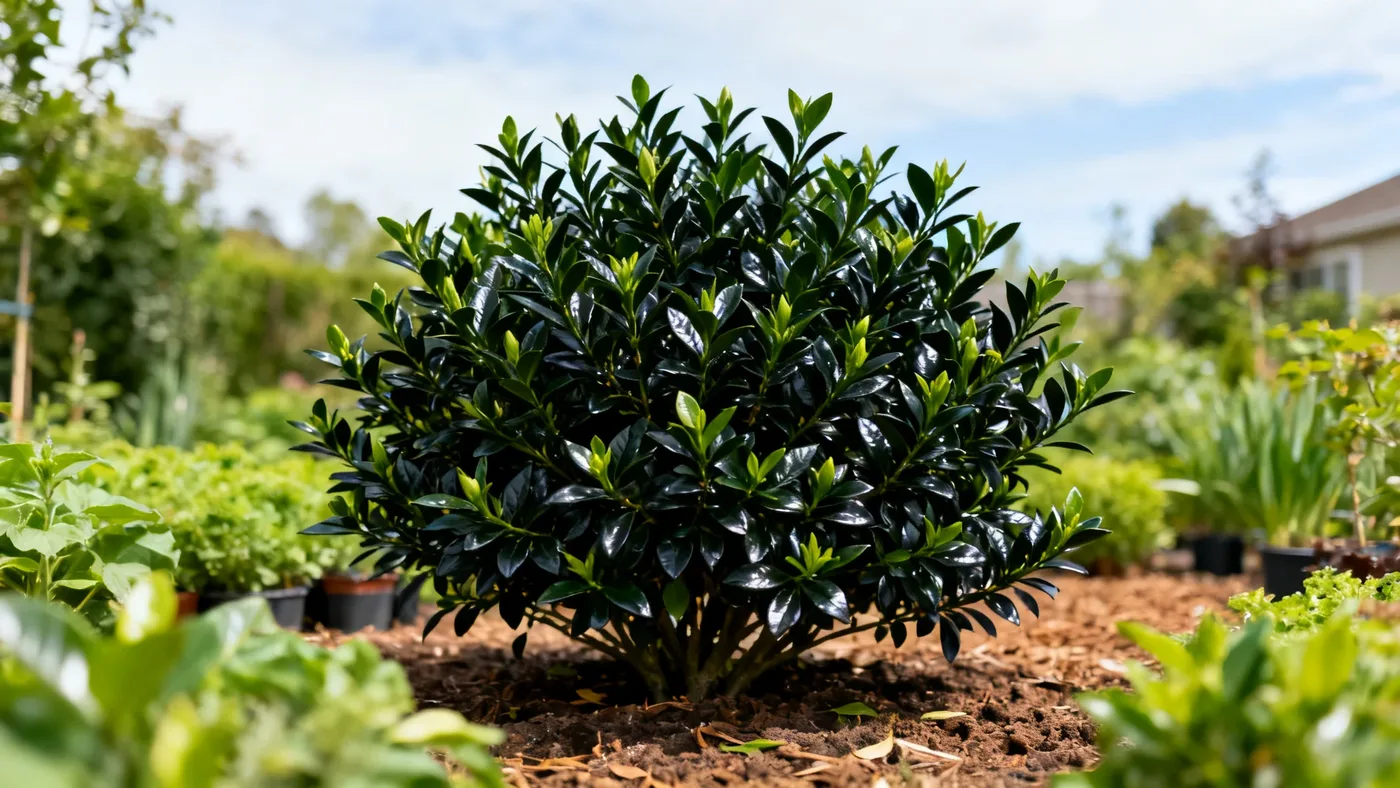
With adequate light for your climate zone, Kleim's Hardy Gardenia produces glossy, dark green foliage year-round and blooms reliably in late spring to early summer. Flowers are white and age to creamy ivory or yellow. The plant does not put on dramatic fall color because it is evergreen, but dark green winter foliage is part of its charm in the landscape.
If light is insufficient, you will see slower growth (the plant grows at a moderate rate, roughly 6 to 12 inches per year, and insufficient light can slow even that), fewer or smaller flowers, or thinner, less lustrous foliage. These changes usually take one to two growing seasons to become noticeable, so do not panic if your first-year plant is modest in size or bloom.
If heat stress occurs (too much afternoon sun without shade or consistent moisture in a hot climate), you may see leaf yellowing with green veins, early leaf drop, or bud drop before flowering. Correct this by adding shade, improving irrigation consistency, or mulching to moderate soil temperature. The plant should recover in the next growing season once stress is reduced.