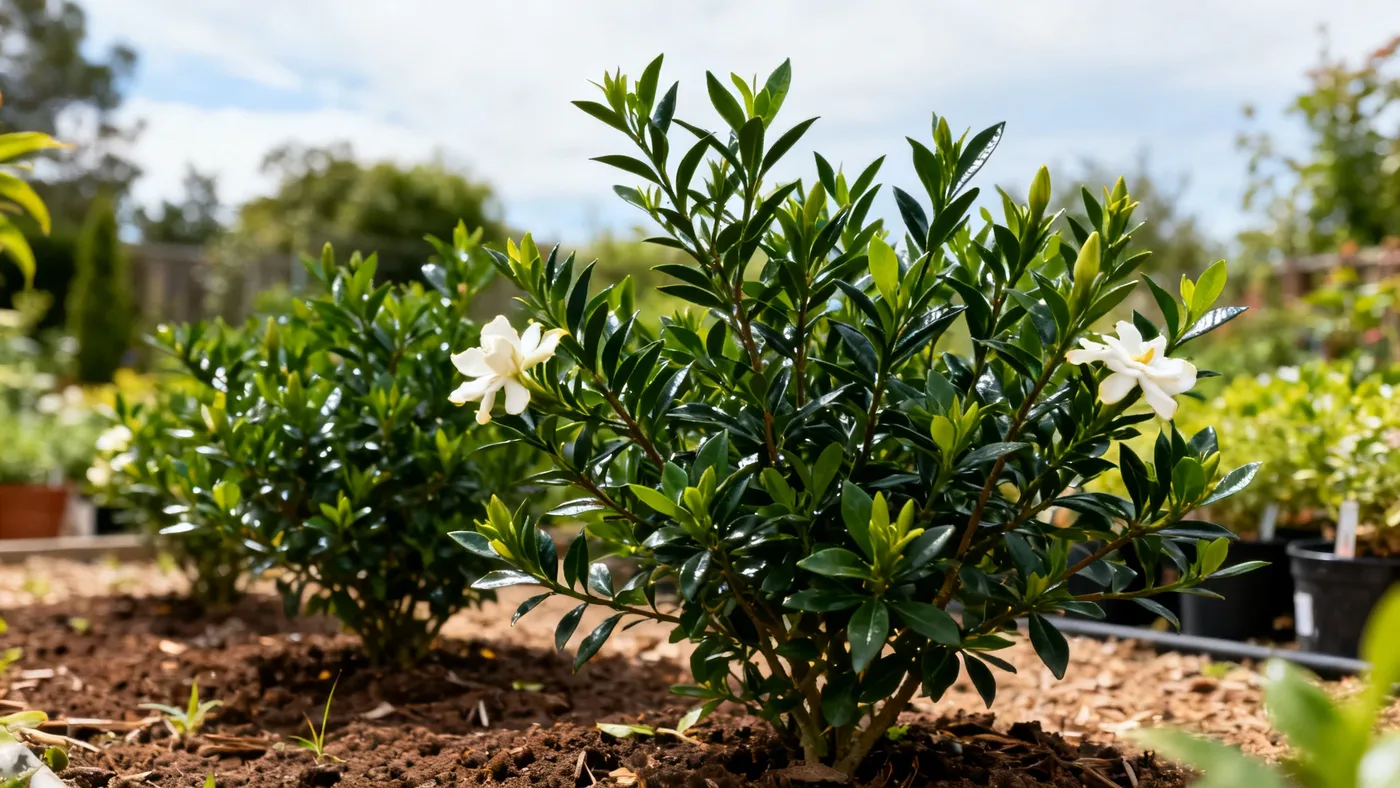
Watering Kleim's Hardy Gardenia: Establishment to Maturity
Kleim's Hardy Gardenia demands consistent moisture but not wet feet. This balance separates thriving plants from those that drop buds or rot at the roots. Whether you're in year one or year five, the watering strategy changes. This guide walks you through what the plant needs at each stage and how to read what your soil is actually telling you.
What You'll Need
- A watering can or soaker hose (not overhead spray)
- A soil moisture meter or your index finger
- A mulch material (wood chips or pine bark, 2-3 inches deep)
- Rain gauge (optional, to track natural rainfall)
- Acidic potting mix or compost for containers
If you're watering in containers, use a well-drained, acidic potting mix formulated for acid-loving plants like azaleas or camellias. In-ground plantings benefit from 2 to 3 inches of organic mulch laid around the base, which holds moisture without trapping water against the stem.
Understanding Kleim's Hardy Gardenia's Water Needs
Kleim's Hardy Gardenia needs medium, consistent moisture year-round. The phrase "consistent" is deliberate. The plant cannot tolerate standing water, which causes root rot, nor can it handle prolonged dry spells, which trigger bud drop and stress. Once established, it has low to moderate drought tolerance, meaning it survives temporary dry periods but performs best with regular water during dry spells.
The challenge is that inconsistency, wet, then dry, then wet again, causes the most damage. Buds may drop from drought stress one week and root rot from overwatering the next. Your job is to keep the soil moisture level steady, like a wrung-out sponge.
Watering During the Establishment Phase (First Year)
A newly planted Kleim's Hardy Gardenia arrives from the nursery with a shallow root system confined to its original container soil. It must grow new roots into the surrounding soil before it can draw water from deep sources. This first growing season is when consistent watering matters most.
Step 1: Water Immediately After Planting
Within hours of planting, water thoroughly until water drains from the bottom of the planting hole or from the container soil (if container-grown). This settles the soil and eliminates air pockets that would otherwise strand roots.
Step 2: Establish a Baseline Schedule
For the first 8 to 12 weeks after planting, check the soil moisture every second or third day. Stick your finger 2 inches into the soil near the drip line (the outer edge of the foliage canopy, not right at the stem). If the soil feels dry at that depth, water thoroughly. If it feels moist or wet, wait another day or two.
In spring or early fall (the recommended planting seasons), this typically means watering 2 to 3 times per week, depending on rainfall and temperature. In hot weather, daily checks are wise.
Step 3: Watch for Settling and Adjust Mulch
After planting, soil settles. If your mulch has compacted or washed away, add more to maintain 2 to 3 inches. This layer insulates the soil, reduces evaporation, and keeps the moisture level stable. Never pile mulch against the stem; leave a 2-inch gap to allow air circulation and prevent stem rot.
Step 4: Extend the Watering Interval Gradually
As the plant enters its second and third month, new roots expand outward. You can gradually extend the time between waterings if rainfall is regular. By month four or five, many established plantings need water only during active growth (spring through early summer) or during obvious dry spells (no rain for 7 to 10 days).
The goal by the end of year one is to shift from frequent shallow watering to less frequent, deeper watering that encourages roots to grow deeper.
Watering Your Mature Plant (Years 2 and Beyond)
Once Kleim's Hardy Gardenia reaches full mature size (2 to 3 feet tall and 3 to 4 feet wide, which takes 3 to 5 years), its watering needs become more predictable. The plant now has an established root system deep enough to access soil moisture reserves.
Step 1: Establish a Rainfall-Based Strategy
Water the plant when the top 2 to 3 inches of soil feel dry. In most climates, this happens after 7 to 10 days without rain or after 1 week of hot weather. A rain gauge helps you decide whether natural rainfall counts toward the plant's weekly moisture needs. If your area receives 1 inch of rainfall in a week, you may not need to add water. If it receives none, one deep watering of 1 to 1.5 inches (delivered over 30 to 60 minutes by soaker hose) will replace what's missing.
Step 2: Apply Water at Soil Level, Not Overhead
Water the soil, not the foliage. Overhead watering wets the leaves, which can promote fungal leaf spots and wastes water to evaporation. A soaker hose laid in a ring around the plant's drip line delivers water directly to the root zone. A slow trickle from a watering can aimed at the base works well for smaller plantings. Allow water to soak in for 10 to 20 minutes, then move on.
Step 3: Adjust for Container Plants
Containers dry faster than in-ground soil, especially during warm weather. Check container soil every 2 to 3 days. If the top inch feels dry, water until it drains from the bottom. In zones 7 to 9, container-grown plants may need winter protection (moving to a sheltered spot or wrapping the container) during harsh winters, as roots are more exposed to cold than in-ground plantings.
Seasonal Watering Adjustments
Watering needs shift with the seasons and your local climate.
Spring (Planting season and bloom prep): As soil warms, growth resumes and water demand increases. Kleim's Hardy Gardenia blooms in late May to early June, and consistent moisture during late spring supports heavier flowering. Maintain steady soil moisture throughout spring.
Summer: Heat and longer days increase evaporation. Mature plants may need water every 5 to 7 days during hot, dry spells. Mulch becomes even more valuable, reducing the frequency of hand watering. In zones 8 and 9, afternoon shade helps preserve soil moisture and protects foliage quality during peak heat.
Fall: As temperatures drop and day length shortens, growth slows. Watering frequency can decrease, but do not let the soil dry out completely. Fall is the second planting window (early fall is preferred), so newly planted specimens still need the establishment-phase care described above.
Winter: In zones 7 and 7b, Kleim's Hardy Gardenia is evergreen, so it needs some moisture even when dormant. However, demand drops sharply. Once every 2 to 3 weeks is often sufficient if there is no hard freeze. If winter is very dry and cold, a light watering before deep frost helps prevent stress. After a hard winter (zone 6b or the very cold edge of zone 7), check for winter dieback and prune out damaged wood in spring.
Recognizing Overwatering Damage
The most common problem from excess water is root rot. Standing water or constantly wet soil suffocates roots, causing them to decay. Early signs include yellowing leaves from the bottom up and a general wilting that persists even after watering. The plant may smell earthy or musty at the soil line.
Overwatering also contributes to bud drop. Kleim's Hardy Gardenia may abort flower buds if the soil shifts between saturated and dry. Container plants are especially vulnerable because drainage can be compromised by compacted soil or a drainage hole blocked by mulch.
If you suspect root rot, reduce watering immediately. Let the top 3 inches of soil dry out between waterings. Check that the planting area has no surface pooling and that mulch is not piled against the stem. If the plant does not recover in 2 to 3 weeks, it may need to be dug and replanted in fresh, well-draining soil.
Recognizing Underwatering Stress
Drought stress shows up first as wilting during the heat of the day, even if the plant recovers overnight. As stress deepens, leaves may drop or turn yellow and eventually brown at the tips. The most frustrating symptom is bud drop: flower buds that formed weeks earlier suddenly fall before opening, usually during a spell of missed waterings.
Underwatering is less common in climates with regular summer rain, but it happens in dry summers, in sandy soils that drain very fast, or when a plant is overlooked during a travel week. The recovery is straightforward: resume regular watering, and the plant will push new growth and buds (though you may miss that year's bloom if the damage occurred close to flowering time).
Common Mistakes to Avoid
Watering on a fixed calendar: Water when the soil needs it, not on a set day. Rainfall, temperature, and soil type all affect how fast moisture is used. Check the soil first.
Overhead watering: Wet leaves invite fungal disease and waste water. Always water the soil.
Allowing soil to dry out completely: Unlike many shrubs, Kleim's Hardy Gardenia struggles to recover from bone-dry soil. Consistency matters.
Neglecting mulch: Bare soil dries faster and heats up more in summer. Maintain a 2 to 3 inch mulch layer year-round.
Planting in alkaline soil: Kleim's Hardy Gardenia needs acidic soil (roughly pH 5.0 to 6.5). If your soil is alkaline, the plant cannot absorb water or nutrients efficiently. Amend with sulfur or peat moss before planting, and use acidic mulch like pine bark.
Quick Reference: Watering Checklist
| Time Period | Check Soil Every | Water When | Expected Frequency | Key Focus |
|---|---|---|---|---|
| First 8-12 weeks after planting | 2-3 days | Top 2 inches feel dry | 2-3 times per week (spring/fall) Daily checks in heat |
Establish root contact with surrounding soil |
| Mature plant, late spring to summer | 5-7 days | Top 2-3 inches feel dry | After 7-10 days without rain or during dry spells | Support active growth and flowering |
| Mature plant, fall | 7-10 days | Top 3 inches feel dry | Less frequent; allow brief dry spells | Reduce overwatering as growth slows |
| Mature plant, winter (zones 7-9) | 2-3 weeks | Soil feels dry to 3-4 inches | Every 2-3 weeks (or after rain) | Prevent complete drying but avoid wet dormancy |
| Container plant, any season | 2-3 days | Top inch feels dry | More frequent than in-ground; varies by weather | Containers dry faster; no deep water reserves |
The Path Forward
Watering Kleim's Hardy Gardenia successfully comes down to one principle: keep soil moist but not wet. A moisture meter removes the guesswork, or you can develop a feel for the soil by checking it regularly. In the first year, err on the side of checking frequently; as the plant matures and its root system deepens, your watering intervals will lengthen and become more relaxed. Once established, Kleim's Hardy Gardenia is low-maintenance, rewarding consistent but not fussy care with years of glossy foliage and fragrant white flowers.
For a complete overview of Kleim's Hardy Gardenia care, see the full care guide. If you're starting from scratch, the planting guide covers site selection, soil prep, and the first-season setup that makes consistent watering easier.