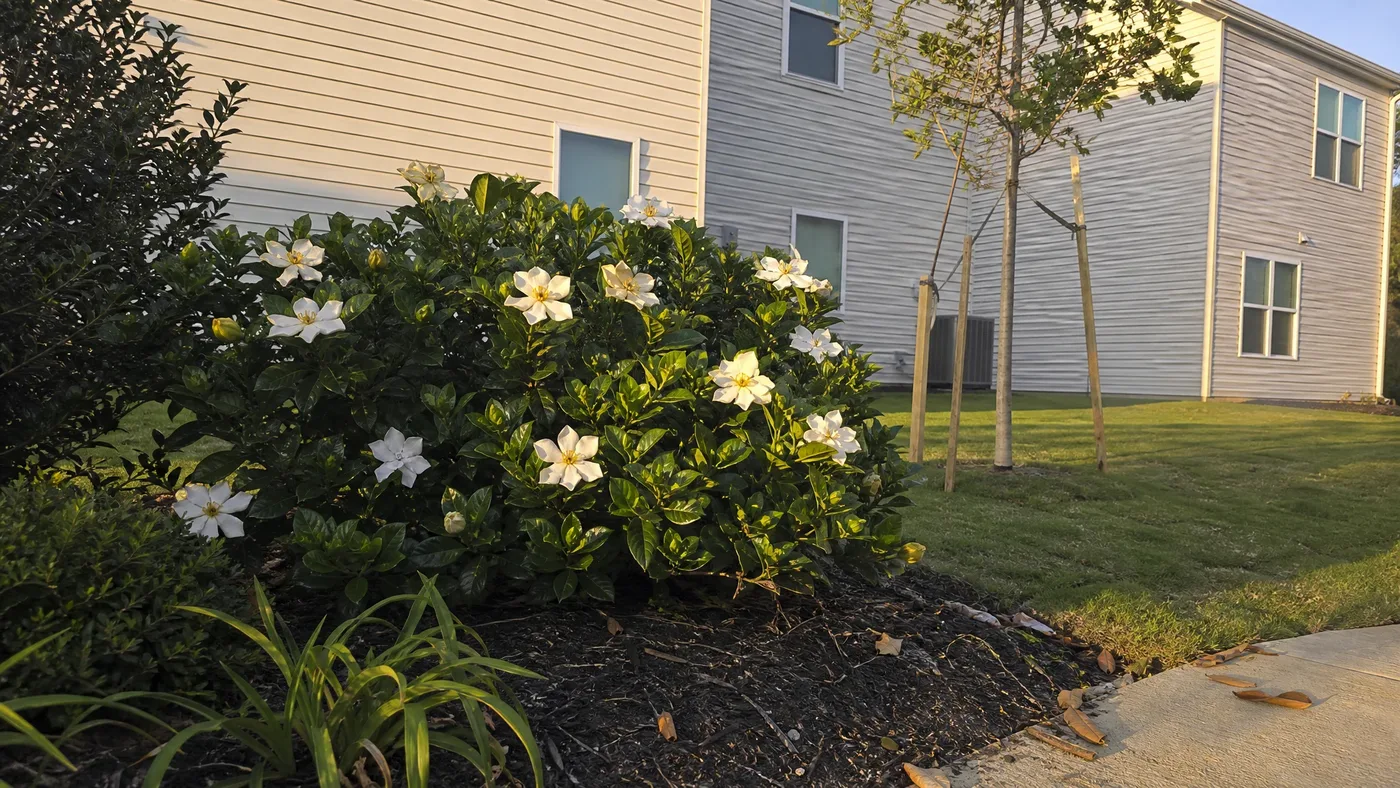
Kleim's Hardy Gardenia vs Daisy Gardenia: Size and Bloom
Lay a tape measure along your bed and write down the number. Say it reads 30 inches, a common width for a strip beside a driveway or foundation. Now ask what fits once the gardenia is full grown, not on the day you plant it.
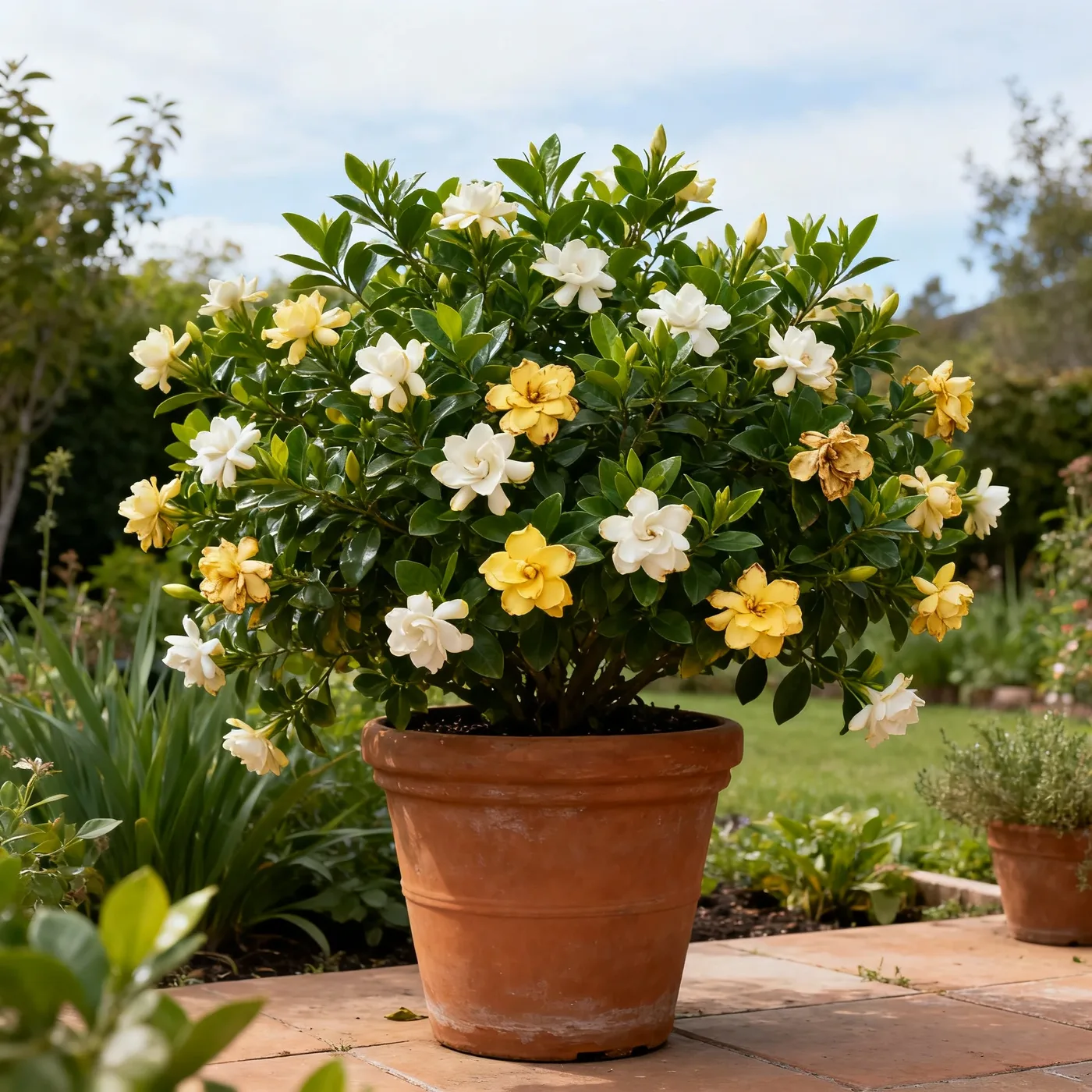
Kleim's Hardy and Daisy get mixed up because both are single-flowered, both are sold as the tougher gardenia, and both are listed at about 3 feet. One of the most common questions we get is which one to buy. Choose wrong and you end up with a shrub leaning over the path, or a bloom season shorter than you wanted.
This guide covers everything you need to know about choosing between them, from fitting a narrow bed and surviving a windy corner to holding up in a hot pot and looking good from the window.
A Narrow Side Bed Beside the Driveway
A 30-inch bed is 2.5 feet. A gardenia needs that much room at maturity, plus a few inches so the leaves are not brushing a car door or the siding. On paper the two plants look like twins, and that is where most people stop reading. Keep going, because in a bed this narrow the whole decision comes down to a few inches.
Measure the Plant Against the Bed
Kleim's Hardy grows 2 to 3 feet wide and about as tall. Both Kleim's Hardy and Daisy reach about 3 feet tall and wide, which is 36 inches. Plant a full-size 3-foot shrub in the center of a 30-inch strip and it overhangs by about 3 inches on each side. That is fine beside a lawn and annoying beside a driveway.
So in a bed this narrow we'd choose Kleim's Hardy. Its listed range starts at 2 feet, which gives you a real chance of landing near 30 inches. The sources we use give Daisy one figure, about 3 feet, with no range, so you have no cushion. That is a gap in the data, not proof that Daisy is bigger, so ask whoever sells you one what they have actually seen.
Growth rate helps too. Kleim's Hardy grows slowly, where the species is rated medium, so width arrives over years and a light trim keeps up with it. Check the tag as well. The plain species reaches 4 to 8 feet wide, and a bare "gardenia" label can mean that plant. Our size and growth rate guide shows what to expect year by year.
Watch What the Driveway Does to the Soil
Narrow beds along driveways and foundations often sit on construction fill, and concrete can push soil pH up over time. Gardenias want acid soil, below pH 6.0. The usual sign of trouble is new leaves turning pale yellow while the veins stay green. It happens to both plants equally.
Test the soil before you plant. If it reads high, dig out the rubble and backfill with an acid planting mix rather than hoping a feeding will fix it later. Pavement also throws heat, so water the strip steadily through summer. Yellow leaves in a narrow bed are usually pH first and water second.
Kleim's Hardy Gardenia on a Windy Corner Lot
A corner lot takes wind from two directions with little shelter from either. Cold and wind together are what test a gardenia, so take them in that order.
Cold Hardiness First
Kleim's Hardy is hardy to 10 °F, and the cultivar grows in zones 7a through 11b. Daisy is the more cold hardy of the two. The sources we use give no matching number for Daisy, so check with your local extension service before you bet a zone 7a corner on the difference.
Customers usually ask us whether the hardier one is worth giving up anything else. What we tell them is that it depends on how close your winter lows come to 10 °F. If they come close, Daisy is the safer pick for that corner. If they do not, hardiness is a tiebreaker and the other points in this guide decide. Our hardiness zones guide goes deeper on where each zone stands.
What Wind Does to the Flowers
Both plants carry single flowers, and Kleim's Hardy flowers reach up to 2 inches across. A single flower has one ring of petals and nothing behind it to take a beating, so a hard gust in bloom week bruises and browns them. Here the two plants part ways. Arkansas extension says Daisy produces all of its blooms at once and is done. If a storm lands that week, you lose the season. Kleim's Hardy blooms in May with a smaller fall flush, so one bad week costs you only part of the show.
Diagnose damage by where it sits. Crisp brown edges on the windward side of the shrub point to wind and winter drying, not soil pH. Yellow with green veins is a soil problem and shows up everywhere on the plant. For exposed corners, plant on the lee side of a fence or house wall, mulch the root zone and water through dry winter spells. Our winter care guide covers the rest.
A Pot on a Hot South-Facing Deck
A south-facing deck is the hardest place on this list. The boards and the wall behind them hold heat, and a pot dries far faster than a bed. Size matters here because the pot has to hold the roots of a shrub that ends up around 3 feet. Kleim's Hardy starts from a listed 2 to 3 feet and grows slowly, so it stays in one container longer than a faster species would. Our pots and containers guide covers pot sizes and repotting.
Bloom performance is where the choice really shows on a deck, because you sit there. Daisy gives one burst and then it is finished. Kleim's Hardy gives a main flush and a smaller fall one, with flowers in summer and autumn. For a patio you use all season, we'd pick Kleim's Hardy.
Setting Up the Pot
These points matter more than which cultivar you choose.
- Fill the pot with an acid potting mix and keep the pH below 6.0 for the cultivar, and make sure the pot has drainage holes.
- Give it morning sun and some afternoon shade. The cultivar takes full sun to partial shade, and partial or dappled shade suits it well, so on a south deck the late afternoon is the part to soften.
- Water when the surface starts to dry and do not let the mix dry out through. A pot that swings between soaked and parched drops buds.
- Pull the pot a few inches off a hot wall or railing so the roots do not bake against reflected heat.
- In winter, remember a pot exposes the roots to cold from every side, so do not lean on the in-ground zone rating.
Reading the Leaves on a Deck
Crisp brown edges and drooping point to heat or dryness. Yellow leaves with green veins point to mix that has drifted toward alkaline, often from hard tap water over a season. Evenly pale, limp leaves with a soggy pot point to overwatering. Fix the cause you see, not the one you assumed.
Bloom Shape in a Bed Seen From the Window
Now picture the bed from a chair indoors. Flower form is the question here, and the honest answer is that both plants are single. Ignore any listing that promises a double bloom for either one.
Up Close on the Flower
Kleim's Hardy has single star-like ivory flowers up to 2 inches across with bright golden stamens. Arkansas extension notes that on cultivars like it, the petals tend to be more pointed. That gives a crisp star with an open center. If you are choosing for the flower itself, look at a Daisy in bloom before you buy, because the sources we use describe its blooms only as single.
Across the Yard Through Glass
From a window, you do not see petal shape. You see white dots against deep glossy green leaves, and the outline of the shrub. That makes habit matter more than the flower. Kleim's Hardy is mounding, and a rounded mound holds a clean shape in the bed all year because the leaves are evergreen.
Timing matters next. Daisy is the plant to choose if you want one big white event, and Kleim's Hardy suits you if you want repeated color. Our bloom time guide lays out the calendar. If the window faces a sitting area, Kleim's Hardy also gives you fragrance across more weeks, which counts for more than petal shape.
Where Kleim's Hardy Gardenia Wins and Where Daisy Does
Put the four cases side by side and a pattern shows. Kleim's Hardy wins on fit and on how long the show lasts. Daisy wins on cold. The table below sums up our pick for each situation.
| Situation | Our pick | Why |
|---|---|---|
| 30-inch side bed | Kleim's Hardy | Listed range of 2 to 3 feet gives you room to land near 30 inches |
| Windy corner, mild winters | Kleim's Hardy | Blooms spread across a main flush and a fall flush, so one storm costs less |
| Windy corner, lows near 10 °F | Daisy | The more cold hardy of the two |
| Hot south deck pot | Kleim's Hardy | Longer bloom season and slow growth suit a container |
| One big show from the window | Daisy | All its blooms open at once |
That is a candid split, and it leans toward Kleim's Hardy for most yards. Daisy earns its place in a narrower set of jobs. It suits the coldest edge of your range, or a spot where you want a single burst of white and nothing else. Neither wins on size, because the numbers are too close.
Picking Kleim's Hardy Gardenia or Daisy for Your Yard
Run the decision in this order. First, measure the bed and the corner. Next, check your winter lows against 10 °F, and ask your local extension service where Daisy's limit sits. Then decide whether you want one big flush or a season of flowers. If cold is not your problem, Kleim's Hardy answers the other questions better. If cold is the problem, Daisy earns the spot.
Whichever you choose, get the soil below pH 6.0 and keep the water steady, because yellow leaves come from those two far more often than from the cultivar. If your bed is 30 inches wide or less, plant Kleim's Hardy and save Daisy for the spot with a full 3 feet and a cold winter to beat.
Kleim's Hardy Gardenia
Nursery-grown Kleim's Hardy Gardenia in sizes from 2 Quart, shipped to your door.
From $15.95
Shop Now →Kleim's Hardy grows on our farms in acidic soil with plenty of sun and a bit of shade, and we keep a close eye on how big each shrub gets. Our own crew raises these top-quality shrubs, so we like helping you pick one that suits the bed you measured. When you have your answer, come and browse our gardenias.