Kleim's Hardy Gardenia Bloom Time, Color and How Long It Lasts
If you're planning a spring garden and want reliable, fragrant white flowers in May, Kleim's Hardy Gardenia deserves a spot on your list. Right now, at the tail end of September, is the perfect time to think about next year's bloom. Soil preparation, site selection, and plant sourcing all start this fall so your gardenia arrives ready to flower hard come spring. This guide covers when Kleim's Hardy Gardenia flowers, what the blooms look like, how long they persist, and what conditions coax out occasional summer rebloom.
When Kleim's Hardy Gardenia Blooms
Kleim's Hardy Gardenia flowers in late spring to early summer, roughly May through June. That's the window across all three hardiness zones where it's reliable: zones 7, 8, and 9. Within that span, timing can shift by 1 to 2 weeks depending on your zone and how warm spring arrives.
Zone 7 gardeners at the cooler edge of the plant's range often see flowers open by late May or even early June as soil and air warm more slowly. Zone 9 gardeners in the Deep South commonly see bloom start by mid-May. Zone 8 splits the difference, with typical bloom arriving around the last week of May through mid-June. The differences are subtle, but they matter for garden photos and fragrance timing.
Bloom onset depends on soil temperature and day length, not calendar dates. A warm, early spring moves the window forward by a week. A cold, wet spring delays it. This is why two gardeners an hour apart sometimes report slightly different bloom windows. The plant responds to its immediate conditions, not the calendar.
Flower Color and How They Age
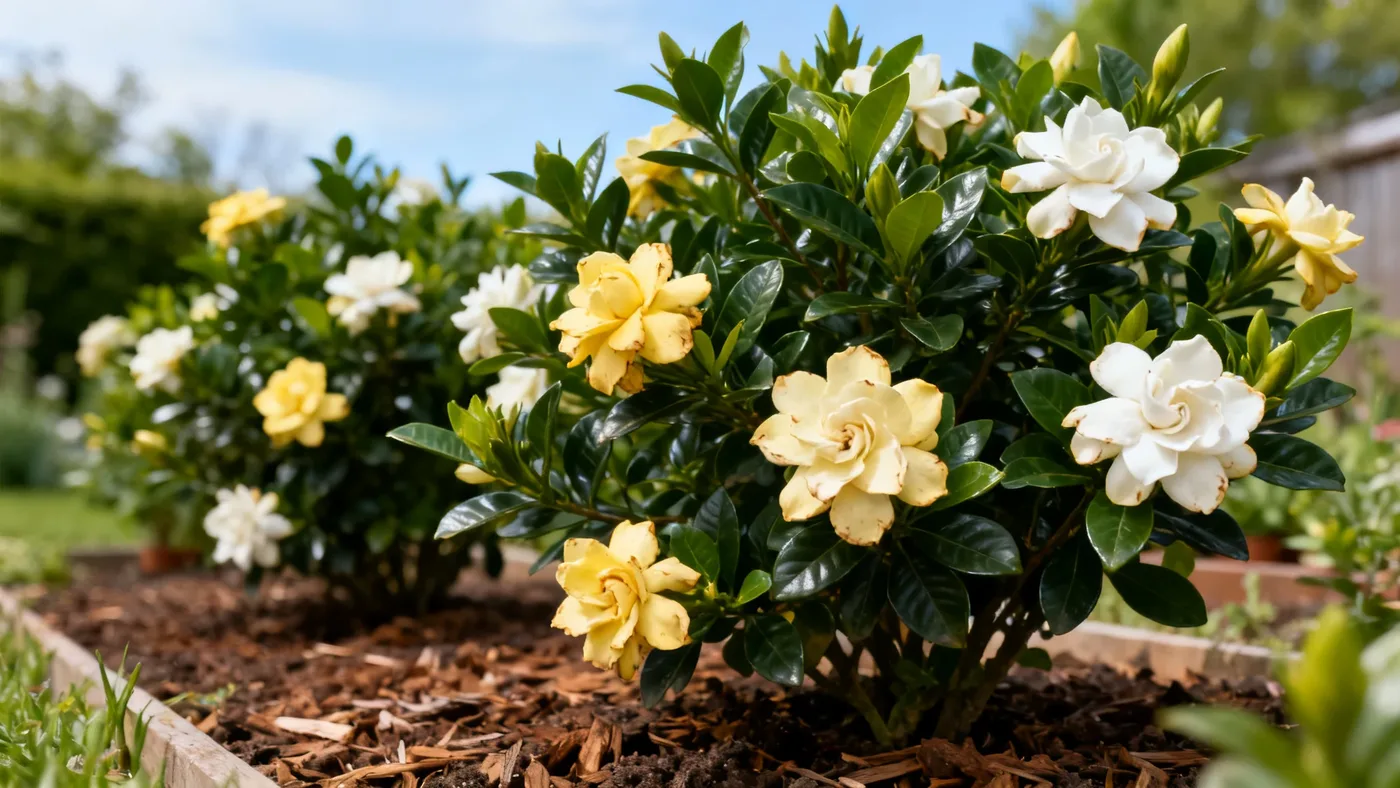
Kleim's Hardy Gardenia produces pure white, waxy flowers that age gracefully to creamy ivory and soft yellow tones over 1 to 2 weeks. This color shift is entirely normal and adds visual depth as the bloom matures. Early-season flowers often stay bright white longer than mid-summer bloomers, which age faster in heat.
The fragrance is strong and sweet, the classic gardenia scent that fills a room or garden at dusk. It's most potent in early morning and evening, when bees, moths, and other pollinators visit. If you site the plant near a window, seating area, or walkway, the fragrance carries indoors and creates a genuine sensory moment in your spring garden.
The blooms stand out against Kleim's dark green, glossy foliage. The leaves on this cultivar are smaller and narrower than standard Gardenia jasminoides varieties, which gives the shrub a more refined, compact look even when covered in flowers. This finer texture keeps the plant ornamental long after bloom fades.
How Long the Bloom Cycle Lasts
The main bloom cycle runs 4 to 6 weeks from first flower to complete fade, depending on temperature, moisture, and how the plant enters bloom. Individual flowers typically persist for 7 to 10 days. Since buds open in sequence over several weeks, the overall floral display stretches well into June.
Cooler springs with steady moisture extend bloom. Hot, dry spells shorten the display and risk triggering bud drop before they open. Humidity and afternoon shade in zone 9 help flowers hold their color and persist longer. Once daily high temperatures stay above 85°F consistently, bloom typically thins.
By mid-to-late June, the main bloom window closes. At this point, the plant transitions to summer growth. This is the right time to prune if needed, since next year's flower buds form on the season's new growth.
Will It Rebloom in Late Summer?
Kleim's Hardy Gardenia occasionally produces light rebloom in late summer under favorable conditions. This is not guaranteed and varies by climate, care, and individual plant vigor. Treat summer rebloom as a bonus rather than something to count on.
Conditions that favor late-summer rebloom include consistent watering through dry July and August spells, light pruning only (no heavy cutback), full sun to part shade positioning, and stable temperatures. Zone 7 gardeners are less likely to see reliable rebloom because the plant is focused on hardening off for winter rather than flowering.
If rebloom occurs, expect scattered flowers rather than the May-June flush. It's typically a shorter, lighter display, sometimes just a few blooms rather than dozens. Autumn rebloom is not reliable enough to design your color plan around it, but a few unexpected flowers in September are a welcome gift.
What Stops Blooming Before It Starts
Bud drop is the number-one complaint from gardeners, and it almost always traces to one of three causes: sudden temperature swings, drought stress, or overwatering. Young plants or those set in the ground for the first time are especially sensitive.
Temperature swings. A warm spell in April followed by a hard freeze can kill developing flower buds. The plant mistakes the warm days for spring and expends energy on bloom, then cold snaps damage or kill the buds. This is why planting in a site with morning sun but afternoon shelter works well in zone 7.
Drought during bud swell. Gardenia needs regular water as it approaches bloom time. A week without water in late April, when buds are swelling, can trigger complete bud drop. In-ground plants tolerate brief dry spells better than containers, which dry out faster.
Overwatering and poor soil drainage. Standing water, compacted soil, or pots without drainage holes invite root rot and fail to support flowering vigor. Kleim's Hardy Gardenia wants consistently moist, well-drained soil rich in organic matter. Wet is not the same as moist.
Soil pH out of range. Gardenias thrive in acidic soil between pH 5.0 and 6.5. Alkaline soil triggers chlorosis, yellow leaves with green veins, and suppresses bloom. If your soil leans alkaline, amend with sulfur or peat moss in fall, and feed with an acid-forming fertilizer in spring.
Maximizing Bloom and Duration
You cannot force Kleim's Hardy Gardenia to bloom outside its natural May-June window, but you can maximize the vigor of the display and length of bloom you get.
- Prepare soil in fall with compost and peat moss to build organic matter and lower pH.
- Plant in spring or early fall to allow root establishment before temperature extremes.
- Water deeply and consistently, especially from late April (bud swell) through late June (bloom fade). Once established, the plant is moderately drought-tolerant, but not during critical flowering periods.
- Feed in early spring with an acid-forming fertilizer labeled for azaleas, camellias, and gardenias. Follow product rates; avoid heavy nitrogen, which delays bloom.
- Prune lightly right after bloom fades in late June. Never prune in late summer or fall, or you remove next year's flower buds.
- Mulch lightly with 2 to 3 inches of pine bark or compost to retain moisture and keep soil cool. Avoid burying the root collar.
Quick Reference: Bloom Timing by Zone and Season
| Zone | Typical Bloom Window | Peak Bloom | Rebloom Odds |
|---|---|---|---|
| 7 | Late May–Mid June | Early June | Rare; possible in mild summers |
| 8 | Mid May–Mid June | Late May | Occasional in favorable years |
| 9 | Mid May–Early June | Mid May | More likely with consistent summer water |
Year-Round Bloom Support Schedule
| Season | Action | Why It Matters |
|---|---|---|
| Fall (Sept–Oct) | Amend soil; plant new shrubs in early fall | Establishes roots before winter; improves drainage and pH |
| Winter (Dec–Feb) | Monitor for cold damage at zone 7 edge; ensure drainage | Prevents root rot and winter dieback |
| Spring (Mar–Apr) | Apply acid-forming fertilizer; begin regular watering | Supports bud set and vigor |
| May–June (Bloom) | Water deeply; enjoy fragrance; prune after bloom ends | Extends bloom; shapes plant for next year's buds |
| Summer (Jul–Aug) | Water during dry spells; avoid heavy pruning | Supports rebloom potential and hardening off |
Learn More About Year-Round Care
For complete planting, spacing, soil preparation, and troubleshooting guidance, read our Kleim's Hardy Gardenia Care Guide. It covers everything from planting depth and fertilizer selection to winter protection in zone 7 and managing common pests and diseases that can interfere with bloom.