Kleim's Hardy Gardenia vs Chuck Hayes Gardenia: Size and Hardiness
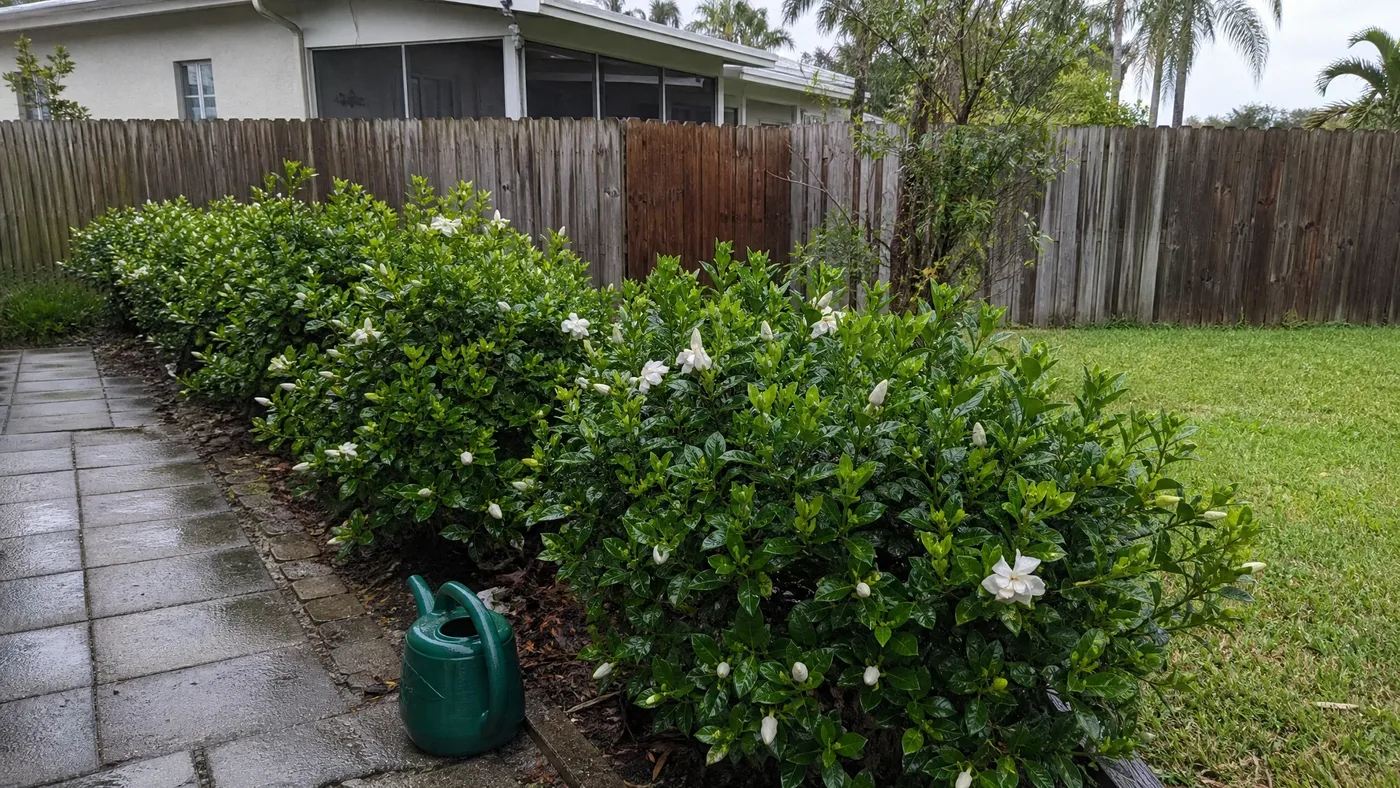
The tape measure says 30 feet of fence, the fence gets about six hours of direct sun, and the hedge has to be chosen before Saturday. Two gardenias come up for this job again and again: Kleim's Hardy and Chuck Hayes. Both are selections of Gardenia jasminoides, a species that grows 4 to 8 feet tall and wide. Kleim's Hardy is the dwarf of the two, and Chuck Hayes is known for cold hardiness.
The choice matters because a gardenia hedge fails slowly and expensively. Buy too few plants and you look at gaps for years. Pick a plant that cannot take your coldest night and the gaps open in winter. Read on for the plant counts for both cultivars, what a hard freeze does to each, how long each blooms, what the hedge costs in plants and years, and the one we would plant.
A 30-Foot Hedge Along a Zone 7 Fence Line
Every later choice in this guide leans on four measurements, so write yours down before you shop. Our example is a straight fence 30 feet long in USDA zone 7, with a hedge that reads as one continuous line of glossy foliage but stays low enough to see over. We are using the example because a gardenia hedge is easy to get wrong by eye and easy to get right with arithmetic.
- Length: 30 feet, measured along the base of the fence with a tape, not paced off or guessed from the house.
- Sun: about six hours of direct light. A site with 6 or more hours counts as full sun, and Kleim's Hardy is listed for full sun to partial shade, so this fence suits it.
- Soil: acid, with a pH below 6.0, and moist but well drained. Test the strip first, because soil beside a concrete footing or an old limed lawn can run higher than the rest of the yard.
- Height: a 3-foot hedge, below the top rail, kept that height without a ladder.
Zone 7 is the number that makes this a real decision. Kleim's Hardy is listed for zones 7a through 11b, so our fence sits at the cold edge of the range. One of the most common questions we get is whether a gardenia hedge is realistic at the edge of its range, and our answer depends on how cold that particular fence gets.
Counting Kleim's Hardy Gardenia at Mature Width
Kleim's Hardy has a mature size of 2 to 3 feet tall and 2 to 3 feet wide. That is the first thing in its favor for our fence, because the top of its height range is exactly our 3-foot target. The plant gets to hedge height on its own. The plant count then comes from one division: fence length divided by the spacing between plant centers.
Here is the 30-foot fence at three spacings across the width range.
| Spacing | Plants for 30 feet | What you get |
|---|---|---|
| 2 feet | 15 | Plants meet as soon as they are 2 feet wide, the fastest closed line |
| 2.5 feet | 12 | Plants meet at the middle of the width range |
| 3 feet | 10 | Plants meet only when each reaches full 3-foot width |
We would plant 12 at 2.5 feet. Set the first and last plants 1.25 feet from the fence ends, and every plant in between 2.5 feet from its neighbors.
Common advice says to space shrubs at their full mature width to save money. For a slow grower like this we would rather buy two extra plants than wait years for the last gaps. Our size and growth rate guide explains why Kleim's Hardy is slower than the species.
Redoing the Count With Chuck Hayes
Chuck Hayes grows slightly larger than Kleim's Hardy, and that single difference changes both the count and the upkeep. We are not quoting a Chuck Hayes width here, because the tag on the plant you buy is the number to trust. The arithmetic is the same as before, so you can run it yourself the moment you have that figure.
The Formula for Your Tag
Divide 30 by the mature width on the tag, then round up to a whole plant. The anchor is the top of the Kleim's Hardy range: at 3 feet apart the fence takes 10 plants. A slightly larger plant needs that spacing or more, so expect 10 or fewer Chuck Hayes where you would have bought 12 Kleim's Hardy. Fewer holes to dig is a real saving.
What the Extra Size Costs You
The trade is height. A plant that grows beyond 3 feet will push past our target, so the hedge needs regular trimming to stay at 3 feet, where Kleim's Hardy simply stops. Check our pruning guide for timing before you pick up shears.
What you get back is cold hardiness and double flowers. The Crown Jewel hybrid credits Chuck Hayes with the cold hardiness and double bloom, and Kleim's Hardy with the dwarf size and prolific flowering. That split is the whole comparison in one sentence.
When a Cold Snap Hits Kleim's Hardy Gardenia and Chuck Hayes
Suppose the forecast calls for a hard freeze in January. What happens to the hedge depends on the low your thermometer records at the fence, not the one on the weather app, because a fence line can run colder or warmer than the official station. Work through the branches below in order.
If the Low Stays at or Above 10°F
Kleim's Hardy is hardy to 10°F. At or above that, expect the hedge to come through with its stems alive, though the leaves may brown or curl. Chuck Hayes is also a cold-hardy selection, so a night in this band does not separate the two. Cold alone should not decide the choice if your fence rarely goes lower.
If the Low Falls Below 10°F
Now Kleim's Hardy is past its rating. A short dip with no wind will likely cost you leaves and shoot tips. Several nights in a row can kill stems back, and the hedge may regrow from the base or not at all.
Chuck Hayes is the cultivar credited with cold hardiness in the Crown Jewel cross, so in a side-by-side planting we would expect it to hold more live wood. We cannot give you a number for it, so check the tag against your coldest recorded night.
Reading the Damage in Spring
Customers usually ask us whether to cut brown gardenias in February. Wait until new growth starts. Then scratch a stem with a thumbnail: green underneath means alive, brown and dry means dead, and you cut back to the live wood only. Our winter care guide covers protection before the next freeze.
Bloom Length Along the Kleim's Hardy Gardenia Hedge
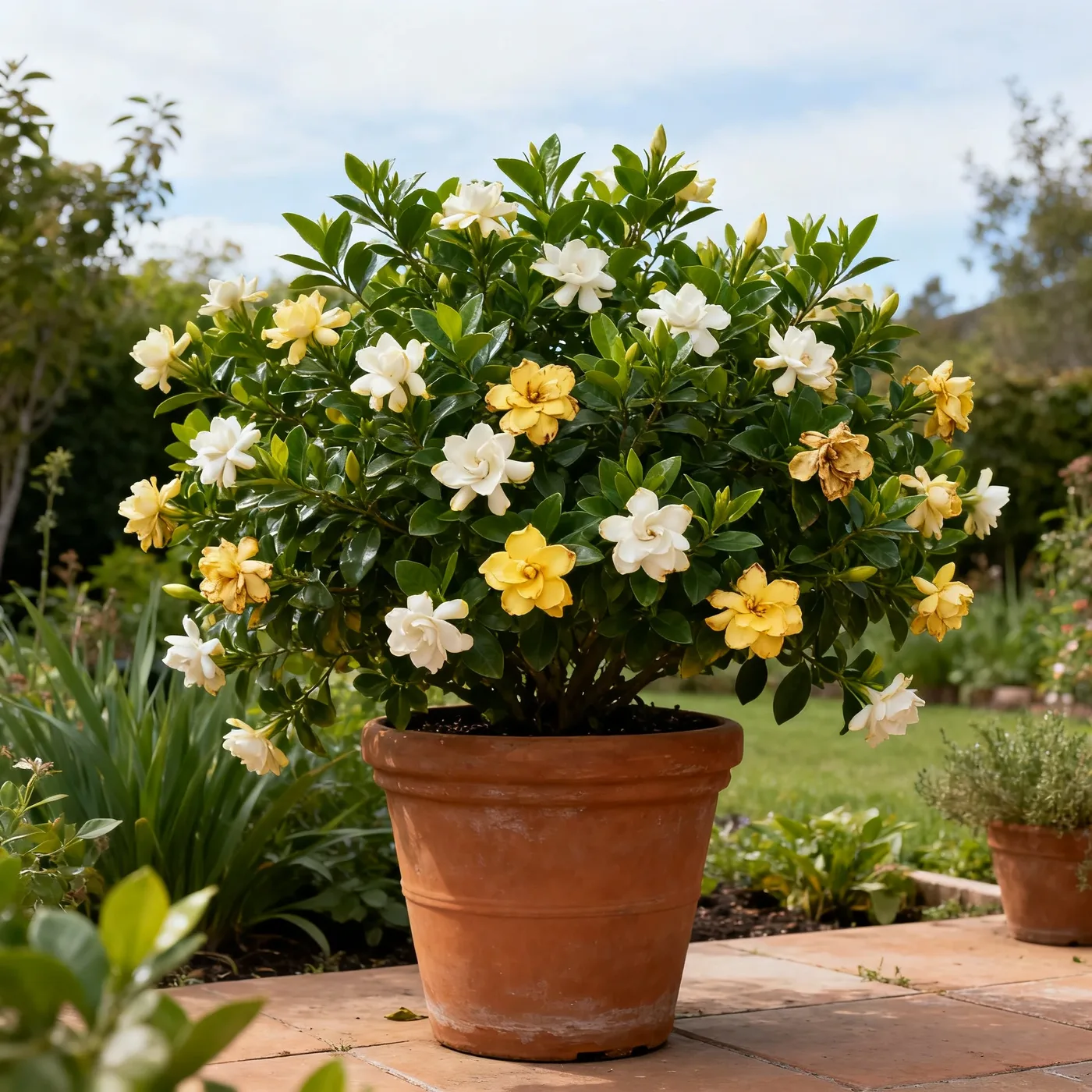
A gardenia hedge earns its space from the flowers, so follow the season along the fence. Kleim's Hardy blooms in summer and carries very fragrant, single, white, saucer-shaped flowers in summer and autumn.
Along 12 plants, that means the line turns white once summer arrives and keeps producing flowers into autumn, with fragrance strongest where the plants stand close.
What Kleim's Hardy Gives the Fence
Kleim's Hardy is a prolific bloomer, which matters on a hedge, because twelve flowering plants at once read as a white ribbon rather than scattered blooms. The flowers are single, so each one opens flat and light. Heavy bloom depends on sun and steady moisture, and our bloom time guide breaks down how long each flush lasts.
What Chuck Hayes Changes
Chuck Hayes brings double flowers, which look fuller and heavier on the plant. In our experience it also keeps blooming longer and repeats more than Kleim's Hardy does, so the line stays in flower for more of the season. The price is that you have fewer, bigger plants carrying that show, and they need more trimming to stay at 3 feet.
What the Hedge Costs in Plants and Years
Costs are best counted in plants and years, since prices change by season and size. Kleim's Hardy takes 12 plants for our fence. Chuck Hayes takes 10 or fewer, depending on its tag width. Add bed prep, because acid, well-drained soil along the whole strip matters more than the plant count, and our planting guide walks through the hole and the bed.
Time is the bigger bill. Kleim's Hardy has a slow growth rate.
At 2.5-foot spacing the line looks continuous only once each plant is that wide, so expect visible gaps in the early years. A slightly larger Chuck Hayes should close the line sooner, but ask the grower for its growth rate and do not count on a figure we cannot source.
Replacement risk is simple arithmetic. Lose one of 12 Kleim's Hardy and you lose about 8 percent of the hedge, a 2.5-foot gap that a single new plant fills. Lose one of 10 larger plants and you lose 10 percent, a gap of 3 feet or more. Cold is the likeliest cause at zone 7, so the real cost of Kleim's Hardy is the chance of replanting after a night below 10°F.
Kleim's Hardy Gardenia or Chuck Hayes for This Hedge
For this fence, we would plant Kleim's Hardy: 12 plants at 2.5 feet. The hedge height we set is the top of its size range, so it needs no trimming to hold. It has the prolific single flowers from summer into autumn, and a count of 12 spreads the risk across more plants. That answer holds only while the fence stays at or above 10°F in a normal winter.
The numbers that would flip the answer are these:
- If the lowest temperature you have recorded at that fence falls below 10°F in more than the odd winter, plant Chuck Hayes for its cold hardiness.
- If you want the hedge taller than 3 feet, plant Chuck Hayes, since it grows slightly larger and you will not be fighting its habit.
- If you want double flowers or the longest, most repeating bloom season, plant Chuck Hayes.
- If you want a low hedge you never have to trim, plant Kleim's Hardy.
- If fewer plants to buy and dig matters most, plant Chuck Hayes, at 10 or fewer for this fence.
Our hardiness zones guide helps you read your own zone against that 10°F line.
Measure First, Then Pick the Gardenia
The example comes down to three numbers: fence length, hedge height and the coldest night you have actually recorded. Kleim's Hardy gives a low, compact line of single flowers that stays near 3 feet. Chuck Hayes gives a slightly larger plant with double flowers, a longer season and more cold hardiness.
Apply this rule to your own fence: if your hedge is 3 feet or lower and your lows stay at or above 10°F, divide your length by 2.5 and buy that many Kleim's Hardy. If you want it taller, or your lows fall below 10°F, divide by the Chuck Hayes width on the tag and buy that many instead.
Kleim's Hardy Gardenia
Nursery-grown Kleim's Hardy Gardenia in sizes from 2 Quart, shipped to your door.
From $15.95
Shop Now →Along the fence rows on our farms, Kleim's Hardy gets acid, moist but well-drained soil and a spot that ranges from full sun to partial shade, which suits a low hedge. Growing top-quality shrubs is our whole business, and it all happens on farms of our own. Once you have measured your fence and settled on a gardenia, we would be glad for you to take a look at ours.