Kleim's Hardy Gardenia vs Pinwheel Gardenia: Flower Shape and Size
In our rows this season, nearly every email that starts with "why aren't my petals ruffled?" has turned out to be about the weather or a photograph, not a wrong plant. Someone sends a picture of a flat, single, saucer-shaped flower and asks whether we mixed up the tag. The tag is almost always right.
This guide covers everything you need to know about choosing between Kleim's Hardy and Pinwheel, from the shape of an open flower and what the first summer really looks like to spacing, planting the two side by side and why pruning will not fix a bloom you did not expect. Settle the choice up front and you skip a few seasons of squinting at a shrub and wondering.
Simple Star Against Ruffled Pinwheel Petals
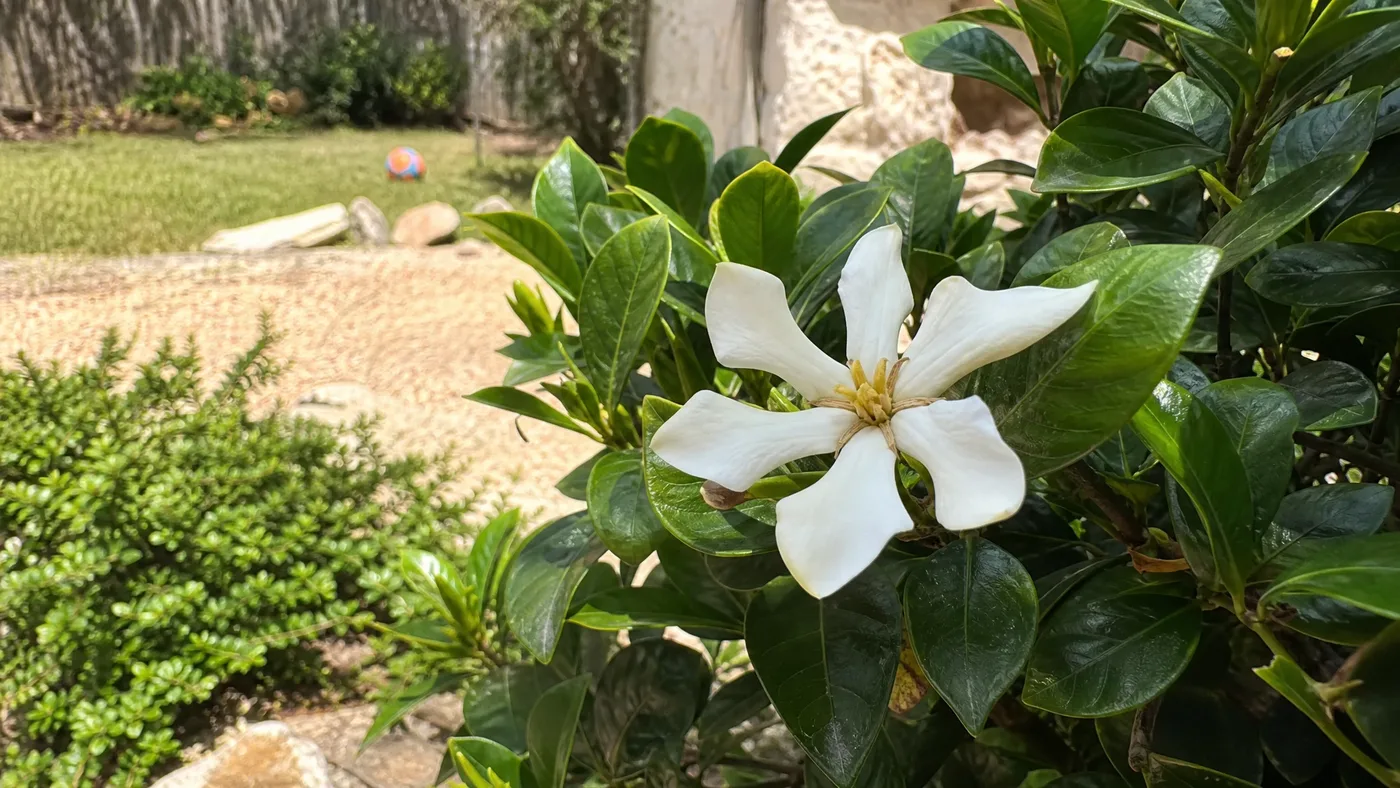
Kleim's Hardy bears single flowers: one ring of five or six petals, held flat like a star or a shallow saucer. They are very fragrant, single, white and saucer-shaped, over deep glossy green leaves. There is no frill and no stack of petals in the middle. Beside a florist's double gardenia a fresh bloom looks plain, and that plainness is the cultivar, not a defect.
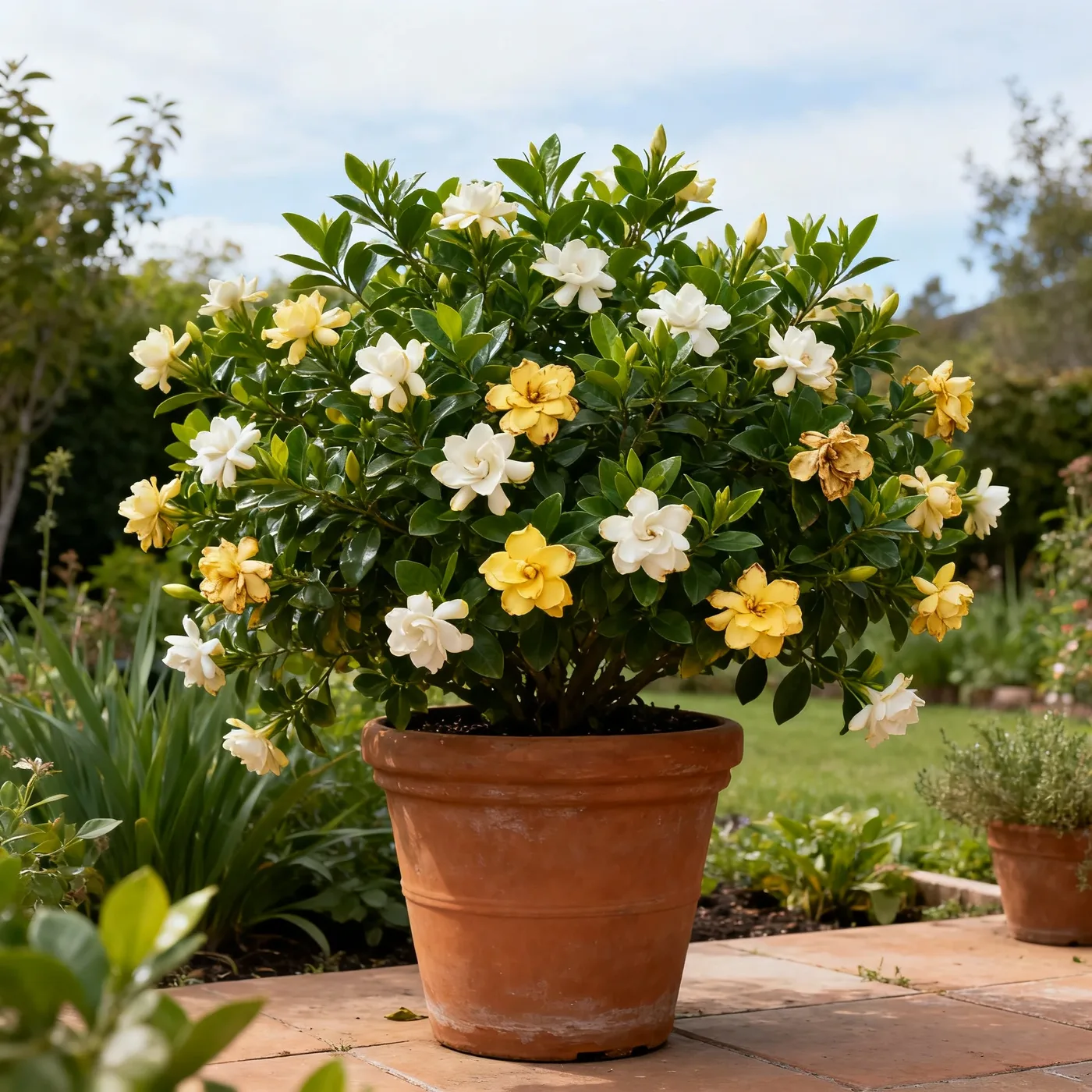
Pinwheel is the show-off. Each petal is fluted and ruffled at the edge, and the whole flower reads as a little spinning wheel, which is where the name comes from. Both plants make white, fragrant flowers, so color and scent will not settle the question. Edge and outline will.
Check an open flower in this order:
- Count the petals. Five or six in one flat ring is Kleim's Hardy. A flower whose petals overlap and twist around each other is behaving like Pinwheel.
- Read the edge of each petal. Smooth and flat is Kleim's Hardy. Fluted or ruffled is Pinwheel.
- Look straight down. A star or saucer outline is Kleim's Hardy. A spiral of overlapping petals is Pinwheel.
- Judge a fresh flower. A bloom open for a day or so shows its true form. Browning, curling edges on an old flower can pass for ruffles, and they fool plenty of people.
Season helps as well. Kleim's Hardy flowers in summer and autumn, while Pinwheel flowers throughout summer. If you are still opening buds as the weather cools, that fits Kleim's Hardy, and our guide to bloom time and color covers the rest of the calendar.
Short version: flat means Kleim's Hardy, frilled means Pinwheel.
Nursery Photos and Kleim's Hardy Gardenia at Home
Catalog and website photos are shot at peak: a mature shrub, a dozen flowers open at once, soft light, and no rain the night before. Nobody photographs the Tuesday after a thunderstorm. A gardenia flower is delicate, and a hot spell or a hard rain can leave a bloom crumpled or spotted before it shows its real shape. If your first flower looked tired, judge the second one.
Scale gets distorted too. A close-up of one flower fills the frame and makes a 2 to 3 foot shrub look like a hedge plant.
The First Summer Reality
Kleim's Hardy grows slowly. The cultivar's growth is rated slow where the species is rated medium. A new plant spends its first summer on roots, so expect a compact mound of deep glossy green leaves, a few flowers at most, and sometimes buds that drop before they open. That is a plant settling in, not a wrong plant, and a plain first summer usually gives way to a better second.
Reading a Disappointing Flower
Before you blame the cultivar, check the plant. Leaves that yellow while the veins stay green usually mean the soil is not acid enough, and Kleim's Hardy is listed for acid soil, below pH 6.0. Our soil, drainage and pH guide walks through testing. Dry soil in a hot week does its own damage: buds drop, flowers brown, and the shape you hoped to see never develops.
If the leaves are glossy and green and the flower is still a plain flat star, nothing is wrong. That is the plant, and no photograph is going to make it ruffled.
A Tight Planting Against Room for Kleim's Hardy Gardenia
Gardenia jasminoides as a species reaches 4 to 8 feet tall and wide, and a lot of planting advice online is written for that plant. Kleim's Hardy stays far smaller, at 2 to 3 feet tall and wide. Plant it on a species-sized grid and you leave gaps for years. Plant it too close because it looks small in the pot and you get the opposite problem.
A crowded bed hides the thing you bought the plant for. Branches knit together, inside leaves lose light, and flowers open in the middle of a mass where you cannot see their shape or smell them as you walk past. Poor air movement also invites the problems listed for this cultivar, including leaf spots, powdery mildew and sooty mold.
Once the shrubs have a few seasons behind them, the two plantings compare like this:
| What you notice | Crowded planting | Roomy planting |
|---|---|---|
| Size reached | Neighbors compete for light and water, and plants grow lopsided | Each shrub can fill its full 2 to 3 foot width |
| Flowers | Buried inside the foliage, hard to see or reach | Open around the outside where the petal shape shows |
| Leaves | Damp, shaded interior, more room for leaf spots and mildew | Dry faster after rain |
| Pruning | Constant cutting to keep a gap between plants | Little needed |
What we tell customers is to start from the mature width and plan spacing around it, then check our size and growth rate guide and your local extension service for a final number in your soil. Pinwheel reaches about 3 feet tall, and its mature width is not in the sources we use, so give it at least the same room until you know.
Kleim's Hardy Gardenia Beside Pinwheel in One Bed
Put the two in one bed and the first thing you notice is how little separates them from ten feet away. The size gap is smaller than most shoppers expect, and the flowers are what tell you which is which.
Where They Look Alike
Kleim's Hardy carries deep glossy green leaves. Pinwheel is a bushy evergreen shrub to about 3 feet tall with glossy dark green leaves. Kleim's Hardy tops out at 2 to 3 feet, so on paper the heights overlap almost completely. Be wary of any listing that promises a big height gap between them, because the sources do not show one.
Where the difference may show is habit. Pinwheel is described as bushy, and Kleim's Hardy is a slow grower that stays compact. Over several seasons you may see one fill out faster, but we would not buy either plant for that reason alone.
Where They Part Ways
The flower outline is the obvious difference, and it reads best at arm's length. Pinwheel's frills are a close-range pleasure, so we would plant it beside a path or an entry. Kleim's Hardy is the better choice for the back of the bed or the corners, where a clean white star and a long season (summer into autumn) do the work. Late flowers in a mixed bed are most likely the Kleim's Hardy.
Hardiness needs a separate check. Kleim's Hardy is listed for zones 7a through 11b. We do not have a zone range for Pinwheel in our sources, so confirm it with your extension service before pairing them, and read our comparison of cold-hardy gardenias if cold is your main worry.
Wrong Pruning Against Right Patience
One of the most common questions we get is whether a hard cut will make the next flowers fuller or more ruffled. It will not. Petal shape belongs to the plant, so no pruning cut turns a single star into a frilled flower. What a hard cut does do is remove growth that would have carried flowers, which gives you fewer blooms of the same plain shape.
The size complaint goes the same way. Buyers who read 4 to 8 feet for the species shear Kleim's Hardy to keep it "in check," or hack it back to thicken it. A shrub that tops out at 2 to 3 feet has little to keep in check, and slow growth means every cut takes a long time to regrow.
What Wrong Pruning Looks Like
These are the cuts that do the most damage to a shrub that was fine to begin with:
- A hard cut in spring or early summer, when buds are forming and the plant has the most to lose.
- Shearing the outside into a tight ball, which thins the inner growth and leaves the plant looking stiff.
- Pruning to fix a flower or color complaint that actually comes from soil pH, dry roots or a rainy week.
What Patience Actually Means
Patience is not doing nothing. It means keeping the soil acid and evenly moist, and giving the shrub light it can use. The listed range runs from full sun, six or more hours of direct light, down to partial shade at two to six hours. Then you wait out the slow first seasons. Remove only dead or crossing wood, and do it after flowering, as our pruning timing and technique guide explains.
The right fix for a plant you do not love yet is a calendar, not a pair of shears.
Pick the Plant, Then Stop Second-Guessing
For most people we would choose Kleim's Hardy. It is listed for zones 7a through 11b, flowers from summer into autumn, stays at a manageable 2 to 3 feet, and gives you a clean, fragrant, single white flower. Choose Pinwheel only if the frilled bloom is the reason you are shopping, and only after you have confirmed it suits your zone.
Whichever you pick, neither plant cares that you spent a week comparing photographs. This weekend, measure the spot where it will go and mark out 2 to 3 feet of width for each shrub.
Kleim's Hardy Gardenia
Nursery-grown Kleim's Hardy Gardenia in sizes from 2 Quart, shipped to your door.
From $15.95
Shop Now →Our Kleim's Hardy plants live in beds of acid soil on our farms, with light that runs from full sun to partial shade, so we see its single white bloom open season after season. Growing our own top-quality shrubs is what our small business does, and that means we can tell you plainly what the flower looks like. Once you have settled on the shape you want, choose a Kleim's Hardy for your garden.