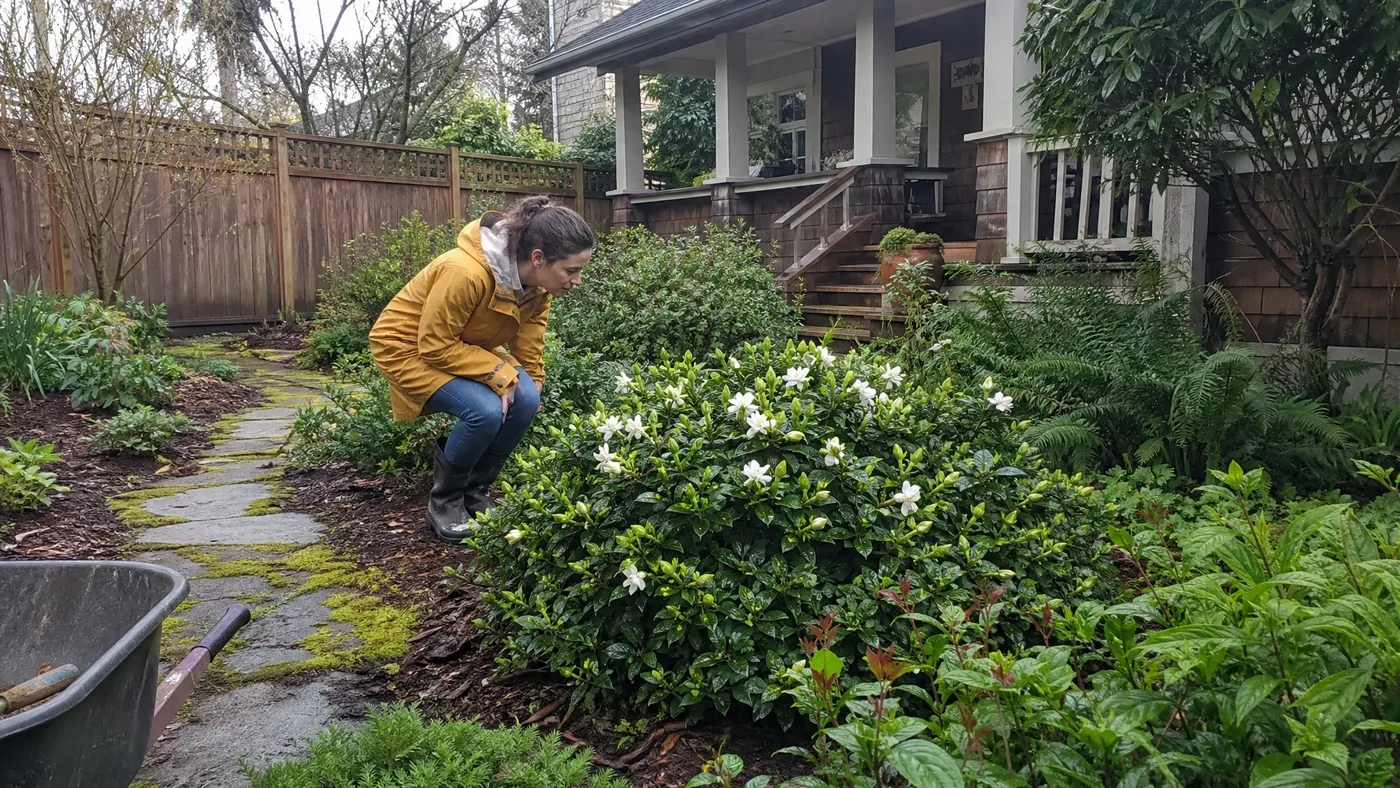
Kleim's Hardy Gardenia vs Fool Proof Gardenia: Bud Drop and Hardiness
Every June there is a morning when a Kleim's Hardy bud looks perfect. It is fat, waxy and pale green going to cream, and you bend down to sniff it even though it has not opened. A week later you find that same bud on the mulch, yellow and soft. That is the moment this topic gets urgent, and it is why people start asking whether Fool Proof, a gardenia bred to resist bud drop, would spare them the heartbreak.
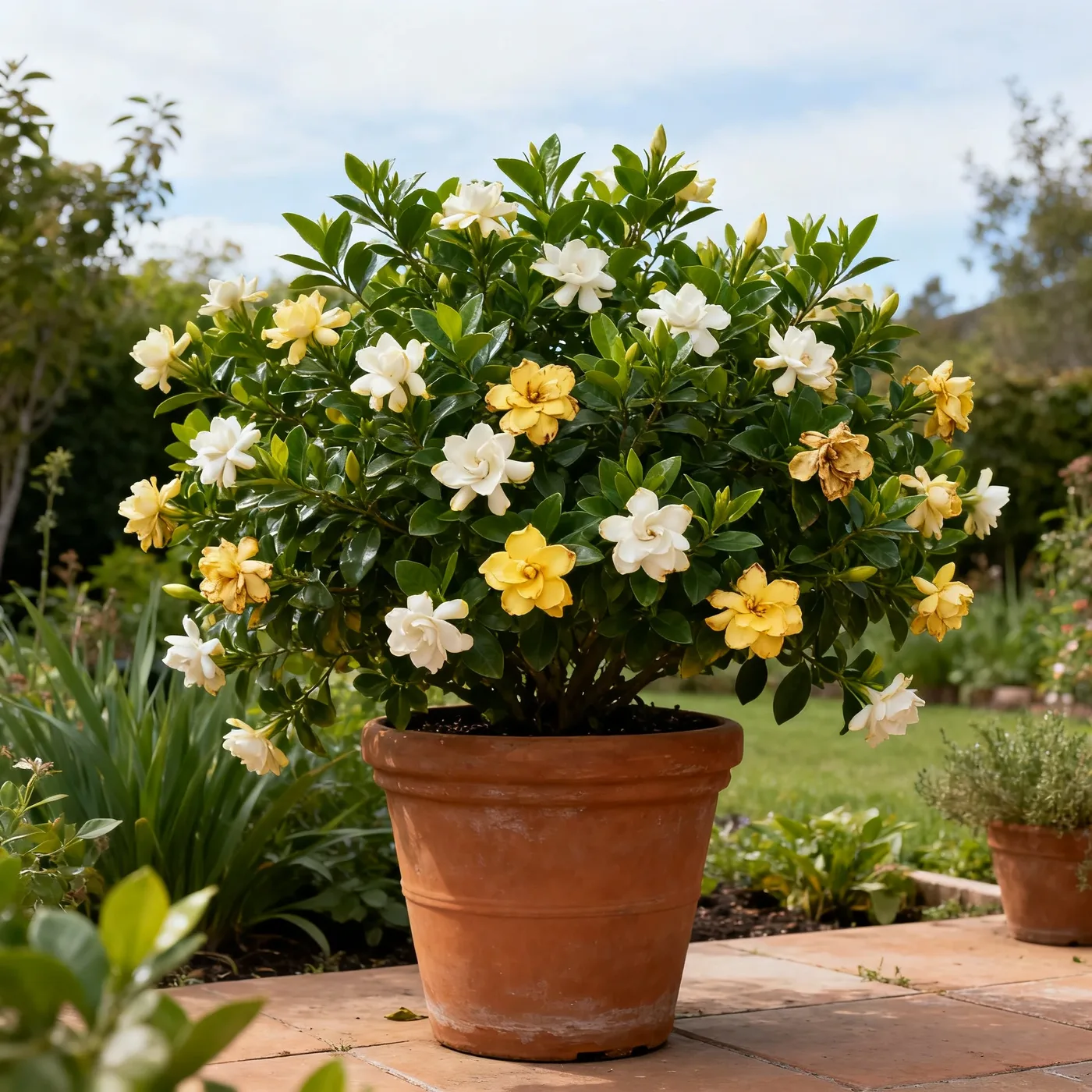
We'll walk you through what dropping buds look like and what causes each pattern, then how a cold snap, brown petal edges and stalled buds each read. After that we compare what Fool Proof's breeding really changes with what Kleim's Hardy asks of you, and say which one we would choose and for whom.
Buds Swell Fat, Then Yellow and Fall
The most common sight is a cluster of plump buds that turn yellow at the base, loosen, and drop within days of looking their best. Bud drop is a physiological disorder, not a disease, meaning the shrub is reacting to stress rather than fighting an infection.
That is good news, because stress can be corrected. On Kleim's Hardy the stress is nearly always something in your routine, so work down the list below in the order we usually find each one.
- Uneven water. A root ball that dries out and is then soaked, or one that sits wet after rain, makes the plant shed its most expensive tissue first, the buds.
- Pruning at the wrong time. Cutting in late spring or summer removes or shocks the wood that is carrying buds.
- Light that changed. A neighboring tree leafing out, a new fence, or a pot moved to a different porch can all trigger it.
- Sap-feeders. Aphids, mealybugs, scale, spider mites and whiteflies all affect this plant, and they hit buds hard.
- Heavy feeding. A strong nitrogen dose in early summer pushes leaves at the expense of flowers.
Start With the Roots
Push a finger two inches into the soil beside the plant. If it is dust-dry, or if it is soggy and smells sour, you have probably found the cause. Our full guide to watering Kleim's Hardy covers the rhythm, but the short version is moist, never swinging between extremes. Mulch helps more than any gadget.
Then Look at the Buds Themselves
Turn a fallen bud over. Tiny insects, sticky residue or stippled leaves point to pests, and our pests and problems guide shows what to do. A clean bud on a healthy-looking shrub points back to water, light or timing. Pruning is the one cause you can rule out by checking your calendar, and our pruning timing guide has the safe window.
Kleim's Hardy Gardenia Buds After a Cold Snap
If buds fell within a week of a chilly night, a late cold front or a sudden drop after warm days, you can usually trace the loss straight to the temperature. Kleim's Hardy is listed for zones 7a through 11b, but hardy describes how the wood survives winter, not how tender buds cope with a swing in spring or early summer.
Buds are the softest tissue on the shrub, and a dip they would shrug off as stems can still make them blacken or drop. Keep your expectations realistic about the shrub itself too. It is rated H3, about 23 to 34°F, which means it should tolerate only a few degrees of frost and wants a warm, sheltered spot. One of the most common questions we get is whether a gardenia sold as hardy can sit out a frost with buds on. It can survive one, but the buds often cannot.
What to Do the Evening Before
When a cold night is forecast while buds are swelling, drape a frost cloth or old bedsheet over the shrub in late afternoon, reaching the ground so it holds some soil heat. Water the day before if the soil is dry, because moist soil holds warmth better. Take the cover off in the morning once temperatures climb. Potted plants should come against a south-facing wall or inside an unheated garage.
What Not to Do Afterward
Do not prune the damaged buds off in a panic and do not fertilize to help the plant recover. Let it settle, keep the watering even, and new buds often follow. The shrub is putting its energy into recovering, and any shock on top of the chill only prolongs the pause.
Brown-Edged Petals on Kleim's Hardy Gardenia Blooms
Few things sting like a flower that opens white and perfumed and then browns at the rim within a day. The petal tissue of a gardenia bruises and burns easily, so this is a different problem from bud drop. A gardenia that gets as far as opening has already passed the hardest test, so the cause now is usually the weather of that particular day or two, with watering and feeding as the second suspects.
Weather
Hot, dry wind and strong afternoon sun are the commonest culprits. Petals scorch at the exposed edges first, while the center stays cream. Rain on open flowers also marks them, leaving brown water spots that spread. If the browning is on the side facing the afternoon sun, think shade, or shade cloth for the hottest weeks.
Water
A plant that is thirsty when the bloom opens cannot fill the petals fully, and the thin edges give out first. Flowers that brown quickly during a dry spell, even on a day that was not hot, tell you to deep-water at the base in the morning. Wet foliage in the evening invites leaf spots, so keep water off the leaves where you can.
Feeding
Fertilizer salts build up in pots and in dry beds, and they can scorch tissue from inside. If you fed recently and browning followed, flush the soil with plain water and hold off on more. This slow-growing shrub, only 2 to 3 feet tall and wide, needs far less than a full-size gardenia.
Fool Proof Drops Fewer Buds, but Not None
Fool Proof was bred to resist bud drop, and that is a real advantage. A plant with a higher tolerance for stress will carry buds through a dry week or a light change that would make a plain gardenia shed them. What breeding changes is the threshold. It does not change the cause.
Gardenias in general lose buds to overwatering, underwatering, poor drainage, pests and changing conditions, and a resistant plant still has a limit. Fool Proof still fails with a root ball left dry for days in a heat wave, soil that stays soggy, a heavy infestation of mites or whiteflies, or a hard cold dip while buds are small. We would not promise that any gardenia is truly immune. Treat the breeding as a margin for error rather than a reason to stop watching the soil.
Hardiness Deserves the Same Caution
Do not take any gardenia's hardiness claim on faith. The University of Arkansas Extension lists Kleim's Hardy among the most cold-hardy selections for zone 6, yet adds that someone still needs to run a scientific evaluation to verify cold hardiness among these cultivars. For Fool Proof we have no verified zone figure to give you, so check your local extension service before you rely on it.
How Kleim's Hardy Compares
Kleim's Hardy asks for cultural care: steady moisture, no late pruning and stable light. In return it stays compact at 2 to 3 feet tall and wide, against 4 to 8 feet for the species, and grows slowly. That makes it easy to water, shelter and cover. Our comparison of cold-hardy gardenias sets more of these plants side by side.
Buds That Stall on Kleim's Hardy Gardenia
A different pattern altogether is buds that stay green and hard for weeks, neither dropping nor opening. These are alive but not getting what they need to finish. In our rows, the most common reason is too little light, because the plant has enough energy to start buds but not to open them.
Kleim's Hardy is suited to full sun or partial shade, which means at least 2 hours of direct sun, and 6 or more is the full sun end. Soil is the second cause. It wants acid soil, below pH 6.0, that is moist but well-drained. In alkaline soil the leaves go pale and the buds sulk. Our soil and pH guide explains how to test and adjust.
Stalling From Heat or Drought
A very hot, dry stretch can freeze buds in place. They resume when conditions ease, so water deeply, mulch two to three inches, and give afternoon shade if you can. Do not hit them with fertilizer to push them along.
When to Be Patient
Flowers come in summer and autumn, so a bud that sits for a while in a cool stretch may just be waiting for warmth. If leaves are glossy and deep green, wait before you change anything.
What Kleim's Hardy Gardenia Is Telling You
Read together, the signs form a fairly clear picture. Sudden yellow drop is a stress response, brown petal edges are a weather or water signal, and a stall is a light or soil signal. The table below pulls those readings together so you can match what you see to the likely cause and the fix.
| What you see | Likely cause | What to do |
|---|---|---|
| Plump buds yellow and fall | Uneven water, late pruning, pests | Even out watering, check for insects, hold pruning |
| Buds blacken after a cold night | Temperature dip | Cover the shrub before the next cold forecast |
| Open flowers brown at the rim | Hot wind, dry roots, fertilizer salts | Deep water, shade, flush the soil |
| Buds stay hard and green | Low light, high pH, heat | Add sun, test the soil, mulch |
Which plant forgives which problem? Fool Proof is more forgiving of water mistakes and sudden shifts. Kleim's Hardy is more forgiving in size and shelter, because at 2 to 3 feet you can cover and move it far more easily. If your watering is erratic, a plant bred against drop is the sensible choice. If you can keep the soil evenly moist, we would choose Kleim's Hardy.
Reading the First Bloom on Kleim's Hardy Gardenia
Most bud drop traces back to water, light, timing and temperature, and each has a fix you control. Fool Proof gives you extra margin against drop, and we would point it out to anyone who cannot water steadily. For everyone else, Kleim's Hardy rewards a steady routine.
The proof is a still evening when the first bud finally opens fully, saucer-shaped and white, and the scent drifts across the yard. That is the sign the diagnosis worked.
Kleim's Hardy Gardenia
Nursery-grown Kleim's Hardy Gardenia in sizes from 2 Quart, shipped to your door.
From $15.95
Shop Now →At our farms, Kleim's Hardy sits in acid, well-drained beds with the soil kept evenly moist, so the buds we watch each year form under steady conditions. Raising every plant we sell is what our small team of growers does, and bud drop is a problem we try to head off before a plant ever ships. When you are ready to put this guide to work, we would be happy for you to begin with one of ours.