Kleim's Hardy Gardenia vs Frostproof Gardenia: Which Is Better?
If you're shopping for a cold-hardy gardenia that can survive winters in zones 7 and 8, you've likely come across both Kleim's Hardy Gardenia and Frostproof Gardenia. Both cultivars are bred for cold tolerance and fragrant spring blooms, yet they have real differences in hardiness, size, and flowering behavior. This comparison will help you choose the best cold hardy gardenia for your garden.
A Quick Overview of Both Cultivars
Kleim's Hardy Gardenia (Gardenia jasminoides 'Kleim's Hardy') and Frostproof Gardenia (also Gardenia jasminoides, a named cultivar) are both cold-hardy selections of the same species. Unlike standard gardenias sold as tropical houseplants, these cultivars were selected and named specifically to withstand colder winters. Many nurseries now market them as alternatives to one another, but their specific traits differ in ways that matter for your landscape.
Side-by-Side Comparison Table
| Attribute | Kleim's Hardy Gardenia | Frostproof Gardenia |
|---|---|---|
| USDA Hardiness Zones | 7-9 (some sources list 6b/7-9) | Generally listed 7-9; often called the most cold-tolerant cultivar |
| Mature Height | 2-3 ft (occasionally to 4 ft) | Typically 3-4 ft; often taller than Kleim's Hardy |
| Mature Width | 3-4 ft, mounding/spreading | 3-4 ft, typically more upright habit |
| Annual Growth Rate | 6-12 inches per year | Similar moderate growth; full size in 3-5 years |
| Bloom Time | Late spring to early summer (May-June), occasional light rebloom late summer | Late spring to early summer (May-June) |
| Bloom Color & Fragrance | White, aging to creamy ivory; strong, sweet fragrance | White, strong sweet fragrance; similar aging to cream |
| Foliage | Glossy, dark green, smaller and narrower leaves than standard varieties | Glossy, dark green; leaf size slightly larger than Kleim's |
| Sun Requirements | Full sun to part shade; afternoon shade in hot climates | Full sun to part shade; similar sun preferences |
| Soil & pH | Well-drained, humus-rich; acidic 5.0-6.5 pH | Well-drained, humus-rich; similar acidic preference |
| Spacing (Mass Planting) | 2-3 ft apart | 2-3 ft apart |
| Container Growing | Yes, performs well in containers with winter protection in marginal zones | Yes, similar container performance |
Kleim's Hardy Gardenia: Strengths and Limitations
What Makes Kleim's Hardy Stand Out
- Compact form: Stays smaller at maturity (2-3 ft tall), making it ideal for foundation plantings and small borders where you need a low shrub that won't outgrow its space.
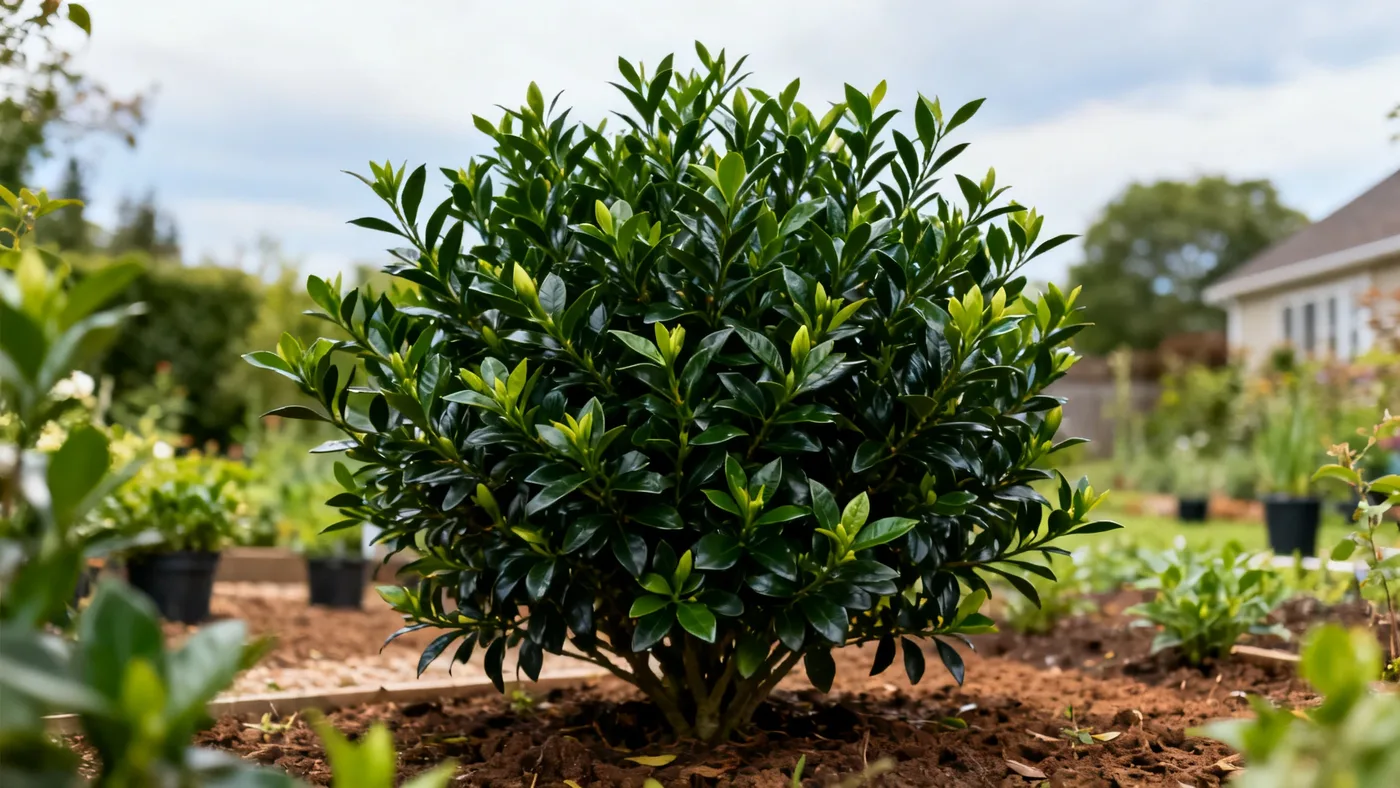
- Distinctive foliage: Smaller, narrower leaves create a finer-textured appearance than standard gardenias, adding visual interest year-round with its glossy dark green color.
- Reliable blooming: Flowers consistently in late spring to early summer (May-June), with occasional light rebloom in favorable late-summer conditions.
- Mounding habit: Natural spreading growth pattern works well for mass plantings without heavy pruning.
- Strong fragrance: Classic gardenia scent, perfect for planting near patios, windows, or seating areas where the fragrance carries.
Where Kleim's Hardy Needs Your Attention
- Acidic soil requirement: Demands soil pH between 5.0 and 6.5; alkaline soil will cause chlorosis (yellowing leaves). You may need to amend soil or add chelated iron supplements.
- Consistent moisture: Needs regular watering during dry spells. Does not tolerate standing water or prolonged drought, making it moderate (not high) in drought tolerance once established.
- Bud drop risk: Sensitive to temperature swings, drought stress, and overwatering, which can cause buds to drop before flowering.
- Winter dieback at zone 7: In the colder edge of its range (zone 7), may experience leaf yellowing or branch dieback in hard winters; winter protection helps in marginal locations.
- Pest pressure: Susceptible to aphids, whiteflies, scale insects, mealybugs, and spider mites, especially in warm climates; regular monitoring recommended.
Frostproof Gardenia: Strengths and Limitations
What Makes Frostproof Popular
- Extreme cold tolerance: Often marketed as one of the most cold-hardy gardenia cultivars available, with growers reporting reliable survival in zone 7 and even the warmer parts of zone 6b.
- Taller, more substantial form: Grows to 3-4 ft, providing more presence in the landscape and working well as a small hedge or specimen shrub.
- Strong fragrance: Produces the classic sweet gardenia scent in late spring and early summer.
- Proven track record: A widely planted cultivar with years of documented performance in northern gardenia zones.
- Long lifespan: Like all gardenias, it's a long-lived shrub that can perform reliably for decades with proper care.
Where Frostproof May Require Adjustments
- Larger footprint: More upright growth habit and taller mature size mean it requires more space and may need pruning to fit smaller landscapes.
- Similar soil and water demands: Also needs acidic, well-drained, humus-rich soil and consistent moisture; chlorosis and bud drop remain risks.
- Bloom frequency: Single main bloom cycle in late spring and early summer; fewer documented cases of late-summer rebloom compared to Kleim's Hardy.
- Pest susceptibility: No more or less resistant to common gardenia pests (aphids, scale, whiteflies) than other cultivars.
Head-to-Head: Which Gardenia Wins?
Cold Hardiness: Frostproof Takes the Edge
If your primary concern is surviving a harsh zone 7 winter with minimal protection, Frostproof Gardenia edges out Kleim's Hardy. It's consistently marketed as slightly more cold-tolerant and has a longer track record in northern gardens. That said, Kleim's Hardy is reliably hardy in zones 7-9, and with winter protection (mulch, a burlap wrap, or microclimate placement), performs well even at the cold end of its range. The difference is modest, not dramatic.
Compact Growth: Kleim's Hardy Wins
For small spaces, tight borders, and foundation plantings where you want a low, mounding shrub that stays 2-3 ft tall, Kleim's Hardy is the clear winner. Frostproof's taller, more upright habit (3-4 ft) suits larger landscapes or hedging.
Foliage Texture: Kleim's Hardy Offers Finer Detail
Kleim's Hardy's smaller, narrower leaves create a more delicate appearance than the slightly broader foliage of Frostproof. If year-round foliage texture matters to your design, Kleim's Hardy adds more visual interest.
Rebloom Potential: Kleim's Hardy Has the Advantage
Kleim's Hardy is documented to rebloom occasionally in late summer under favorable conditions. Frostproof's rebloom is less predictable. If secondary flowers matter to you, Kleim's Hardy is your choice.
Soil and Water Needs: Tied
Both require the same acidic, well-drained soil (pH 5.0-6.5) and consistent moisture. Neither is low-maintenance or drought-proof. This is not a differentiator.
Best For: Use-Case Recommendations
Choose Kleim's Hardy Gardenia If You Want:
- A dwarf or compact gardenia under 3 ft for a foundation bed or small border
- Finer-textured foliage as an ornamental feature year-round
- The possibility of late-summer rebloom in warm regions
- A mounding, spreading form that doesn't require pruning to keep its shape
- To place the plant near a window or seating area where its strong fragrance is appreciated up close
Choose Frostproof Gardenia If You Want:
- Maximum cold hardiness at the northern edge of zone 7 or into zone 6b
- A larger, more substantial shrub (3-4 ft) that reads as a focal point in the landscape
- An upright habit suitable for hedging or specimen planting
- The cultivar with the longest documented cold-hardiness track record
- A plant for a larger garden where size isn't a constraint
Our Verdict: The Right Choice for Your Garden
Neither cultivar is objectively "better." The real answer depends on your space, hardiness zone, and design goals.
In zones 8-9: Both excel. Choose Kleim's Hardy for compact landscapes, Frostproof for larger spaces. The difference in cold hardiness is negligible.
In zone 7: Frostproof Gardenia is the safer bet if winters are severe. Kleim's Hardy will survive with protection and thoughtful placement (afternoon shade, wind shelter, good drainage). In the warmer parts of zone 7, Kleim's Hardy thrives with no special care.
For most home gardeners: Kleim's Hardy Gardenia is the practical choice. Its compact size fits most residential landscapes, its finer foliage adds textural interest, and it blooms reliably with the bonus of occasional late-summer flowers. If your garden is spacious and you're gardening in the coldest part of zone 7, Frostproof's slightly greater hardiness justifies the extra space it demands.
Whichever cultivar you choose, success depends on three constants: acidic, well-drained soil, consistent moisture during growth and bloom, and light pruning right after flowering finishes. For detailed care instructions on Kleim's Hardy, including soil preparation, watering schedules, and pruning timing, see our complete Kleim's Hardy Gardenia care guide.
Quick Reference: Kleim's Hardy vs Frostproof at a Glance
| Factor | Priority for You? | Winner |
|---|---|---|
| Maximum cold hardiness | Yes, zone 6b/7 gardener | Frostproof |
| Compact size (under 3 ft) | Yes, small space | Kleim's Hardy |
| Finer foliage texture | Yes, ornamental appeal matters | Kleim's Hardy |
| Possibility of late-summer rebloom | Yes, want more flowers | Kleim's Hardy |
| Larger, more upright form | Yes, larger landscape | Frostproof |
| Easier hedging or screening | Yes, need privacy or structure | Frostproof |
| Zones 8-9 with no special care | Yes, warm climate | Tie (both excel) |
| Strong fragrance | Yes, scent is a priority | Tie (both strong) |